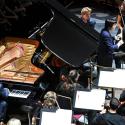
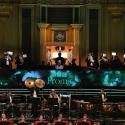
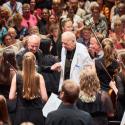
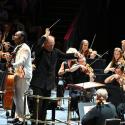
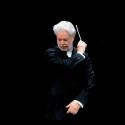
It seldom happens that you long to hear choral music not in a modern auditorium but some chilly, echoing cavern of a great Victorian town hall. But that thought did arise as a full-strength London Symphony Orchestra and its hundred-strong chorus crammed uncomfortably into every inch of the Barbican hall’s stage for Vaughan Williams’s Dona Nobis Pacem. It felt like squeezing a herd of elephants into a cake tin, and the Barbican’s disobliging acoustic hardly helped enrich the mood.
Yet Antonio Pappano still managed to work the uplifting magic that he reliably brings to choral blockbusters. Vaughan Williams’s full-blooded and great-hearted plea for global peace from 1936 (commissioned for the centenary of the Huddersfield Choral Society) more than lived up to its billing as a direct ancestor of Britten’s War Requiem. Indeed, as bass-baritone Ashley Riches achingly lamented that (in Walt Whitman’s words) “my enemy is dead, a man divine as myself is dead”, the tragic pity of Owen’s Strange Meeting lies very close at hand.
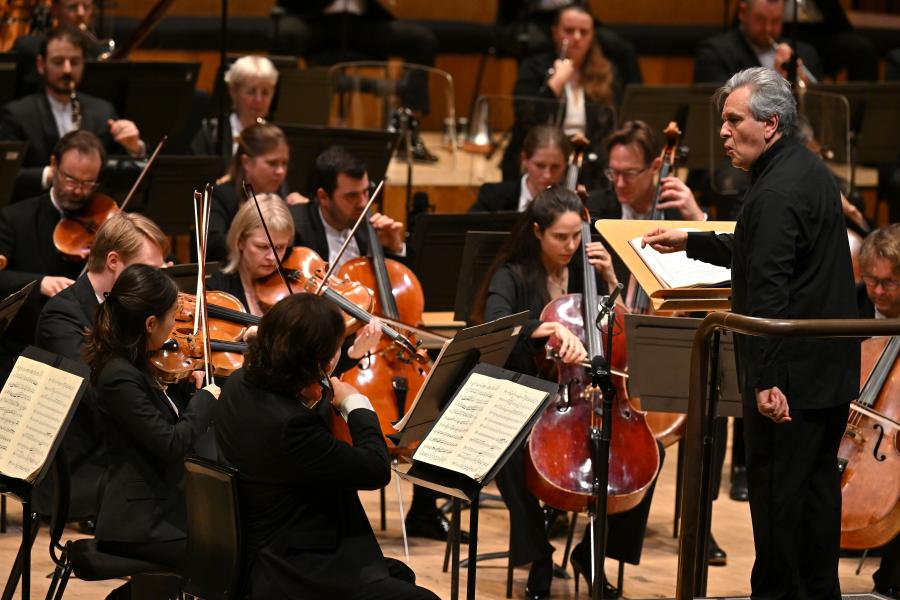
Dona Nobis Pacem capped a programme of works marked by deep, mixed feelings not always easy to decipher or define. That’s what the music does. A first half of Tchaikovsky’s brooding and turbulent Fourth Symphony gave way to a celebration of Vaughan Williams in the second. Before the massed regiments took up their positions, we heard RVW’s 1925 suite for viola, small orchestra and chorus, Flos Campi. Antoine Tamestit, whose warmth and depth of tone not even the Barbican could douse, was the viola soloist in this elusive, hypnotic piece – complete with sensuous wordless vocalise from the chorus – inspired by the veiled eroticism of the Song of Solomon. If anyone in the audience still harboured preconceived notions of this composer, Flos Campi would surely have dislodged them: Hymns Ancient and Modern it is definitely not.
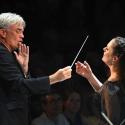
In Tchaikovsky’s Fourth, Pappano shaped and managed its ferocious mood-swings with consummate precision and authority. For all the detailed (if misleading) schedule of contrasting states of soul that the composer attached to the work, in performance it can sound like a thrilling big hot mess. Pappano, with some exhilaratingly fine work across the LSO desks to support him, both heightened the colours and sharpened the edges. The opening brass fanfare and its late return (Fate’s irresistible call, wrote Tchaikovsky) had a menacing bite and rasp. A volcanic and propulsive long first movement gave each swerve and lurch time and space to make an impact, with bold, full horns and sauntering, gurgling woods (especially Rachel Gough’s bassoon) to lighten the tone before another cry of pain.
The andantino “In modo di canzona” gave us not just song-like grace but a luscious plangency in the LSO strings, enhanced by the ravishing sadness of the oboe melody (Olivier Stankiewicz) and refined accents, here and throughout, from the flutes (Gareth Davies, Imogen Royce). Pappano conjured a massively sumptuous sound without cloying pomposity: much abetted by the elegant nobility of the cellos seated in front of him.
In the scherzo, the strings managed their sustained pizzicato excursion with nerveless finesse, with skittish fun supplied by Patricia Moynihan’s impeccable piccolo and, at the opposite extreme, the gruff charm of Ben Thomson’s tuba. Patrick King’s timpani anchored a top-grade percussion squad that helped the finale maintain coherence and vivacity alike. Pappano wasn’t afraid to pause and wait, adding suspense to climactic tutti and avoiding high-volume monotony as the folk-song theme picks up momentum and complexity. For all its bright hues and clear outlines, his Tchaikovsky never lacked fire.
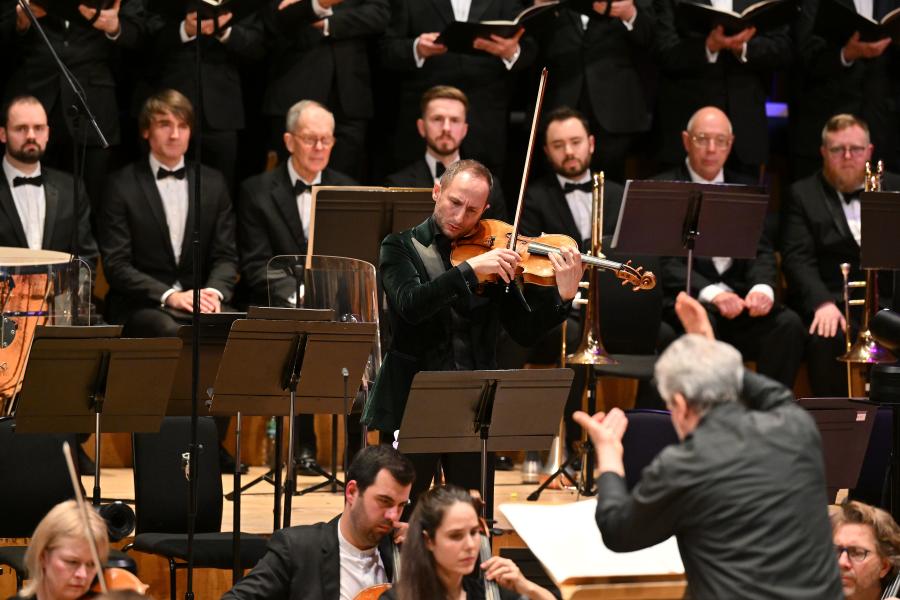
Dreamy, enigmatic, meditative, Flos Campi summons an intangible sensuality as tantalising as the bitonal harmonies (viola and oboe in different keys) that begin the piece. Standing behind the players, in front of the choir, Antoine Tamestit commanded the stage, never over-emphatic but always deeply expressive. The rich-hued chromaticism of the string parts here seem to transport us closer to early 20th-century Vienna than the English folk revival. Tamestit and the LSO dug deep into the work’s mysterious inwardness, while the Ravel-like otherworldly croon of the chorus added to the aura of impalpable desire.
In contrast, Dona Nobis Pacem shows Vaughan Williams as a public-facing composer committed to broad gestures and resounding statements. At moments (and with one foot in the Victorian choral tradition), the work does veer into bombastic hyperbole. But that huge choir has plenty to do beside grand fortissimo declamations. The London Symphony Chorus, under their director Mariana Rosas, excelled as well in the tricky long lines of the Walt Whitman settings, notably with “Beat! Beat! Drums!”: the diction, phrasing and volume exact but full of feeling too.
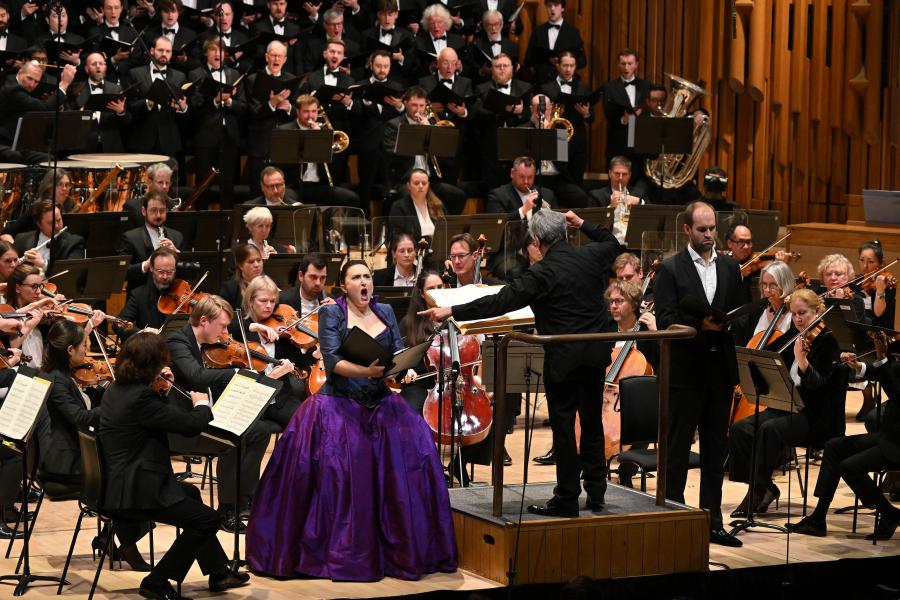
Julia Sitkovetsky, the soprano soloist, lent a certain asperity to some of her repeated iterations of the Latin prayer for peace. If it wasn’t always the most beautiful sound, the text does call for anguish rather than serenity, and her dramatic intensity never failed (there are surely echoes of the Verdi Requiem here too). Yet she could deliver more straightforward purity and polish too, as the lovely sustained notes of the final invocation proved. Ashley Riches, meanwhile, made both the grief and tenderness of Whitman’s verse stand out in moving clarity, his bass engaging and assured but never too serene for the mourning and fury of the text.
Pappano’s feats of generalship ensured that the work’s wide dynamic leaps, and drastic shifts between intimacy and grandeur, didn’t lapse into Victorian choral melodrama. Part of the piece’s enduring power stems from a musical idiom that frankly faces both ways: towards that confident past of massed choral ceremonial, and a perplexed present of individual doubt and hope. Pappano’s peaceable army allowed us to hear, and feel, both.