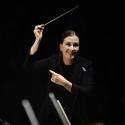
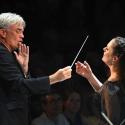
So much was fresh and exciting about Michael Tilson Thomas's years as the London Symphony Orchestra's Principal Conductor (1988-1995; I don't go as far back as his debut, the 50th anniversary of which is celebrated this season). Carved in the memory are his concert performance of Rimsky-Korsakov's Mlada in "The Flight of the Firebird" festival, his high-octane piano playing as well as conducting in "The Gershwin Years", the transformative Prokofiev Fifth and Strauss Ein Heldenleben (both fortunately also recorded). He seems a more sober figure now, less swooping of gestures, eyes a little too fixed on the score. Berlioz in his great "dramatic symphony" always asks for more - more light, shade, passion, tenderness, subtlety, bravado, intimacy and grandeur - than this sophisticated performance gave us.
It came as a surprise to discover that Tilson Thomas, at least these days, doesn't encourage his orchestra to vocalise every phrase in what is, after all, an opera for orchestra. The opening tumult didn't quite bring the warring Montagues and Capulets to life; after the most perfect of oboe solos for dreamy Romeo from Olivier Stankiewicz, lights never fully blazed at the Capulet ball, not helped by a shaky launch, Tilson Thomas doing some uncharacteristic stamping at the door and frightening the orchestral horses. He is still master of the long romantic phrase; the odd proportions of the big central love scene made sense when passion was followed by a new depth in the more measured but even tenderer conversations which mark a long dying fall.
Mab, Queen of Dreams, can hardly fail to scintillate with players of this calibre - is not this hugely influential fantasy-scherzo the high watermark of refined orchestration? - but still needed to fly higher and lighter. The coda to the mesmerising funeral cortege for Juliet joined the end of the Balcony Scene in stilling and drawing an audience in, but both reminded us of what we should have been getting throughout. Memories of John Eliot Gardiner's supremely vivid Proms Berlioz are still too strong, and many LSO players will still have Colin Davis's Berlioz engraved on their hearts.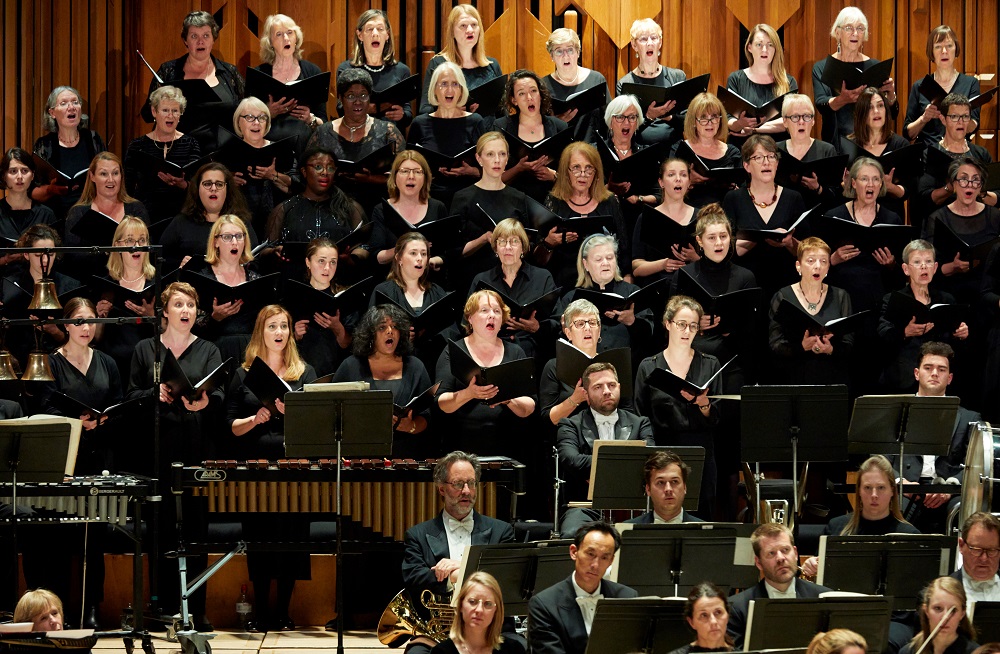 Vocal honours went from excellent to good: Alice Coote wove the right timbral magic for the slightly tangential "Strophes"; Nicholas Phan, while not the ideal high, light French tenor necessary for the Mab "preview", got around the rapid phrases elegantly; and Nicolas Courjal, reliable if a little too self-pitying in the only dramatised role, that of Friar Laurence, didn't provide the wow factor of a real bass we badly need in Berlioz's oddly extended final scene of reconciliation (disproportionate to Shakespeare, welcome on Armistice Sunday).
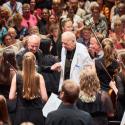
The full London Symphony Chorus (women pictured above in a concert with Tilson Thomas earlier this year) came into its own here, but it would have been wiser to engage the small ensemble of students from next door's Guildhall School, narrators of things to come, as the warm-up act to the love scene, partygoers stumbling home from the ball. The whole delivered a good impression of this kaleidoscopic masterpiece; it's just that example has led us to expect the exceptional.