Who wouldn't wish to have been a fly on the wall during those pre-recording days when composers and their friends played piano-duet arrangements of the great orchestral works? Any notion that we don't need such reductions anymore was swept aside by Antoine Françoise and Robin Green in the fourth concert of an untrumpeted but brilliantly conceived piano-duo series matching transcriptions of 20th-century Viennese masterworks with Mozart and/or Schubert and five world premieres. Such ambition was last night crowned by an hour-plus performance of Mahler's Sixth Symphony arranged by Zemlinsky, which opened the door to new wonder about this tragic masterpiece.
The programme might have been subtitled "Men Who Loved Alma". Not Mozart, of course, whose teenage jeu d'esprit the four-hand Sonata in D opened the concert, but rather Mahler, who married Alma Schindler with far from untroubled results, Zemlinsky, who pined after her, and Kokoschka, whose 1914 painting Bride of the Wind (pictured below) shows himself and Alma in elemental embrace and inspired Alissa Firsova's piece of the same title.
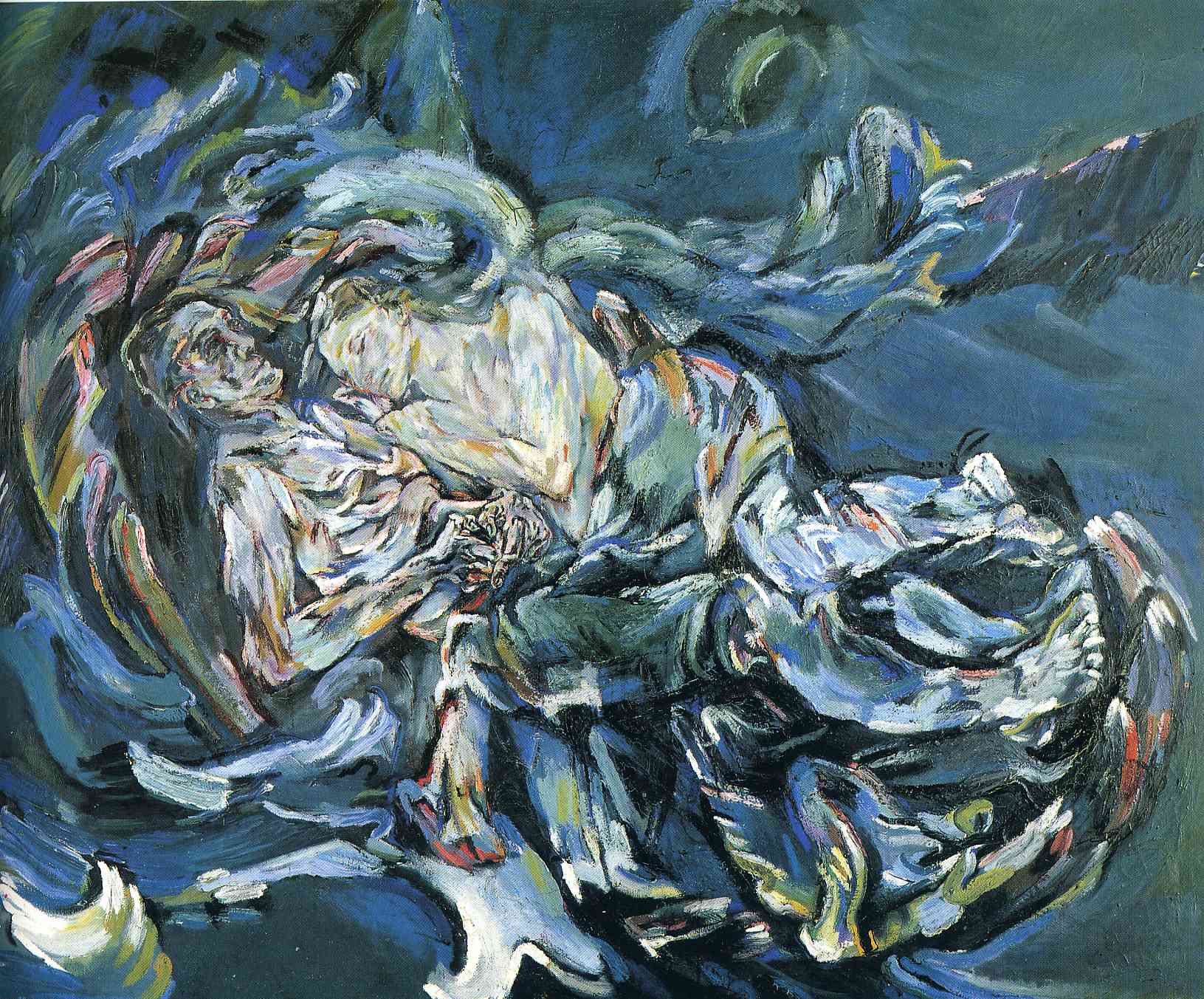 Françoise and Green made light of its chord-cluster difficulties, almost elegantly balancing the cosmic washes of sound – magnificent resonances from the sustaining pedal – with singing lines of rhythmic firmness. The glowing textures were ideally supported by the St John's acoustics – this is a work which would have sounded too dry in the Queen Elizabeth Hall, too overpowering in the Wigmore – and the essential radiance of Firsova's fine invention found its natural conclusion in a sudden, magical final triad. Bride of the Wind was the perfect contrast, too, to the Mozart, where a premonition of Cherubino's "Voi che sapete" in the first movement was balanced by a mock-military march à la "Non piu andrai" in the sparkling rondo.
If there's mockery in the marches of Mahler's Sixth Symphony, it's always of the grimmest sort. The duo kept a very firm grip on the bold outlines of the first movement; to have gone at it hell for leather – and to have included the exposition repeat – would have exhausted both them and us prematurely. Zemlinsky leaves very little out in the so-called "Alma" second subject until the climax – semiquaver inner lines were always impressively handled – and keeps tremolos to a minimum in the high-pastures idyll at the centre of the movement.
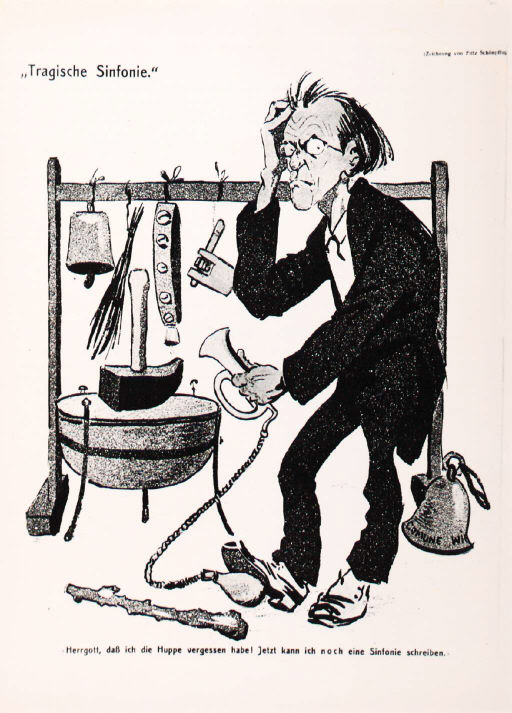 There was still tension here; all the more reason for tears of relief, then, when Françoise articulated the "old-fashioned" trio theme of the scherzo – placed second, as it should be – with such poise and beauty. This, the bittersweet Andante melody and the noble theme of hope in the furious finale all came closer than in the orchestral version to the world of Schubert, his piano music especially, and moved me much more than many concert performances of the fully-scored original.
Did we miss the exotic orchestration (caricatured above), the percussion battery including xylophone, cowbells and wooden hammer (considered here, apparently, as a possible addition, but discarded as a distraction; Green's terrifying lower resonance told us where the axe was falling)? Only, perhaps, in the misty introduction of the finale, and the final gearing-up of the apocalyptic marching when at least another pair of hands is needed for Mahler's multiple strainds.
Otherwise, the harmonic richness emerged with exemplary clarity, tempo changes were masterly, space was always given for passages of special significance. How the two kept a clear head throughout is something of a miracle, but they can now claim to have reached the summit of a piano-duo Everest with aplomb, and descended just as safely. Shame about the small if distinguished audience, but the rapt silences played their part in the magic of the evening. Don't miss the final concert of the series.