The Polyphonic Concert Club is a collective of musicians – including Isata Kanneh-Mason and I Fagiolini – offering recorded chamber recitals released weekly through March and April. Like the festivals of Voces8 (I reviewed their Christmas series) they are aimed at a premium market: high-quality filmed content at a significant price, here £95 for the six concerts, not far off the cost of live tickets. Only the Club itself will know whether there has been enough take-up to make it financially viable, but on the evidence of yesterday’s recital by the Castalian Quartet, they have not compromised on choice of repertoire nor the excellence of the performance.
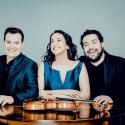
There were three pieces on the programme: Haydn’s C major quartet, op.20 no.2, Thomas Adès’ The Four Quarters and Janáček’s 'Kreutzer Sonata' Quartet (No 1), which required the Castalians to traverse a wide range of territory, aesthetically, technically and emotionally. The quartet has been playing together since 2011 and their sound is muscular and assertive but not without lightness of touch, and they found a terrific dynamic range. Like the best quartets they move and breathe together and clearly engaged with all three pieces in their different ways.
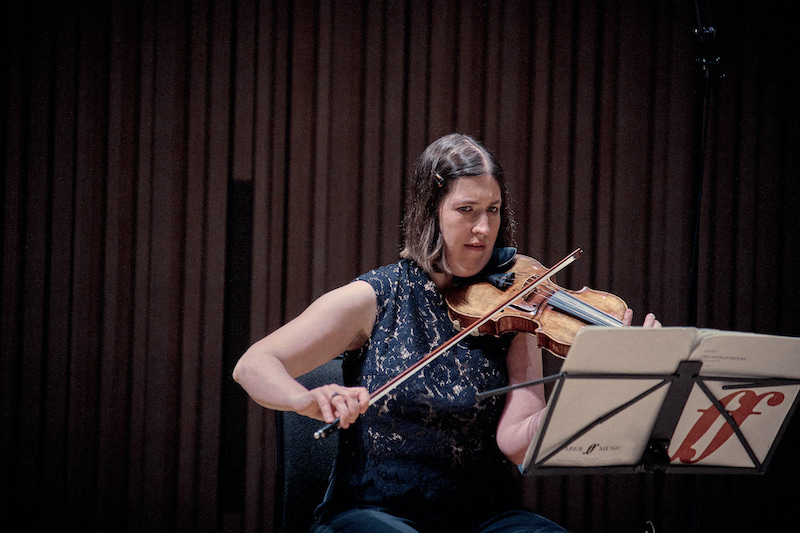 Haydn’s opus 20 set established many of the principles of string quartet that held sway for the next century, but always with his sardonic humour and subversiveness. The Castalians avoided romanticising Haydn’s classical language in the slow movement and were impish in the fugal finale. First violin Sini Simonen (pictured above) carried this forward with an effortless phrasing of the fugue’s themes and there was a real sense of contrapuntal conversation between the parts.
Thomas Adès – who has recently celebrated his 50th birthday – was represented by his 2010 The Four Quarters, whose movements journey through the course of a day. It has his usual mastery of texture, elusive rhythms and allusive harmony. The Castalians were more than equal to the many technical demands of the piece but went beyond that to draw out the expressiveness of the piece. The first movement is my favourite, hocketing patterns between the upper strings never quite landing where you expect, the structural build-and-fall-away paced beautifully by the quartet. After the second movement’s frenetic barrage of pizzicato and the sonorous repetition of the third, the fourth – called ‘The Twenty-Fifth Hour’ – is an otherworldly dream of pizzicato and harmonics which eventually floats away into a ghostly D-major chord.
Janáček’s 'Kreutzer Sonata' Quartet has no such moments of dream or repose, but is rather anguished music of confrontation. This is not reassuring music; it is not pretty or comforting, but it demands a response, even if that response is one of discomfort. The Castalians engaged with the music on both a technical and emotional level, finding its stormy, restless heart.
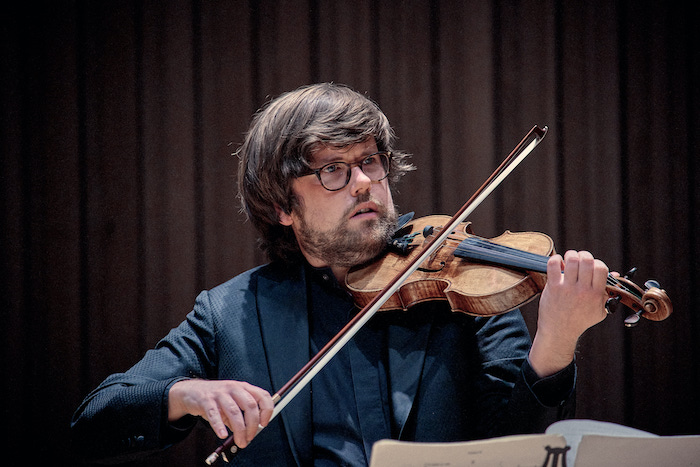 We have travelled a long way from the soundworld of Haydn. Where the Adès’s piece is thoroughly, avowedly post-tonal Janáček’s clings by its fingertips to a kind of modality but it is bursting at the seams, and this sense of desperation was present in the playing. The severe, scratchy ponticello playing in the third movement was emphatic, second violinist Daniel Robert’s (pictured above) crazed arpeggios in the fourth movement were adamantine, and there was a delicious coldness in the still opening to the final movement. You want drama? There’s drama here. Looking for consolation and good cheer? Look elsewhere.
The whole thing was really beautifully filmed – possibly the best picture editing of any of the filmed concerts I’ve watched. In particular I enjoyed the pacing of the cuts being in tune with the pacing of the music: there was a real synchrony there. The only real disappointment was the lack of programme notes – there wasn’t even a breakdown of the movements – and I think subscribers could have expected more in this respect. But in all others they should be well satisfied.