Thomas Adès and the Britten Sinfonia here reached the most revolutionary works in their twin portrait season of Gerald Barry and Beethoven: Barry’s Chevaux-de-frise and Beethoven’s "Eroica". Adès, ever-keen to play the iconoclast, emphasised all the radical features and brought a visceral intensity to both scores. The Barry came off best, the performance yet again demonstrating the close artistic affinity between the two composers. The Beethoven was less successful – suitably dynamic but with its lyrical lines rarely given space to breath under the weight of Adès’ muscular interventions.
Chevaux-de-frise was written to commemorate the anniversary of the Spanish Amada in 1988. It was a BBC Proms commission, and was clearly written with the Albert Hall in mind, making its impact more claustrophobic at the Barbican. Rhythmic unison is the most radical aspect of the score, the outer sections moving in steady crotchet dissonances throughout the orchestra and the inner sections characterised by fast runs in unison and octaves between disparate groupings.
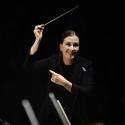
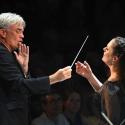
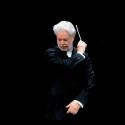
Although not Minimalist, the consistency of texture, and the doublings of high and low voices (violins and tuba, for example) call to mind the contemporaneous scores of Louis Andriessen. And, as with Andriessen, the quieter woodwind passages, as angular as the tuttis, are reminiscent of Russian-period Stravinsky. But otherwise Barry is his own man, and the radically unified ensemble has the effect of concentrating the rhythmic intensity and emphasising the percussive profile. This is where Adès excels, driving the music on and maintaining the volume and concentration. His conducting style is energetic and agile, making full use of his long, slender limbs to communicate the sense of energy he seeks.
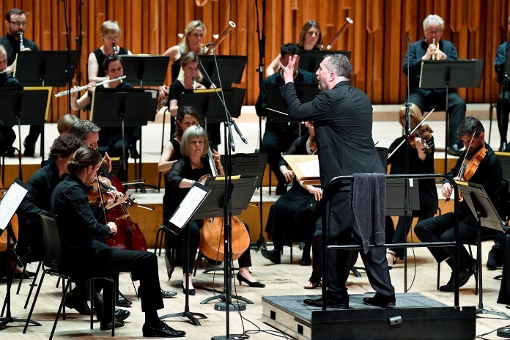
That physical dynamic between conductor and orchestra continued in the Beethoven, and often to thrilling effect. Adès clearly has a vision for the "Eroica", based on a strong rhythmic profile for each of the motifs and cleanly defined contrasts between sections. He is in tune with many aspects of Beethoven’s dramatic shaping, especially his long codas, and each of the movements here ended convincingly, with careful build-up and rhythmically incisive cadence. But the fast tempos he adopted often sat uneasily with the loud dynamics, and the orchestra often struggled, particularly in the fast runs in the outer movements.
Adès intervened continuously, to cut phases short or to bring out lines of counterpoint or accompaniment. Even the second-movement funeral march was delivered in fast, brutally clipped phrases. Occasionally, he allowed the music to play out in broader spans, in the later variations of the second movement and for much of the third. The Scherzo third movement was the most successful, Adès here allowing the woodwind soloists to fill out phrases, that continuity of line effectively balancing the rhythmic impulse from the podium: rare moments of lyrical beauty in an otherwise breathless and unrelenting account.