

Currently on show at the Barbican is a video that makes your hackles rise. Two “savages” are on display in a cage surrounded by punters who happily pay a dollar to pose for photographs with these exotic natives or else to watch them dance. These hideous interactions are being played out in museums in supposedly civilised countries including America, Spain and Australia.
You don’t have to be Einstein to smell a rat, though; the signs are there for all to see. Along with her grass skirt, the woman wears shades and sneakers while the man’s Mayan-style breast plate and head gear are accompanied by a Mexican wrestler’s mask, leather boots, shades and Goth-style wrist bands festooned with metal spikes.
Performed in 1992 by artists Coco Fusco and Guillermo Gómez-Pena, The Couple in the Cage was a spoof on the “human zoos” that were popular from the Victorian era until the mid 20th century. (The last display of its kind was at the 1958 World’s Fair in Brussels when Congolese families were exhibited as exotic specimens).
Despite the deliberate inconsistencies, many took the couple’s performance at face value. While some were outraged enough to cancel their museum membership, others clearly relished this supposed encounter with the “other”. Beaming with delight, for instance, one man feeds the couple a banana as if they were monkeys in a zoo, while looking to the crowd for confirmation of his great wit. It’s a chilling example of how readily some people embrace racism, and a reminder of the degree to which the far right is gaining popularity once more by stirring up these ugly sentiments.
The video is just one of some 300 exhibits in Project a Black Planet, a show that explores how, since its inception in the early 1900s, the concept of Pan Africanism – a worldwide movement whose aim is to encourage a sense of solidarity between Africans and people of African descent – has continued to grow and develop.
But although the show could not be more timely that doesn’t make it a good exhibition. In effect, it’s a book on the walls, packed with archival material including books, pamphlets, posters and photographs that need to be read or explained in more detail. Realising the problem, the curators have provided endless links, but if you were to download and study them all you’d be there ’til doomsday.
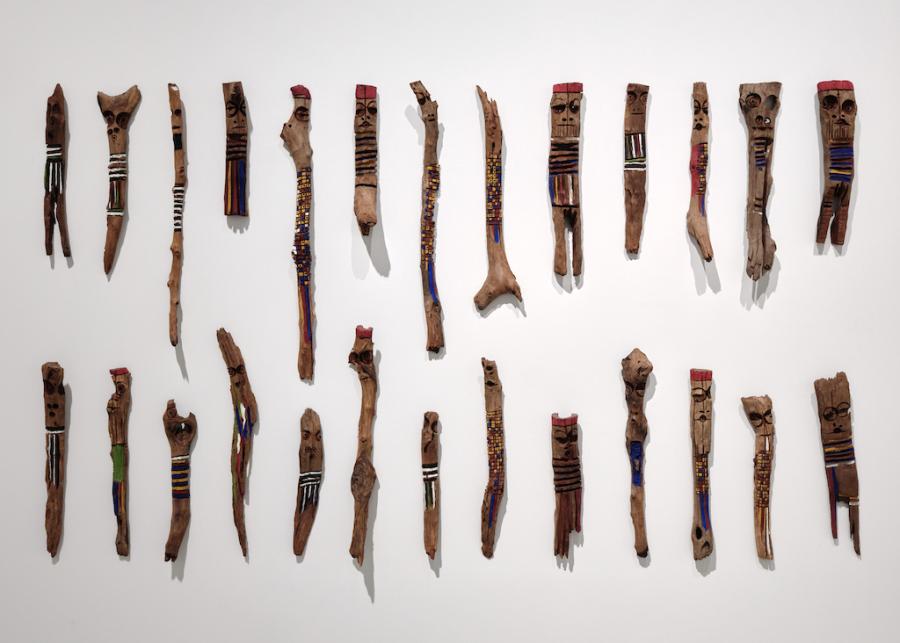
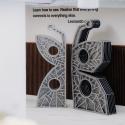
The art works have been chosen to illustrate themes such as “Agitation”, “The Language of Blackness”, “Rupture”, “Autonomy” and “Historical Reckoning”, so you don’t see enough of anyone’s work to relate to it on its own terms and, as a result, each artist is diminished in stature. Take El Anatsui, for example. At the Ancestors Conference 1995 is a witty take on the African tradition of wood carving (pictured above. Photo © Thomas Adank, Barbican Art Gallery). By drilling holes into bits of scavenged wood and adding a few bands of colour, he effortlessly transforms the fragments into a series of fearsome heads. They are funny, clever and modest; but there’s no hint of the ambition that lead him to produce Behind the Red Moon, the majestic hanging he made for Tate Modern’s Turbine Hall from thousands of bottle tops.
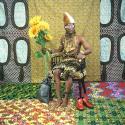
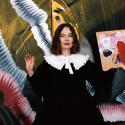
Don’t get me wrong; there are some fabulous things on view, but in this maelstrom of information, they are easily missed. Photographer Samuel Fosso is represented by a delightfully acerbic self portrait (main picture). Decked out in fake leopard skin, copious amounts of jewellery and shades, he is the embodiment of corruption – The Chief, He Who Sold Africa to the Colonists 1997. But he deserves far more space; so does Rotimi Fani Kayode who, with his powerful photographs of gay men, is like the Robert Mapplethorpe of Lagos. He’s represented here by a fey image of a man holding an African mask that accords with the overall theme of the show more happily than, say, a sexy man in black leathers.
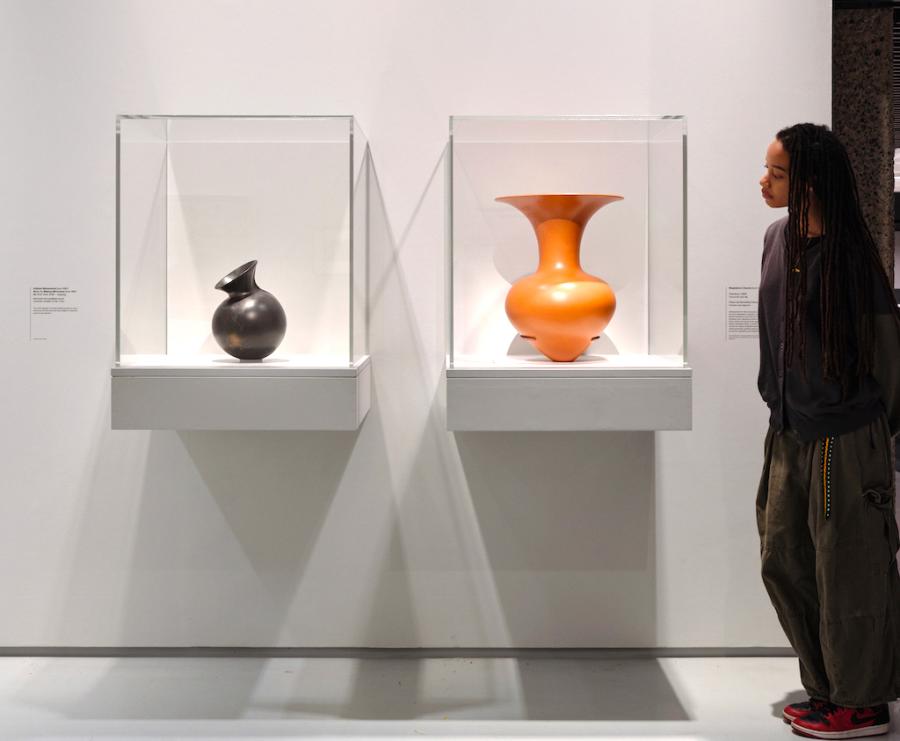
I’m grateful to have been introduced to African American sculptor Melvin Edwards who, sadly, has just died. But you could easily miss his Afrophoenix, 1963 a small relief in darkly patinated steel that, with minimal means, suggests escape from bondage. And also to Magdalene Odundo’s exquisite pots (pictured above. Photo © Thomas Adank, Barbican Art Gallery). With their sensual, streamlined beauty, they can hold their own no matter what the company.

Women are seriously outnumbered by men in the show. An intriguing painting by Lubaina Himid is tilted William Cuffay’s Sister 1989. Cuffay was a Chartist who spent years lobbying parliament for workers’ rights until he was transported to Tasmania in 1848. Little is known of his sister Juliana and Himid’s fictional portrait of her serves to remind us of the hundreds of women, black and white, who have been omitted from the records by male historians so their achievements go unremarked.
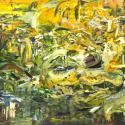
As though to compensate for this imbalance, a whole room has been given to Lynette Yiadom-Boakye whose key strength is the ambiguity of the characters she conjures with her brush. Her figures are not portraits so much as generic types – wise men, teenagers and so on. Made especially for the show, the new paintings have been given titles such A Toast to Your Exit and In the Revolutionary Prospect that encourage more literal readings which, for me, limit the imaginative power of the images. But with its less prescriptive title, An Understanding of Uncles (pictured above), a drawing of four men, triggers one’s thoughts towards endless interpretations.
If only the rest of the exhibition were that open.




Add comment