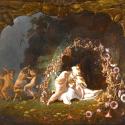
Hidden among rampant foliage, a couple makes out with an urgency transmitted through Cecily Brown’s vigorous brush marks (pictured below right: Couple 2003-4). Their passion seems to have infected the whole woodland scene. The magenta flowers in the foreground are clearly defined, but as one’s eye travels back through the undergrowth, it’s as if feeling takes over from observation. Clarity is swept away by a gestural frenzy of greens and browns punctured by a patch of violet that breaks through the trees like an intense moment of orgasm.
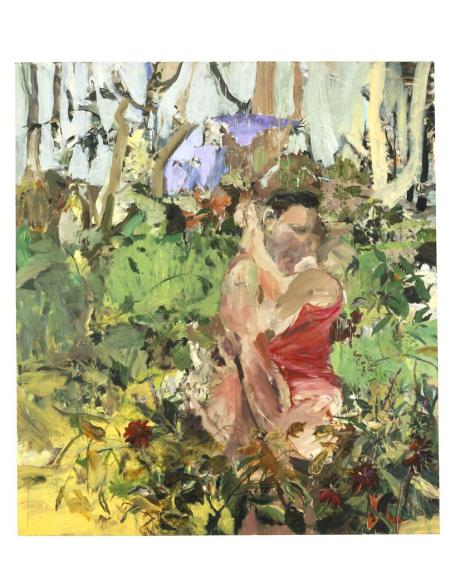
It’s a wonderful picture, but it was painted over 20 years ago when Brown was emerging as a shooting star on the London art scene and it’s by far the best painting in her Serpentine show. In the past she borrowed freely from old master paintings, translating their figurative compositions into a melée of energetic marks that harbour glimpses of people, places and things and keep you guessing, and searching, and wondering.
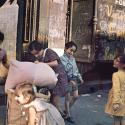
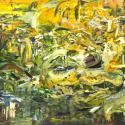
That energy is still there but, with time, the flickers of her brush have become more uniform and the layering denser; rather than hinting at hidden (forbidden) subject matter, paintings such as A Round Robin (2023-4) (main picture) seem turgid and inert. Gazing into its depths no longer carries a sense of discovery and revelation. Instead your eye gets mired by a murky tangle of oil paint that leads nowhere either physically or emotionally.
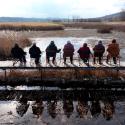
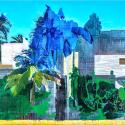
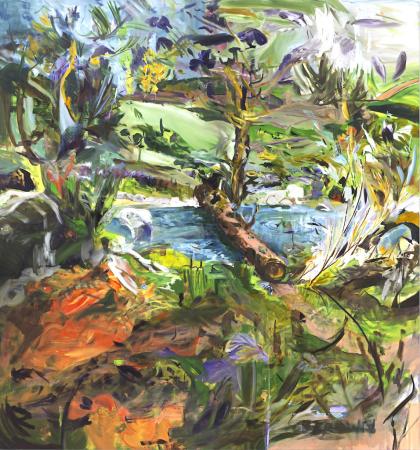
Then comes the nature walk series based on a jigsaw puzzle illustration. Lying across a stream, a fallen log provides a makeshift bridge that invites you to wander into the landscape beyond. Despite Brown’s best efforts to energise the scene with animated paint handling and adding suggestive titles such as Nature Walk with Paranoia (pictured below left), The Charmed Water and Nature Walk with Hysterical Sky or switching to black and white, the image stubbornly refuses to become anything more than a picturesque cliché devoid of emotional depth.
A recent fascination with the fairy paintings of Victorian artist Richard Doyle and illustrations in children’s books by Beatrix Potter and Kathleen Hale has led to a series of charming but cloyingly sentimental watercolours. Oh dear! The artist moved to New York in 1994, a year after graduating from the Slade School, and it feels as if, for her, England has become inextricably linked with the past and memories of childhood story books.
In a recent interview Brown remarked that the only subjects worth painting are birth, copulation and death. In an era when we rely more and more on second hand information and our experience of the real world diminishes accordingly, it feels as if the time has come for her to put on her walking boots and encounter reality, mud and all – so that her engagement with her subject matter is not just in the studio. Can we please have more substance and less reliance on gestural fireworks ?