It’s true that there is something wildly, garishly, theatrical about Pedro Almodóvar’s films – none more so than this rampant farce – but it’s equally true that their sensibility is far removed from what the English might deem farce, and that their speed of delivery leaves not a millisecond to draw breath, let alone sing a song. So where does that leave Women on the Verge of a Nervous Breakdown, the Musical? Lost in translation; twice over.
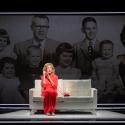
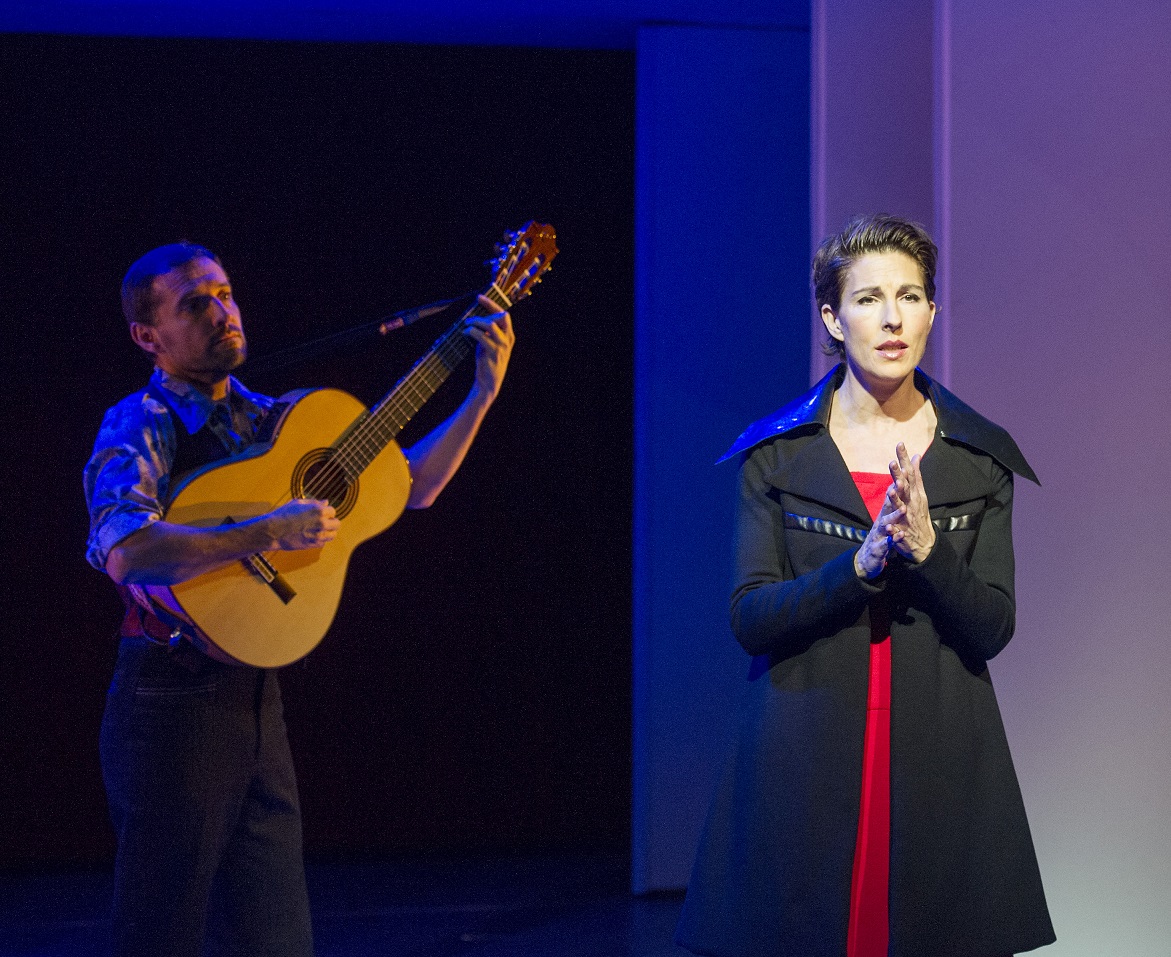
The conceit is niftily established when our anti-heroine Pepa (Tamsin Greig) staggers sleepily onto Anthony Ward’s sleek duplex set and affects a series of double-takes at the presence of a band and a whole bunch of unlikely bodies going nowhere fast. A female matador with a blackboard indicates that we are in Madrid (just in case the assortment of English accents should later throw us) and we are furthermore in the midst of Pepa’s “Dream”. Or should that be nightmare? There’s a singing taxi driver with a guitar – the excellent Ricardo Afonso (pictured below right, with Tamsin Greig) acting as a narrator/balladeer in the manner of Che in Evita – and since he has a Spanish accent and no one else does we start to buy (or not) the fact that nothing is going to be quite as it seems here. That anarchy (and, yes, there’s even an Islamist terrorist – which is not good timing) is bound to rule.
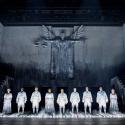
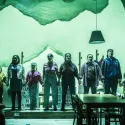
 But soon everybody is singing and the question asked of all musicals – why and when do people sing? – becomes an increasingly burning issue. The creators, Jeffrey Lane (book) and the talented David Yazbek (music and lyrics) clearly see the musical element as a means of pausing for thought and for emotion; they also pull off a couple of amazing ensemble set-pieces, “On the Verge” and “Tangled”, which encapsulate better than words alone can (because everyone can sing at once in chaotic counterpoint) the meltdown of reason and sanity that drives Almodóvar’s farce. But though I applaud Yazbek for resisting at all times a generic “musicals” style, and even at times deliberately parodying the Spanish elements, the songs just aren’t memorable enough to merit the time-outs they necessitate amidst the mayhem of scorned, jealous, oversexed women and a bumper batch of gazpacho laced with valium.
Part of the reason the show looks but doesn’t feel right is the sound and speed of the incendiary Spanish language. Candela (Anna Skellern), who’ll lay anything with a pulse but is a little perplexed when she finds a belt of grenades among her latest conquest’s discarded clothing, has a number chronicling a series of frantic voicemails which aims to precisely replicate such verbal fireworks if only we could catch more of the lyric through Skellern’s breathless delivery.
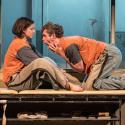
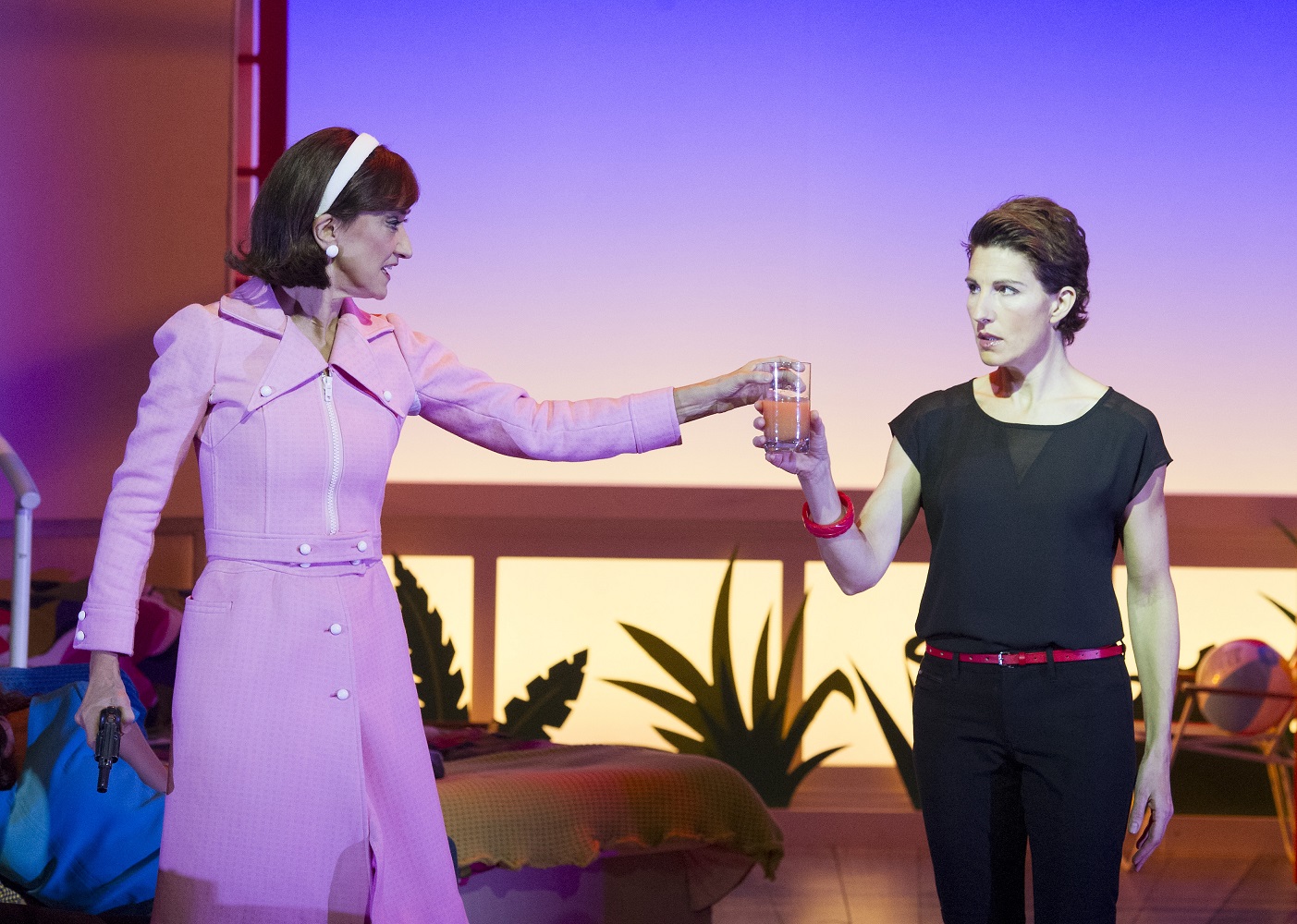 The evening stands or falls, of course, around the engaging Tamsin Greig who is beautiful and undeniably skilled as an actress and comic but seems inhibited by the challenge of her numbers in ways that the marvellous Haydn Gwynne (pictured left, with Grieg) is not. Tall, scorned, and lethal, she's redolent of a young Elaine Stritch and absolutely nails her eleven o’clock number, "Invisible". She also gives us the evening’s best laugh as she catches sight of herself in a Picasso portrait and exclaims, “I look dreadful!”
So the laughs are there, for sure, but for every one that lands there are another dozen that don’t. I fear the show will die with an audience less receptive than that of partisan first-nighters. It’s to do with speed – it’s a long haul for what it is – it’s to do with Spanish-versus-English sensibility, but most of all it’s to do with the movie being so damn good.