

With impeccable timing, the Orange Tree in Richmond has scheduled a one-act play that’s exactly what a beleaguered public needs: 75 minutes of mind-bendingly ludicrous physical comedy in the form of Peter Shaffer’s 1965 hit, Black Comedy. It's still a lethal weapon.
Farce was a theatrical staple at that time, regularly broadcast on primetime television from the Whitehall Theatre. A pants-down Brian Rix in flamboyant underwear invaded the nation’s living rooms long before serious dramas with suggestive sex scenes were allowed in. So Shaffer was working fertile soil. (Spoiler alert if you have never seen the piece and don’t want its novel concept exposed.) But he gave the genre his own turning-over with a simple mechanism: it’s played with the lighting values onstage 100% the opposite of what they should be. So when the characters’ surroundings have been plunged into darkness, they are shown to us in full brightness. And if a character produces a lighter or a candle, as occasionally they do, the bright stage lighting has to be fractionally dimmed, representing the degree to which this small source of light has lifted the gloom. Timing of the lighting cues is all.
This is a hard enough script for the actors to negotiate as it is, stumbling around as if in a pitch-black space, hands frantically sweeping the terrain ahead of them for obstacles. But the Orange Tree’s in-the-round stage requires even more skill than a proscenium arch setup would. The cast’s faces can’t be seen by all the audience at once — people on one side will inevitably be looking at an actor’s back if those in the seating opposite are getting the full benefit of the performer’s face. So the laughs have to be spread to all areas of the seating, and delivered with maximum precision.
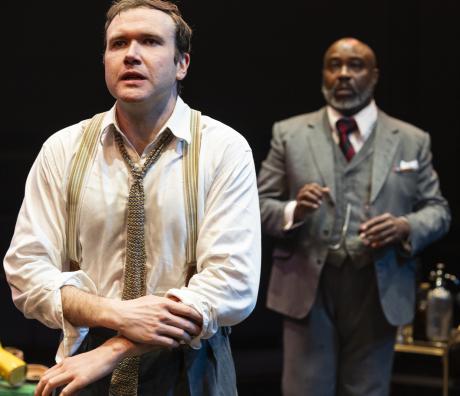
Thankfully, the production has a very able director in Caroline Steinbeis, a cast apparently ready to risk life and limb as they grope and tumble around, sometimes into the audience (the only casualty on press night was a pottery teapot) and a ringmaster in the form of physical comedy consultant John Nicholson, who has been staging funny pratfalls since the 1990s, notably for Peepolykus. One of his collaborators from that troupe, Javier Marzan, makes a brief but spectacular appearance in the final stretch of the play as Georg Bamberger, an eccentric billionaire.
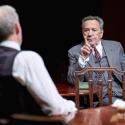
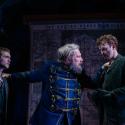
This is not just a play that calls for good clowning, though, as its 1965 cast suggests: Derek Jacobi played the impoverished sculptor Brindsley Miller, with Maggie Smith as his artist girlfriend, Clea. Brindsley, robustly performed here by Joe Bannister (pictured above, left with Jason Barnett) with palpable rising panic, represents the coming men of the Swinging Sixties, a well educated, middle class bohemian on the make. After Clea left him, he has taken up with a wealthy young thing in a mini-dress, Carol (Leah Haile). Together they hope to win over her fierce father, Colonel Melkett (Jason Barnett, though you could think you were listening to Roger Livesey’s Colonel Blimp), by boosting Brindsley’s income through sales of his Pop art sculptures to the wealthy Bamberger. These artworks are gloriously awful, consisting of a shop mannequin’s dismembered body parts sprayed primary colours and adorned with accessories such as the tines of a garden fork, representing a mohican.
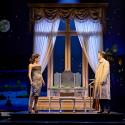
Whereas the Colonel and the couple’s neighbour, Miss Furnival (Julia Hills), are fairly reactionary types, Brindsley and Carol seem more “modern", but also brittle and blinded by materialistic desires. It’s no matter to them that they have stolen from another neighbour, camp Harold (Simon Manyonda), some antique furniture and valuable objets to give an impression of luxe living. They simply don’t want to get caught. Their commitment to each other is tenuous, too, as they reveal when Clea (Patricia Allison, pictured below) sidles back into the flat unannounced and, of course, unseen.

This is standard stuff in farce, naturally, where the leads are expected to show superior physical skills rather than refined moral scruples. But here you care even less than usual whether the lead farceurs are found out. You just want to see who can survive this fiendish obstacle course the playwright has devised, requiring the cast to show almost superhuman powers of stamina, quickwittedness and ingenuity. They crawl along the floor in the “dark”, in a mad slalom of avoiding chairs and each other, or punch the air believing it is unoccupied. Somehow a chaise longue, with a drunken Miss Furnival on board trilling “Rock of Ages”, is slipped out of the room; two people pass on a ladder going in opposite directions without changing course; the Colonel looks as if his chair is going to be removed from beneath him, but something even better happens. Hats off to John Nicholson for this bravura display.
When a German-accented man from the electricity board (Chris Chilton) turns up, what was left of the characters’ reason abandons them. Assuming they can’t be seen by their targets, they give up disguising how they feel, hurling insults at people we can see are just inches away in front of them, spilling secrets, having surreptitious gropes. They would be ghastly people if they weren’t such magnificent clowns.




Add comment