

Pete Waterman, responsible (some might prefer the word guilty) for more than 100 Top 40 hits, said that a pop song is the hardest thing to write. Boy meets girl; boy loses girl; boy gets girl back – all wrapped up in three minutes. Benedict Lombe’s Shifters takes longer – 33 Kylies longer – but it pulls off the same devilishly difficult trick and, as with the best earworms of the 1980s, it’s likely to stay in your head for years.
Dre(am) is at his Nana’s wake when, late and unannounced, Des(tiny) is suddenly in the room, the impact of her arrival akin to his being hit in the face with a cartoon frying pan. The man with all the words is instantly dumbfounded, the all-purpose smile, and what a smile, unsummoned and you can almost see his mind spiralling back to teenage years. Soon we’re down that same rabbit hole with them.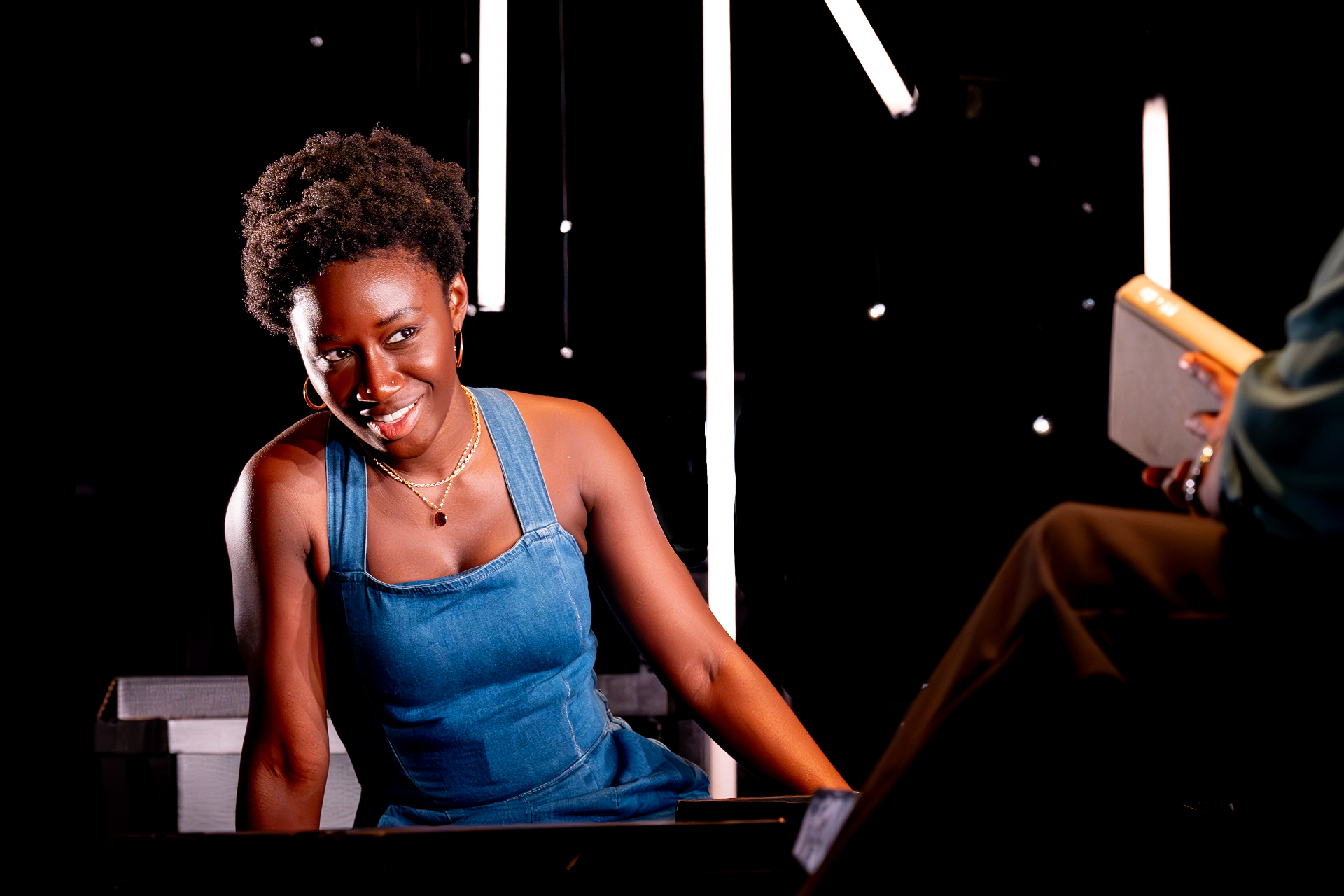 Rewind 16 years and we’re in what would be labelled a “Left Behind” town today. Des is a gobby sixth-former in debating class who catches the eye of the only other black kid in the group, yep, our man Dre. She’s not gobby of course, but challenging, curious and confident, something her teacher recognises, fascinating him as much as it irritates him, an incandescent spark in a room of silent, sullen teens. She radiates her carapace of middle class poise, and Dre, unfamiliar with such armour but seeing a woman as intelligent as himself, perhaps for the first time, draws on his unpolished charm and that smile, and the two pair off. Soon we’re tracking their lives as they circle each other egos colliding, life events supervening, love and pain found in equal measure as we discover how that figurative frying pan got into Des’s hands.
On the face of it, there isn’t much more to it than that cookie-cutter romcom plot. No face off between feuding families, no suicides in a tomb, but, like Romeo and Juliet or Nick Payne’s Constellations, which the play suggests even more readily, the power of the tale is in its telling.
On its transfer to the West End from the Bush Theatre, another trailblazing success for that particular venue after Red Pitch and for London’s extraordinary Fringe scene in general, director, Lynette Lynton, retains the intimacy a two-hander needs in order to weave its magic. It’s little short of genius to use a traverse stage, because the sight of the audience behind these two extraordinary individuals continually reminds us that the British daughter of a Congolese neurologist and the British son of a Nigerian widow are just like us, whoever that “us” might be. It’s a cliche of an adjective, but it’s box office catnip – here we have a relatable couple.
The theatrical geography alone allows a remarkable level of specific detail to underpin the characters, from African cuisines to musical heritages to parental pressure. Sometimes such richness of contextual information can come across as didactic or, worse still, tritely exotic, but everything here is natural. And so is the response of the audience to what we see – as in For Black Boys at the Garrick last year, the house is as much a part of the show as the actors.
Not that they are outshone at all. Tosin Cole is the more immediately attractive, bright, handsome and witty, it’s not just Des who is in love with him – 10 minutes in, we all are. But, as we knew really, he is too good to be true and, when the bluster and bonhomie fall away, we see him as a damaged soul and almost ache with him for the pain the long separation from Des must have caused.
Heather Agyepong (pictured above) has the more difficult job with Des. She’s spikier, a touch arrogant and just a little bit entitled, so it takes longer for us to warm to the woman. We get there though, as Agyepong unpeels Des’s vulnerabilities and her reasons for following a path her talent and energy has carved out against the odds.
They are two performances of immense emotional intelligence interspersed with killer comic lines and overlaid by an ever-present poignant melancholy. Somehow the simple set manages to corral such talent, but I’m sure we’ll see them in the limelight again when awards season rolls round.
It’s not a perfect play though, too often reaching for hot button issues to drop another pebble in the pond when some more ripples are required. There are also elements that don’t quite stack up in the interconnected world of 2024. And sometimes the hand of the playwright manipulating our emotions is just a little too intrusive for its own good.
Quibbles aside, Shifters is a date movie of a play (why aren’t there more of them?) that will reach audiences across so many of the demographics that middle-aged, white and safe Shaftesbury Avenue struggles to find. It’s bold and brilliant, with a winning humanity that runs through it like The Congo runs through Africa. It’s the future of British Theatre, right here, right now.












Add comment