In a flowering branch of London theatre, Norway comes to Notting Hill with what's becoming revelatory regularity, thanks to the cultural support of that admirable country. Two visionary-searing Ibsen productions are now joined by an off-piste piece of performance art from the techno-innovative Oslo-based company De Utvalgte. Jon Fosse, Norwegian playwright of international fame, hasn't had much celebration in our too-literal theatre world: I am the Wind appeared at the Young Vic in 2011, directed by the late, great Patrice Chéreau, and the Coronet/Print Room's previous venture, in translation, The Dead Dogs, followed in 2014.
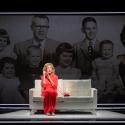
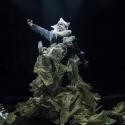
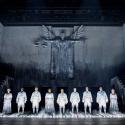
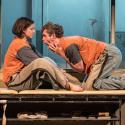
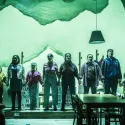
When We Dead Awaken, title of a late Ibsen play, might be an alternative here, though meant in quite a different sense - these wraiths never do quite wake up - and if Fosse is in a line with any other great playwrights, it would be with Beckett and Pinter rather than Ibsen. Five children's faces appear in globules hanging above the stage, where old people sit immobile, shaking, briefly play a few notes on a piano, or embrace. Their younger faces greet each other in perfunctory phrases, some expressing their fear, all wondering where they are and when they can go home. A narrative emerges: their mortal incarnations, some embodied below, were/are as two parents of a son, whose wife is the liveliest spirit, the older couple estranged when the father left the mother for another woman - also feaured - eventually returning just before his sudden death.  Fosse's lapidary style seems to cry out for music, even operatic treatment, which it got so hauntingly in Georg Friedrich Haas's Morgen und Abend (Morning and Evening), a meteor flashing big themes of birth and death at the Royal Opera. The (uncredited) score here is minimalist, in line with the text, but way too mundane to sustain the sense of otherness. Lighting by Jean-Vincent Kerebel and video design by Boya Bøckman complement Kari Holtan's production. It's certainly worth being immersed in the hour-long experience, especially given the sensitive performances of the (uncredited) children, whose solemnity tellingly gives way to brief moments of happiness and vivacity, but how this will resonate in the mind, only time will tell.