

This November, experimental theatre company Hydrocracker will bring The New World Order – a site-specific cycle of five Pinter plays – to a former government building in Hackney. Doubtless the immersive impact will add disquieting emphasis to Pinter’s dark tales of totalitarian power and abuse of authority, but if you prefer your Pinter a served a little straighter, briefer and with greater intimacy, then the Young Vic’s miniature double-bill One For The Road/Victoria Station offers a fairly devastating warm-up act.
Not seen out in public together since Pinter himself directed their London premiere in 1984, the two plays together offer contrasting meditations on (mis)communication and human intimacy. While Victoria Station – based on a real-life experience shared by the playwright and Antonia Fraser – is a comedy whose surreal premise turns each laugh bitter as it rots in the mouth, One for the Road’s exploration of totalitarian authority and obsession sees the playwright at his most bleak. Both are perfect miniatures, works whose exposition is pithy, not to say curt, but whose resonance only grows in retrospect as, tumbleweed-like, they roll through the mind.
In the Clare’s circular set-up, audience becomes jury
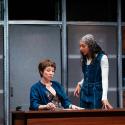
The pairing is more one of contrast than similarity however, making a single shared set a practical necessity rather than an ideal. Alex Lowde’s strip-lit interrogation chamber (a natural fit for the Young Vic’s blank Clare space) here separates his taxi-firm controller and dysfunctional driver 274 diagonally, each locked in their own self-contained institutional space. With each so equally present, however, we lose something of Pinter’s alienation, of the confusion of the Driver (Kevin Doyle, pictured below) who cannot remember where or what Victoria Station is. Neither character is privileged in director Jeff James’s vision (the production is a transfer from The Print Room), neither has the greater claim on our sympathy, surely skirting the play’s central interpretational question.
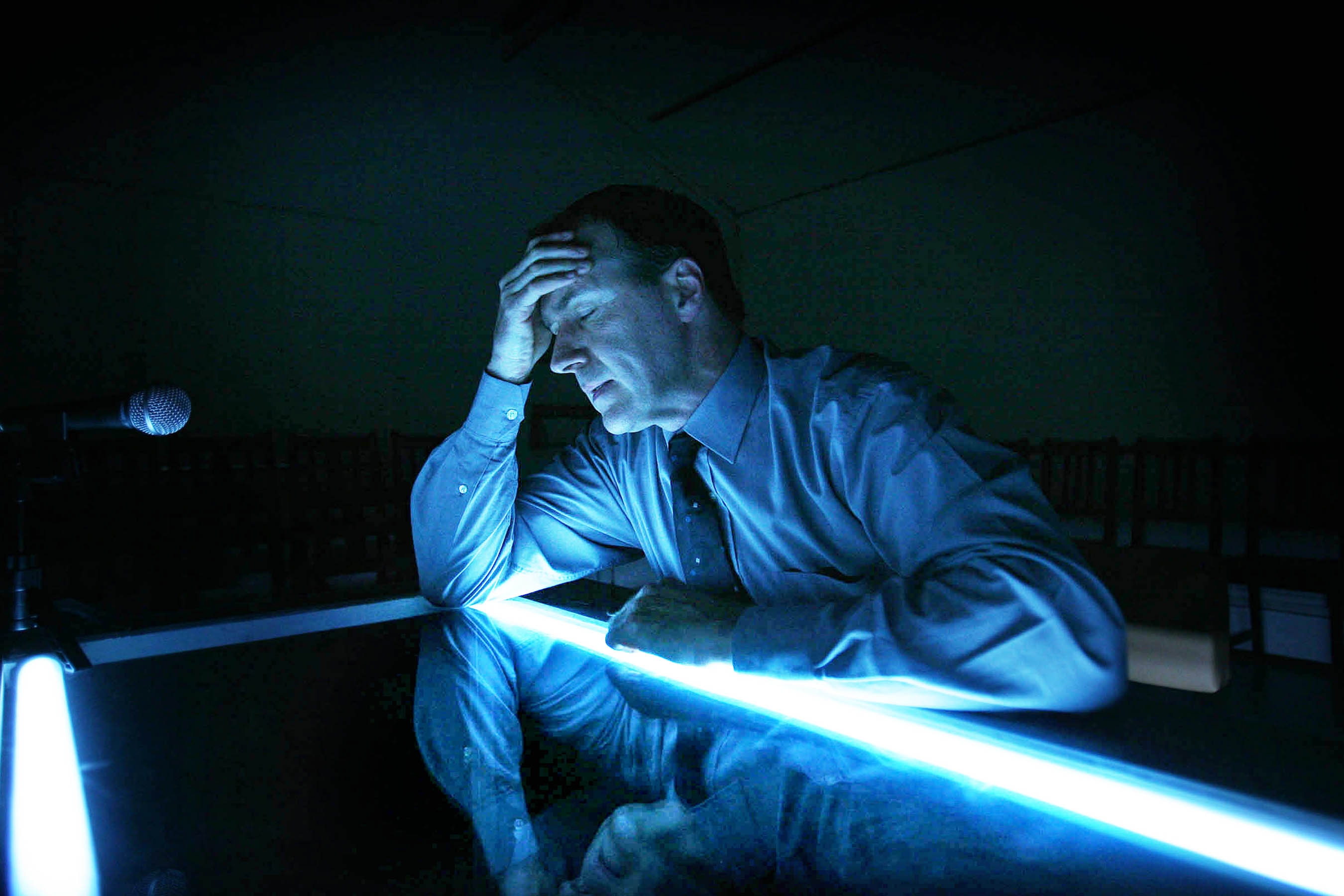 James’s decision does, however, allow Keith Dunphy’s Controller to expose the full facial workings of his frustration, his bland Irish tones modulating into ever more extreme contortions (“You’re beginning to obsess me.”) There’s little sanity here to balance Kevin Doyle’s achingly flaccid Driver, all bruised perplexity and inaction, and while the result captures the manic quality of Pinter’s humour it never quite commits to its darker extremities.
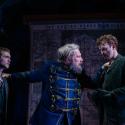
Power shifts neatly in the more successful One for the Road in which it is Doyle who takes on the role of Nicolas, the genial sadist and interrogator of an unnamed political state. In clothes as uniformly grey as the room itself, he circles his three successive victims in the freely choreographed mating dance of the torturer. Doyle’s menace here comes not from any overt display of violence but precisely from its absence. “I’m the chatty type,” he volunteers, while steering the confessions of dissident Victor (Dunphy) and his family (Anna Hewson as Victor's wife Gila, pictured below). Even the line that Fraser has identified as the play’s most chilling, addressed to Victor’s small son – “My soldiers don’t like you very much either, my little darling” – smuggles its stiletto blade among silk.
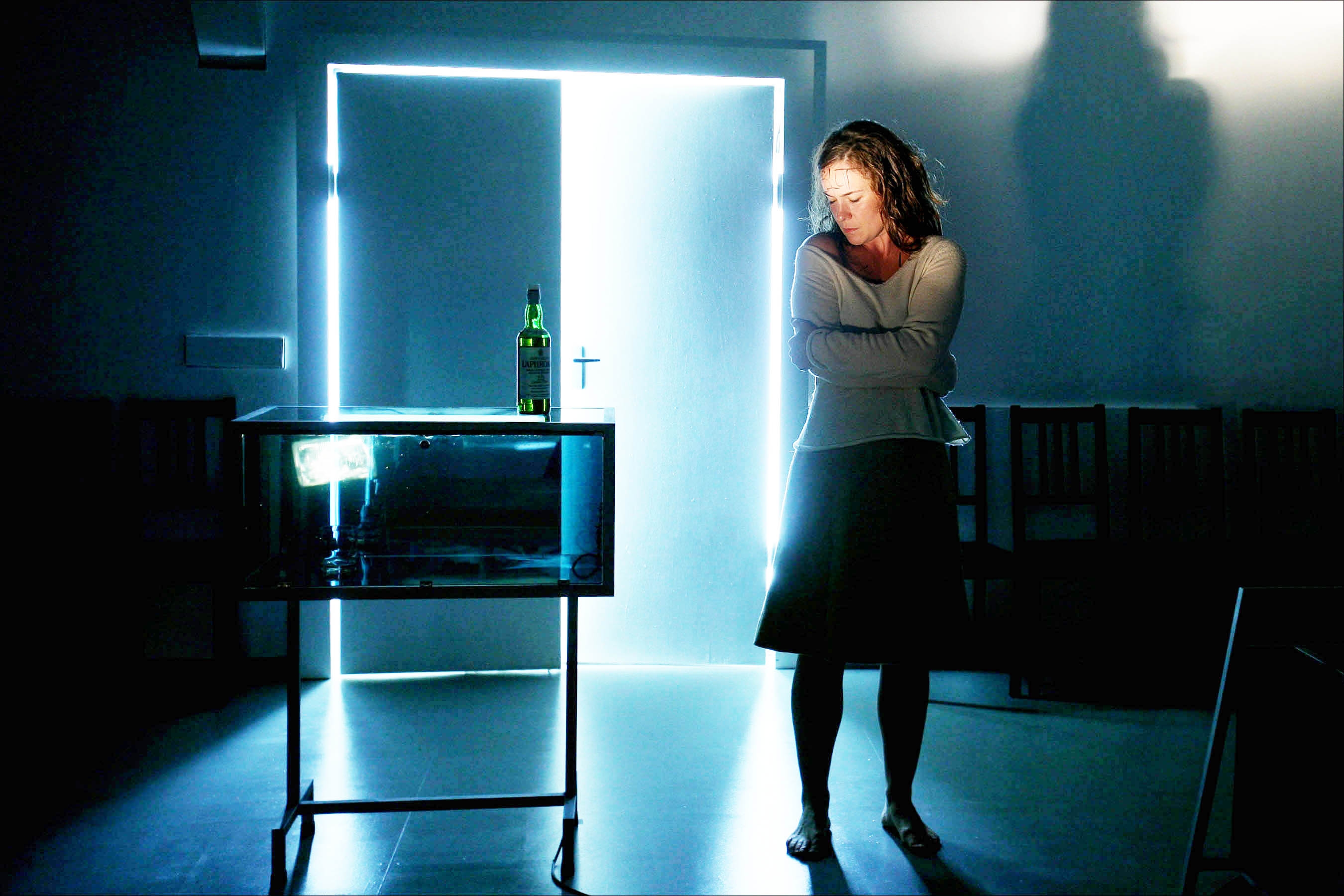 Facing one another across the room in the Clare’s circular set-up, audience becomes jury. We watch the inevitable ending, complicit in Nicolas’s judgment. It’s a short evening that navigates the journey from comedy to brutality with speed but never haste, making sense of Pinter’s pairing. I’m not sure the attacca transition between the works benefits from being quite so continuous, but it’s a reading that yokes the plays together into a single development. We see the reasonable logic of Victoria Station’s Controller become the inflexible authoritarian absurdity of One for the Road, and leave disturbed, desperately trying to draw the dividing line.
- One for the Road/Victoria Station at the Young Vic until 15 October








Add comment