

The repercussions of loss ripple inexorably through Simon Stephens’ 2003 play One Minute. Foreshadowing elements the prolific playwright has developed in his later work, it’s a testing piece that speaks most of all about the currents of loneliness that fan out within the fabric of the modern metropolis.
There’s a degree of bleak poetry in its depiction of a London that dwarfs the separate lives of those who struggle within its mesh. The city’s sounds, its “slaughtering metal” and the like, seem a presence of their own, as they are indeed in this revival by Delirium Theatre at The Vaults. Hidden away in an abandoned archway beneath the tracks of Waterloo station, there’s a nice connection to experiencing a stage world in which physical environment dominates over the human factor in a venue where the rumble from the tracks above periodically intrudes in similar fashion.
The cast of five create their own shapes and constellations of togetherness
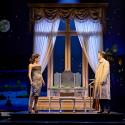
We can only guess just how many degrees of separation underline Stephens’ world here, and he doesn’t hurry to reveal his underlying subject. The first scene catches a chance encounter between two women, the over-anxious, brittle Louise (Rose Riley) and much more relaxed Catherine (Rebecca Killick) as they try on clothes: there’s even humour there, as they strike up an unexpected conversation that looks like it may even lead to a closer bond (one that will, however, turn into a shackle of a different kind).
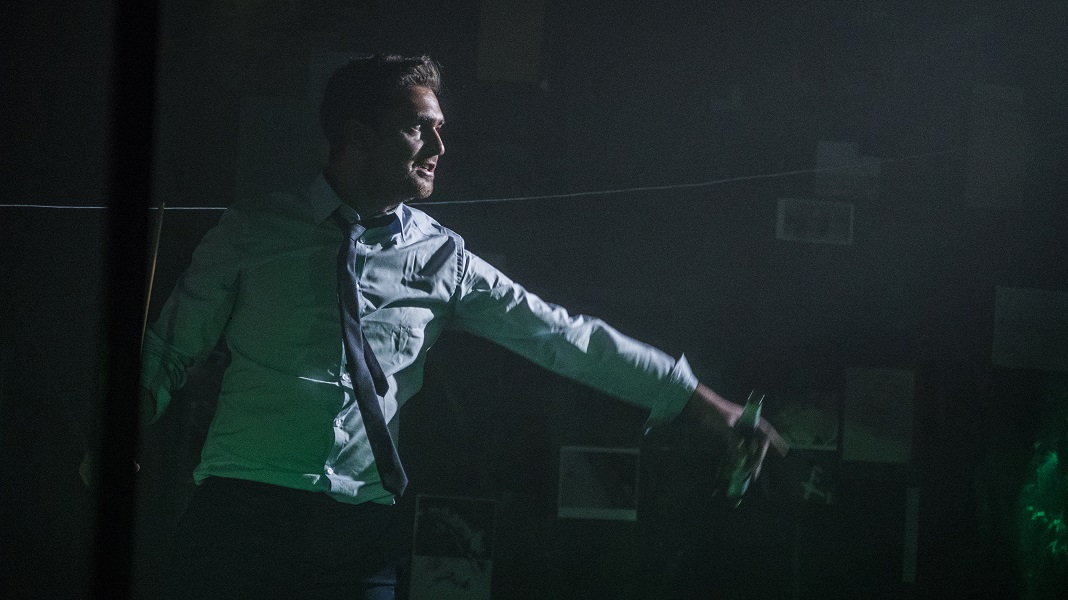
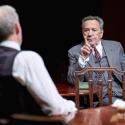
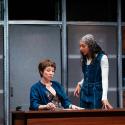
Next there’s an older woman Anne (Cait Davis) ending an encounter with a middle-aged man, Gary (Jake Ferretti): she’s addressed as “doctor”, and we wonder if it’s the end of a therapy session, with the tidying-up of coffee cups overlapping with fragmented childhood recollections. A scene on from that, Gary’s in the company of another man, the younger Robert (Oliver Kaderbhai, pictured below): they could be casual acquaintances caught up in some night transport delay, sharing incidental details of their lives to pass the time.
 Only when we move into what is clearly some kind of questioning does the real context of this prelude become apparent. Anne’s daughter has vanished, wandered away or snatched; Gary and Robert are police officers investigating the disappearance, and they’ve been on a night stake-out somewhere; now they’re talking to Louise, who thinks she’s seen the child. Catherine will soon enter the orbit of Louise more directly, and in turn she has a connection of sorts, a friendship not quite bordering on flirtation, with Gary, who drops regularly into the bar where she works, seeking some sort of end-of-the-night consolation.
The formal challenge here is that, aside from the hint of the ongoing investigation that provides a (slight) element of structure, the dramatic form for a world of such overlapping isolations is the monologue, and that’s the form Stephens exploits most here – there’s a long one from Robert on the alienation of the city, and a beautiful closer from Anne – as he has in more recent work, too. The only moment of direct conflict comes when Robert loses his self-control in an after-hours confrontation with Gary (who's his senior officer: they’re not equals), and that’s soon passed over.
Both men – tellingly, they’re not Londoners by birth – may banter about their own partners, but that’s a rather one-sided engagement. But the real gap here, perhaps even more so than the missing girl, is surely Anne’s absent other half: she refers to him in her interactions with the police officers, we even know how they may adapt their plans for the future, but no more. It somehow restricts the growth of any more piercing depth or breadth, as does the developing depiction of Louise, whose emotional maladjustment to the world surrounding her is slowly revealed to borderline on clinical illness.
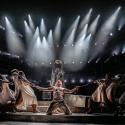
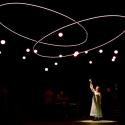
Co-directors Kaderbhai and Matthew Churcher present this skeleton of a story with a theatrical busyness that consciously works against the emotional thrust of Stephens’ play. The cast of five, playing within a highly choreographed structure of lighting and music, create their own shapes and constellations of togetherness. Do we believe more, or less, in the writer’s premise of isolation when the actors are so intricately linked together in action that they throw props to one another with an unstudied fluency that betrays deep rehearsal coordination?
Just as Stephens ends his play on a final line that hangs, unresolved, in the air, that question remains open here. The directorial choice seems right on one level, at least: to play One Minute as an unalleviated dirge of isolation grief alone would make its running-time of 90 seem very long indeed.




Add comment