Hail the spirit of the dance. And of acting. And of driving and flying. At a time when new writing is clearly in decline, and the most successful shows are adaptations or revivals of the classics, the National Theatre returns to one of its big hits from a year ago, thrillingly recast. Unsurprisingly, it’s an adaptation of a popular book of yesteryear: Kendall Feaver’s version of Ballet Shoes, Noel Streatfeild’s classic 1936 coming-of-age novel about three adopted sisters who go to drama school.
Set in a fossil-filled crumbling house in Cromwell Road, the plot is about the absent-minded and often physically absent palaeontologist Great Uncle Matthew (GUM), who takes in three orphans: Pauline (rescued from a shipwreck), Petrova (ditto from the Russian Bolsheviks) and Posy (ditto from her dancer mother who “never wanted a baby”). Cared for by their guardians, Sylvia – bizarrely aged 12 when the first baby arrives – and the much older Nana, plus assorted lodgers, each of them seeks to realise their dreams: Pauline for acting, Petrova for cars and airplanes, and Posy for ballet. If to dance in a pair of shoes is, in the end, to ruin them, then all three have to confront the bruises of their growing up.
Streatfeild called her book “a fairy story with its feet halfway on the ground”, and the tale stresses the poverty and hard work of this almost all-female household. As teenagers, the three “Fossil” girls must learn that enthusiasm is useless without technical ability, and that learning requires not only effort, but also sacrifice. The sheer excitement of performing, the shame of failure and the physical and mental tiredness that comes from any endeavour, are all here. Stress, stress, stress. But then again the auditions, nerves, stage fright and eventual triumphs are a real antidote to the boredom of everyday life.
At the same time this is a play about family, the chosen kind rather than that in which you are born. This blended household is, in the eyes of today even more than of the 1930s, a kind of feminist community which must always watch the purse in order to maintain independence – it’s a materialist as well as an exalted vision. At one point, the radical nature of this collection of women is emphasized when Pauline asks Dr Jakes, one of the lodgers, “Are you a lesbian?” Well, of course she is. While the line is more Feaver than Streatfeild, it still conveys the radical gesture of an alternative to heteronormativity. But this is not all rosy: the “sisters” bicker in true sibling fashion, and their pivotal vow of union is hard-won, and often shaky.
Ballet Shoes shows how the teens need mentors, each having a different life teacher, but all receiving variations on the same message: what you need to succeed is self-confidence, but also hard work; resilience, but also luck; ambition, but also help. Their mentors include not only Sylvia and Nana, but also English teacher Dr Jakes, dancer Theo, handyman mechanic Jai, ballet-teacher Madam Fidolia, theatre director Mr French and film director Mr Sholsky. Phew. There are, of course, ups and downs in this coming-of-age story, with lots and lots of comedy as well as moments of heartbreak.
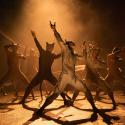
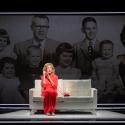
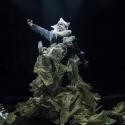
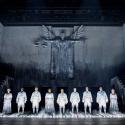
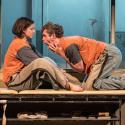
Directed by Katy Rudd, this is a show that positively and joyously shouts about its theatricality and its pleasures. From the pre-show moments, when the ensemble lead the audience in a series of ballet-style physical movements, through the exciting dance numbers, choreographed by Ellen Kane, this is an evening of visually memorable and emotionally striking episodes: I love the Bauhaus-style futuristic version of A Midsummer Night’s Dream, the memory of the Bolshevik revolution, the car ride across London and the Alice in Wonderland bit. And yes, the designs by Frankie Bradshaw and costumes by Samuel Wyer are absolutely gorgeous.
With their energy as well as ability to stay in the calm of the quiet moments, the huge cast is excellent: Anoushka Lucas is a pragmatic Sylvia and Lesley Nicol lends Nana a nice air of disapproval, yet both characters are supportive when they need to be. Obviously the main stars are the Fossil sisters: Nina Cassells (Pauline), Sienna Arif-Knights (Petrova) and Scarlett Monahan (Posy), each playing to their strengths and giving an instantly recognizable account of sibling rivalry. They are very well supported by Justin Salinger, who plays GUM as well as Madam Fidolia and the directors, and by Nadine Higgin (Theo), Pandora Colin (Jakes) and Raj Bajaj (Jai). All in all, this is a stupendously enjoyable evening for anyone, regardless of age, and much more than a Christmas treat.