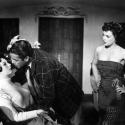
The first word of The Iliad is “war”; the first word of The Odyssey is “man”. After that, the twists and turns of Homer’s epic poems veer in wildly different directions. It’s fitting, then, that cinematic adaptations are multi-faceted, too. From the dawn of the medium, Homer’s works have proved to be irresistible to adapters, who have given us everything from a four-minute silent fever dream of sex and horror to a seven-hour Italian miniseries that leaves nothing out, except the Greek language. Here are some of the notable efforts:
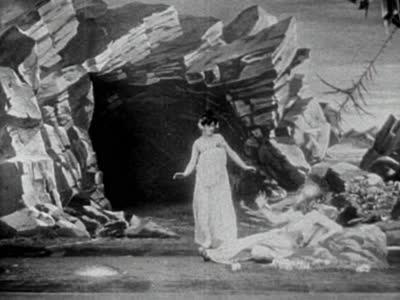
L’Ile de Calypso: Ulysse et le geant Polypheme (1905)
Cinema pioneer Georges Méliès distils The Odyssey into a music-video-length thriller, complete with alluring dancing girls and innovative practical effects. Calypso entices the shipwrecked hero, then vanishes before our eyes, and Polyphemus, the dreaded Cyclops, suffers an ocular wound that oozes like a baked potato. The biggest question, though: are Calypso, her dancing servants and the Cyclops all living together in one cave? Later silent adaptations feature massive casts and elaborate costumes, but in L’Odissea (1917), the most magical scene is the sight of the Sirens, complete with waving mermaid tails.
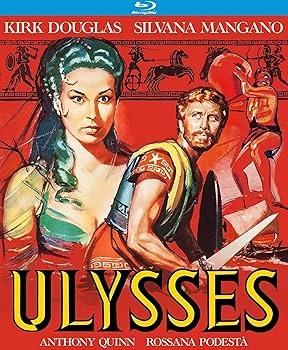
Ulysses (1954)
A box-office smash, this Italian-US co-production kicked off a wave of big-budget, international sword-and-sandal movies. In this version, Kirk Douglas is an angsty amnesiac Odysseus who impresses a hospitable princess (Rossana Podesto) by telling of his travels – and winning a wrestling match. The film has the wit to cast Silvana Mangano in the dual roles of both Penelope and Circe: no wonder Douglas’ hero looks surprised, even a bit frightened, when he meets his wife’s witchy double.
Helen of Troy (1956)
This US-Italian adaptation of The Iliad, directed by Robert Wise and produced by Carlo Ponti, puts a romantic spin on the elopement of Helen (Rossana Podesto again) and Paris (Jacques Semas). Look closely, and you’ll recognize Stanley Baker beneath Achilles' war helmet, and Brigitte Bardot as Helen’s handmaiden. The movie’s lavish, troubled international production is said to have inspired another tale of ruined love: Jean-Luc Godard’s Contempt.
The Trojan Horse (1961)
In this prime (Grade A steak) example of the Italian peplum film, the men’s war-skirts are scandalously short, and the biceps – mainly those of star Steve Reeves – are stunning. An action-oriented take on The Iliad, the movie focuses mainly on the exploits of Aeneas (Reeves), who almost singlehandedly repels the Greek assault. He seems squeamish, though, around Helen (Edy Vessel), who homes in on him like a cocktail waitress looking to close out a late-night bar tab.
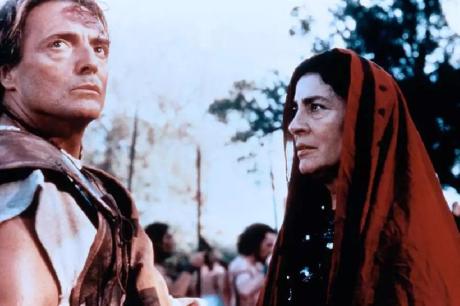
L’Odissea (1968) / The Odyssey (1997)
Because the epic poems contain so many myths, characters and events, they may be best suited for long-form television. A stately, eight-hour, Italian-mad adaptation is probably the most faithful to the text and features the venerable Irene Papas (pictured right, right) as Penelope. As pop entertainment, the US miniseries – even with its sadly dated visual effects – had a bigger viewership. Armand Assante embodies the hero who is trickster, warrior and loving husband to Penelope (Greta Scacchi). Interestingly, it’s one of the few adaptations to depict the gods and goddesses as active participants. As bright-eyed Athena, Isabella Rossellini wears pale contact lenses and seems to be lit with pure moonlight.
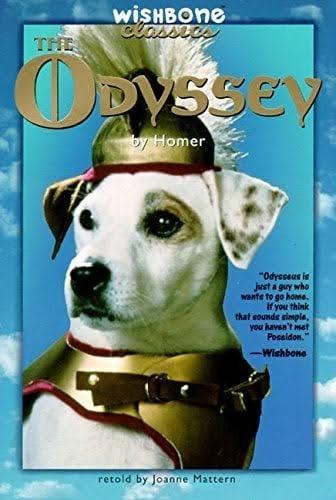
Homer Sweet Homer (1995)
The “Wishbone” series, a standout PBS production that introduced children to classic literature, cast an expressive Jack Russell terrier named Soccer as a modern-day pet who imagines himself as the hero of every tale. The kid-friendly version turns Odysseus’ vengeance upon the suitors into a harmless cafeteria food fight, and his feud with Poseidon into a dogpaddle to safety. Odysseus may not rank among Soccer’s greatest performances, but you should see his Edmond Dantès.
O Brother Where Art Thou? (2000)
Though filmmakers Joel and Ethan Coen claim that they never read The Odyssey, their comic adaptation is a truly inspired reading of Homer’s epic. George Clooney, as a fast-talking escaped convict in Jim Crow-era Mississippi, evades a Cyclops (John Goodman in an eye-patch) and three riverbank Sirens who, like many of the characters, sing enchanting bluegrass tunes. “They’re just looking for answers,” says the wily hero. As with most Coen brothers movies, it’s best not to.
Helen of Troy (2003)
This time, The Iliad’s heroine is neither a seductress nor passive beauty: Sienna Guillory portrays her as a questing young woman who survives war and disaster, only to take the blame for causing them. The character makes her entrance on horseback, galloping through her kingdom – an image of freedom, rebellion, and power that’s at odds with earlier treatments.
Troy (2004)
Technically impressive but dramatically inert, this post-Gladiator sword-and-sandal movie finally puts Achilles (Brad Pitt), the blunt, belligerent warrior, at centre stage. Directed by Wolfgang Peterson and starring an in impressively buff Brad Pitt, Troy is at its best during its furiously compelling hand-to-hand fight sequences. Even the casting coups of casting coups of Julie Christie as Thetis, and a pre-fame Rose Byrne as Briseis cannot distract from Troy’s focus: the brutality of war.
The Return (2024)
What is The Odyssey without battles, gods, goddesses, magic or monsters? This stripped-down drama somehow conveys more passion than a dozen sword-and-sandal extravaganzas. Odysseus (Ralph Fiennes) emerges as a traumatized veteran, forced to return home in disguise, and perhaps in shame, while Penelope (Juliette Binoche) crafts a scheme to deter those who would steal his throne and murder his son. Fiennes and Binoche (main picture) have worked together so many times that they probably know each other better than Homer’s Odysseus and Penelope, who parted soon after the birth of their son. In this version, young Telemachus is even more petulant and disrespectful than usual. The film includes one of the tale’s most moving moments, when Odysseus’ old hunting dog, Argos, is the only one to recognize his master.