Rose (Ann Skelly; The Nevers) is adopted. The name on her birth certificate is Julie and the possibility of a different identity – different clothes, different hair, different accent - beckons. If she could embrace this second life, she thinks, she could be the person she was meant to be. “I’d be the real me.”
In their third feature, directors Christine Molloy and Joe Lawlor, both originally from Dublin, continue the themes of identity, role-playing and moments of transformation that they explored in the unsettling, meditative Helen (2008) and Mister John (2013). Rose Plays Julie is also an examination of sexual violence and its rippling aftermath. Slow-moving, sombre, alienated and beautiful, its pace is underpinned by Stephen McKeon’s ominous score.
There’s a frozen, almost trance-like quality to Rose’s affect as she sets out to find her biological parents, though she’s also determined and confident. She's a veterinary science student in Dublin and we see her attending a lecture with the sinister title of “Euthanasia and the Healthy Animal". Pets are often put down for bad behaviour, the students are informed. Rest assured, Rose will have reason to remember this later. “In my first year I did two border collies, a poodle, four cats, two rabbits and a ferret. You’ll get used to it,” a friend tells a tearful Rose after she assists in euthanising a black lab.
Her biological mother, Ellen (a wonderful Orla Brady; A Girl from Mogadishu; Collateral) wants no contact with this daughter. An actress, she lives in a sumptuous pink mansion in some nameless leafy London suburb (though in fact it's all shot in Ireland, with an entirely Irish cast and crew) with her 16-year-old daughter Eva (Sadie Soverall). But even the house is playing a role. It’s not rooted in a stately past as it appears to be; instead, it was originally a show house in a new development.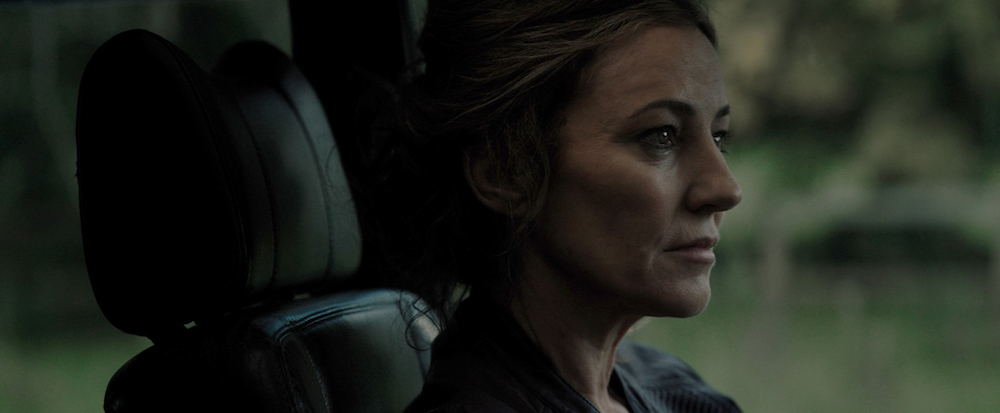 At first, an angry Ellen (pictured above) refuses to take Rose’s phone calls. She’s on set in a period drama and lapses into a paralysed, fugue-like state when she realises who’s calling, an unfocused, far-off look in her eyes. But Rose persists, following her and managing to get into her house, which is for sale (a temporary quality there too) on the pretext of arranging a viewing. This verges on farce. The estate agent is dubious, not surprisingly, about whether one so young and so disconnected could be a serious buyer, but she doesn't challenge her forcefully, which heightens the feeling of unreality. Rose asks unconvincingly about square footage, opens drawers shamelessly and picks up a stuffed animal in Eva’s bedroom. Is this the life she should have had?
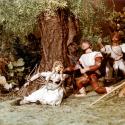
Ellen reveals that Rose was the result of a rape and that no one knows about her existence. After Rose's initial horror there's a rapprochement between the women, who talk in the car before walking in a fairy-tale-like forest (in several scenes, each woman cries alone in her car, as if the small, moveable space can contain emotion better than the outside world).
Ellen can hardly bear to describe what happened – she was on an archaeological dig one summer when she was in her thirties. She didn’t have an abortion because she decided that thinking about Julie, out there somewhere, leading her life, might salvage something good (which slightly contradicts her reaction to Rose getting in touch). Even now she can’t bear to say the name of the rapist. “Can you write it?” asks Rose, handing over her phone.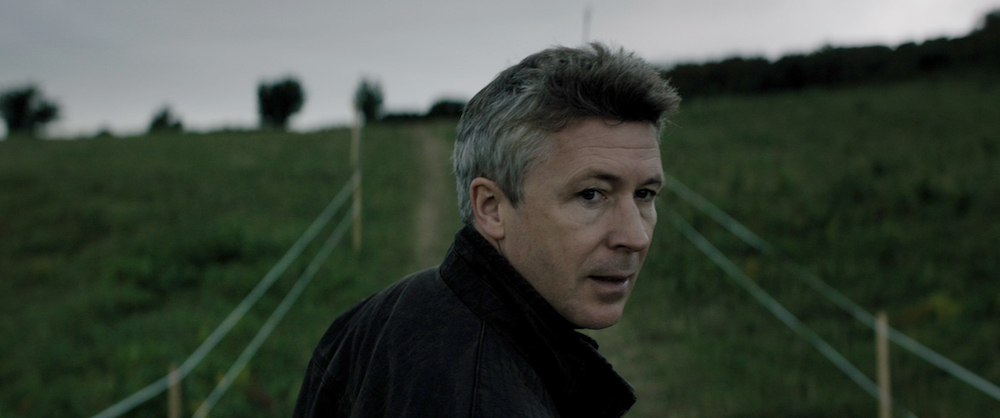 And then, after mourning the loss of the fantasy parents Rose had imagined, a complex variation of the "real me" emerges. Rose starts to play Julie, wearing a short wig (which takes on a life of its own), blagging her way into the launch of a book by archaeologist Peter Doyle (an inscrutable Aiden Gillen, pictured above; Game of Thrones, Peaky Blinders, Mister John), and, echoing her mother, volunteering for work on one of his digs under the pretext of doing background research for a part in a play. Disturbing college scenes are interspersed: a ghastly dissection of a cow – blood and guts is putting it mildly - and Rose bashing with a fire extinguisher a man who she thinks, wrongly, is about to rape a student. Is she losing her grip on reality?
Ellen visits Rose in Dublin, the first time she’s been back since the attack 20 years ago. Now she, in turn, wants to insert herself into her daughter’s life. “Doesn’t it bother you that he’s out there, acting as if nothing had happened?” asks Rose. “I’m really struggling with how that makes me feel.” But the struggling results in bold action: Rose/Julie turns up at Doyle’s house, or rather, his wife’s, who's growing tired of his obfuscations, and history almost repeats itself. “When you tell someone to stop, you stop,” Julie yells, leaving him with a bleeding head wound. “And one more thing, you are my father.”
Doyle hasn’t changed – narcissism seems to be his main characteristic - although, as far as we know, he doesn't seem to have preyed on his young team. He's given added depth when a deer falls into one of the pits and, in a surreal scene with mythical undertones, he has to kill it, sobbing uncontrollably. At the end, in an extraordinary act of revenge, it’s Ellen who takes on her daughter’s burden, binding them together in violence for a second time.