

The Icelandic director Hlynur Pálmason follows up Godland with an equally striking film, this one about a moribund marriage. It’s a living album of impressions and memories, small incidents and fragmented snapshots, with no conventional narrative shape. Yet there’s a coherence and weight lent to all these disparate elements by the teasing affection of the director’s lens.
The family preparing for the break-up are parents Anna (Saga Gartharsdóttir), an artist, and Magnus, known as Maggi (Sverrir Guthnason), a trawlerman, with their young family: two boys (Thorgils and Grímur Hlynsson, Pálmason’s sons, pictured below right) and an older girl (Ída Mekkin Hlynsdóttir, his daughter and a regular trouper in his work, rooster care a speciality). And not forgetting Panda, their into-everything Icelandic sheepdog and grandfather Pálmi (an all too brief appearance from Ingvar Eggert Sigurthsson).
The couple have been together since they were 17. No specific reason is stated for their split, but it’s obvious Anna is dissatisfied with her domestic life and impatient to be recognised as a serious artist, a disgruntlement she seems to focus on the often absent Maggi. He clearly obeys her every command, even when it comes to despatching Tribbo, the rooster, which Anna finds overly aggressive.
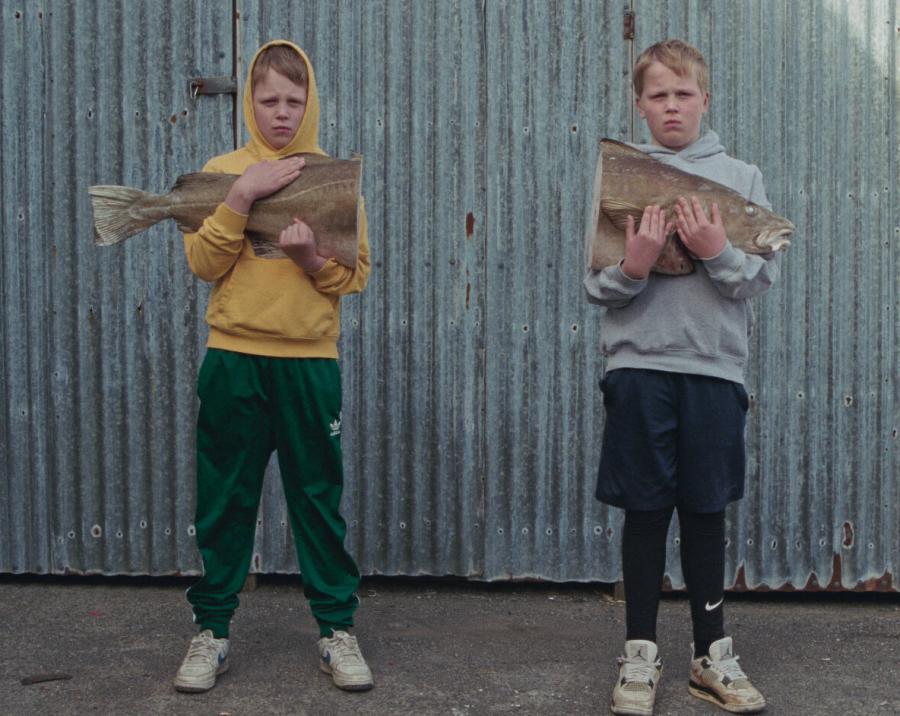
Their eminently sensible daughter disagrees with this judgment, seemingly understanding roosters – and perhaps human relationships? – better than her parents do. In fact, the children are quietly self-possessed, good at entertaining themselves outdoors, but sweetly loving with their parents and, mostly, with each other. They especially enjoy discussing what little they understand about sex, and playing war games, using a “knight” that Pálmason’s montages gradually assemble outdoors: a dummy hanging from a pole that, item by item, gains clothing, armour and a helmet, a toy version of Iceland’s warrior past.
In the present, Maggi’s trawler sets off for the herring shoals, while Anna works outdoors creating large-scale artworks from sheets and metal shapes that leave behind rusty patterns. She tries to interest a Swedish gallerist in her work, but he is too self-important even to understand what her practice is, thinking she is a painter. Another man flirts with her over the phone. Maggi still wants to have sex with her, but she is uninterested. At one point outdoors, she strides across him and stops, at which point Pálmason dutifully provides Maggi’s eye-view of her crotch in scanty panties, her long bare legs a dark-honey colour surrounded by her long skirt, an image that features in montages of his memories, too, unsurprisingly.
Nature for the children is clearly an adventure playground or source of pets – one deadpan-funny sequence has the daughter stroking a baby chick while mum roasts a grown-up one for dinner (main picture above). In the background, whales with 12ft penises lustily mate in a David Attenborough TV show, orcas trail the trawler, a serial killer reportedly prowls, wild ponies roam and break into Anna’s art-field, monsters stalk Maggi’s dreams. For the men, jockeying for status seems to be the prevailing mode, especially on the trawler, where fistfights break out over bawdy chatter and the men’s views are often on the conservative side. Family is championed by all.
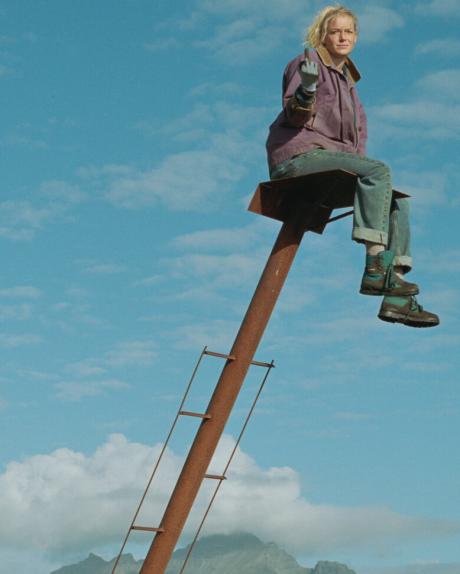
Visually, the film is a feast. The cast's faces are fascinating, Anna’s in particular, her freckled complexion and light-auburn hair picking up the same colours as a lavish sunset over sea and mountains that Pálmason’s camera watches at length. The children have the robust healthiness of people living out an apparently edenic existence against a backdrop of extraordinary scenery, which predictably emerges as raw and overwhelming, all towering cliffs and murky rock-pools. Only the gentle noodling of a jazz piano provides marked shifts in tone.
This summary of mine reorganises all the kaleidoscopic shards Pálmason provides into some kind of coherent whole. His approach obliges the viewer to attempt this, having immersed us in a time and place without any of the usual information; we are just left to edit this welter of material for ourselves. The characters, too, have to be assembled and assessed fragment by fragment: there is no overt editorialising about their personalities. Is Anna too unfair towards Maggi? Does he deserve to be a hapless outsider in the family? What exactly has he done, or not done?
The result is a visual correlative of the confusing upheaval the break-up is causing for all involved, a sort of group memory. It’s deliberately multifaceted; no blame is attributable with iron-clad certainty. These people have gentle feelings for each other, in varying degrees, but also stern, wild ones that verge on violence. All of it is true,
Pálmason leaves us with a, for this film, lengthy – and satisfying – image, of Maggi singing as he floats in an inflated diving suit in the sea, where a ship was supposed to pick him up for an urgent trip to shore. In his song he curses his slowness and stupidity in losing Anna and his family. It’s a fitting finale, a man who’s literally missed the boat and is drifting while awaiting some kind of deliverance.






Add comment