Fences is one of the best-known works by playwright August Wilson, part of his Century Cycle of plays exploring 100 years of black American history, and it won him a Pulitzer Prize and a Tony Award in 1987. Wilson died in 2005, but further gongs greeted the play’s 2010 Broadway revival, including Tonys for its stars Denzel Washington and Viola Davis. Alongside the bulk of the 2010 cast, they reprise their roles of Troy and Rose Maxson in this film version, and both are Oscar-nominated. Washington also directed.
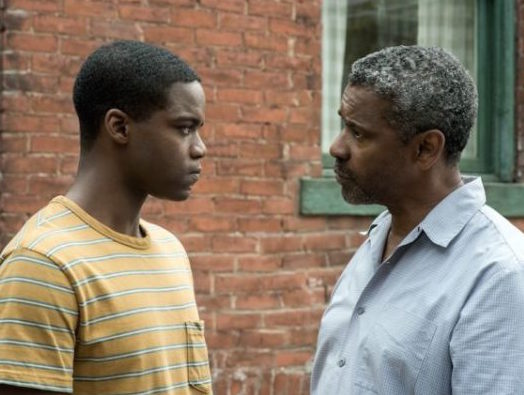
The story is set in 1950s Pittsburgh, where an ageing Troy is eking out a living as a garbageman and trying to maintain an outward facade of proud patriarchal manliness. As the story progresses we come to understand that Troy’s chest-out bravado masks all kinds of bitter disappointments. He coulda been a contender as a pro baseball player, but he claims his potential was sawn off by racism (it takes Rose to point out that he was too old, since he spent 15 years in prison after shooting someone during a robbery). He angrily lectures his sons Lyons (Russell Hornsby) and Cory (Jovan Adepo, pictured below with Washington) about self-discipline and standing on your own two feet, but we learn that Troy was only able to buy his home by using a government pay-out to his brother Gabe (Mykelti Williamson) who was seriously wounded in the Pacific war.
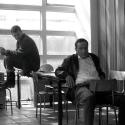
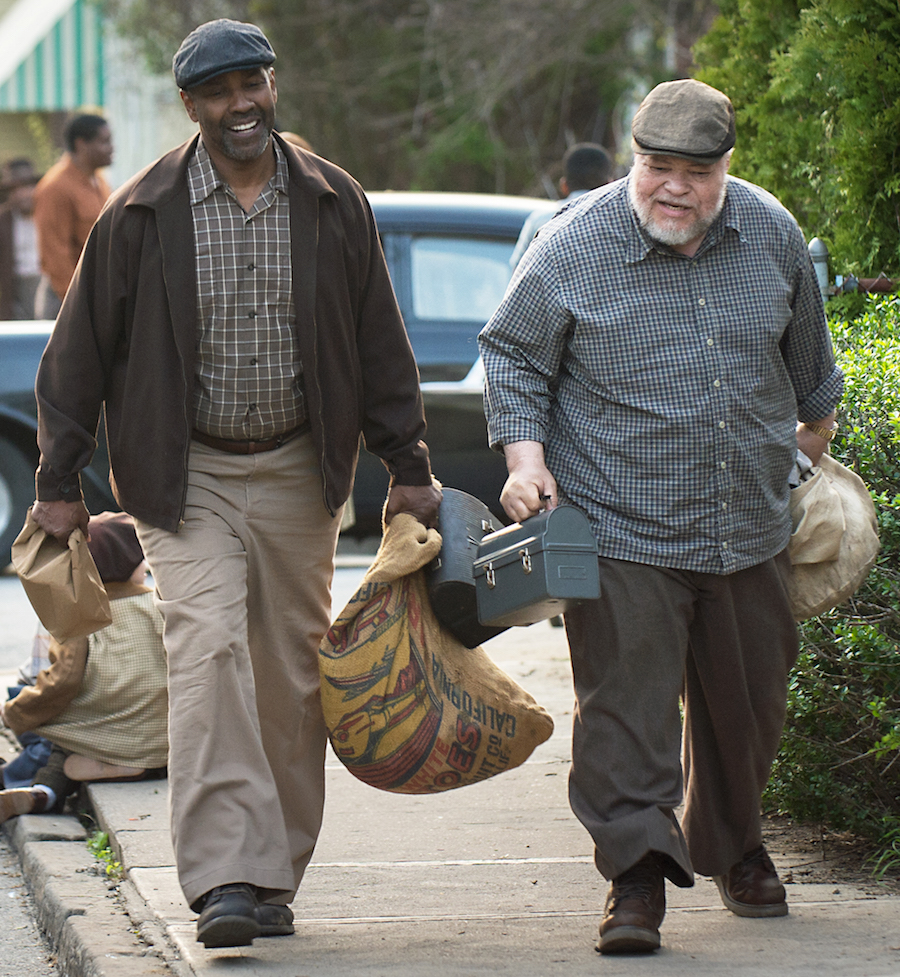
 A very long early scene in Troy’s back yard, where he and his old friend Bono (Stephen Henderson, bottom picture) shoot the breeze over a bottle of gin after a hard day’s graft, sets the tone, and it’s a slightly wearisome one. Washington has great big-screen presence and I daresay he’s a fine stage actor too, but the self-consciously rhetorical pitch of Wilson’s dialogue is patently not designed for film. It’s the kind of writing which certain critics would try to tell you sounds like jazz music, but I’ll take Coltrane instead if you don’t mind. The scene is aiming to set Troy up as a master raconteur with a virtuoso grasp of the vernacular, but it’s more like being pushed against a wall – the fourth wall, possibly – and browbeaten into submission.
I won’t try to kid you that I’m a theatre critic, but you don’t have to be Kenneth Tynan to work out that language has an entirely different function, or range of functions, on the theatrical stage than it does in the movies. It does what lighting, location, cinematography and music do on screen, so placing Wilson’s unexpurgated text – this is a long haul at two hours 20 minutes – into a naturalistic filmic setting is like a conversation at cross purposes. Unfortunately the filmic setting is almost exclusively Troy’s ramshackle house, so where the theatre stage would be a gateway to a limitless imaginative universe, here we feel confined to one very specific small building in Pittsburgh. Troy’s fitful construction of the eponymous garden fence never fulfills the metaphorical weight Wilson intended to give it.
 As director, Washington might have done better simply to film the stage play, because he has a terrific cast at his disposal. Adepo and Hornsby vividly convey their very different struggles with their difficult, domineering father, and Henderson’s Bono is a touching portrait of a faithful friend who’ll forgive Troy all his faults, but can’t bear to see him cheating on loyal, rock-solid Rose. As for Davis, her soulful and heartfelt performance looks well worth the Supporting Actress nod. Even if this is hardly the year’s most filmic of films.
- Read more film reviews on theartsdesk
- Watch the trailer for Fences