When Jim Jarmusch won the Golden Lion at last year’s Venice film festival, it came as something of a surprise. The best film award had been widely expected to go to the emotionally demanding The Voice of Hind Rajab, not to the mannered ensemble piece that is Father Mother Sister Brother. Perhaps the jury, led by Alexander Payne, a fellow American auteur, felt that it was time to honour another veteran indie film-maker, or that it was just too politically fraught to award a docudrama set in Gaza.
Either way, the Venice prize cued a cascade of positive reviews from critics, which judging by the less enthusiastic online responses from audiences, might not always be matched. Father Mother Sister Brother follows three separate family reunions, it’s an anthology film like Jarmusch’s Mystery Train, Night on Earth and Coffee and Cigarettes. Fans will doubtless be pleased to see regular performers Tom Waits, Adam Driver and Cate Blanchett and will settle into the driving sequences and etiolated dialogue scenes. It’s all played at a pace that underscores how far we are from the snappy writers’ room generated banter of mainstream family dramedies.
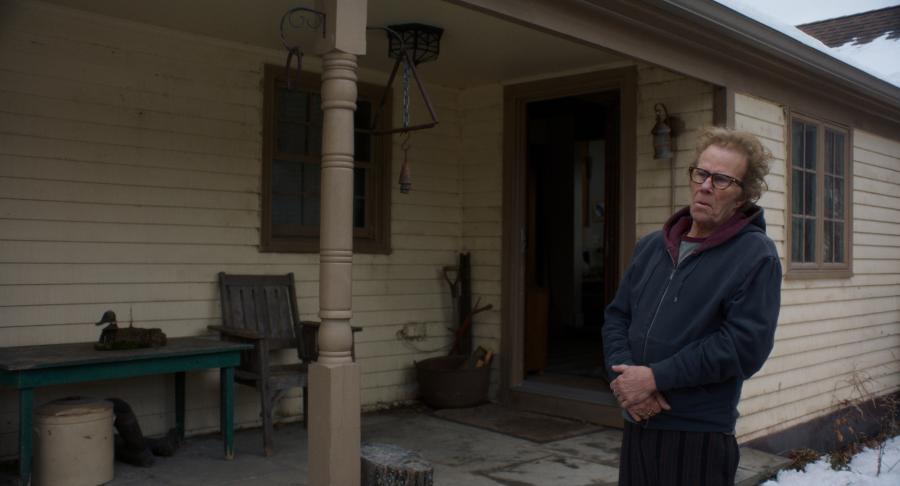
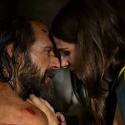
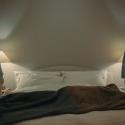
First to hit the road is Jeff (Driver) and his sister Emily (Mayim Bialik), who are driving through wintry New Jersey countryside to visit their errant father, played by Tom Waits (pictured above). Expository dialogue on the journey makes it clear that Jeff is a sucker for his father’s tales of collapsed walls, broken water-pumps and unpaid phone bills – and that Emily doesn’t believe in indulging him with care packages of food or financial handouts. She has a point. Waits, instead of tidying, makes his home shabbier, piling laundry on chairs, smothering a smart leather sofa in an old blanket. A wrecked station wagon moulders on the driveway while a vintage BMW stays hidden under wraps. As soon as they are gone, he drives off to a fancy restaurant, his son's cash in hand
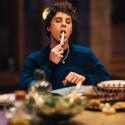
Moving on to the middle chapter, the role of family deceiver is reversed. Pink-haired Lilith (Vicky Krieps) comes to visit her mother (Charlotte Rampling) with tales of her success as an influencer and the rich, handsome man desperate to marry her. But when tea is over, she needs to use her mother’s Uber account to get a ride back to her girlfriend. Rampling plays a successful writer of romance novels that her children haven't read. She lives in a chintzy Dublin villa and although her daughters have moved to the same city, this is their annual visit. Mother has laid the tea table with her best china and what looks alarmingly like Mr Kipling’s fancies. Her first born, Timothea (Cate Blanchett) plays an uptight arts administrator, eager to please with extravagant flowers. But the bouquet is too big for Rampling to peer across the table at her disappointing daughters and is pointedly put to one side. No-one leaves the tea-party any the wiser about each others' lives.
The final story in the triptych is set in Paris. With their parents dead in a plane accident, twins Skye (Indya Moore) and Billy (Luka Sabbat) visit their emptied-out apartment and pick through a storage unit piled with their possessions. They find multiple driving licences and fake IDs and agree that they never really knew their mysterious parents. The absence in this segment of another actor playing a difficult parent means the two performers only have each other to play off and there’s little dramatic tension between Sabbat and Moore (best known as the trans sex-worker in Pose). It's hard to care about this pair and this segment lacks the flashes of humour that occasionally lit up the first two parts.
While the characters in each chapter never meet, Jarmusch links their stories together in a way that’s reminiscent of Kieslowski’s portmanteau films. There are rhyming tropes that reappear in each episode, both verbal and visual. It’s almost tempting to mock-up a quick bingo card with items for the audience to spot and tick off as the film ticks by. Slomo skateboarders sail through the streets of New Jersey, Dublin and Paris. Variations on the phrase "Bob’s Your Uncle" are puzzled over. A Rolex watch appears that may or may not be fake. There are fretful discussions over water quality and the etiquette of toasting memories without alcohol. The same top shot of a laden table breaks the frame. All this arcane artistry may make a prize-winning film in the eyes of Jarmusch afficionados but others might find Father Mother Sister Brother something of an indie endurance test.