Dovzhenko’s 1930 film Earth is widely considered his classic, completing the loose silent “Ukrainian trilogy” that began with Zvenigora in 1928 and continued with Arsenal in the same year – respectively termed by the director in their opening titles a “cinema poem” and a “historical-revolutionary epopee”. Arsenal seems the one to start with, catching as it does the uncertainty of Ukraine, poised between a rebirth of national consciousness and the far-from-certain advancing power of Soviet rule. Dovzhenko looks almost pacifist in his depiction of some of the horrors of war, as well as its devastating results back home. From the trenches, soldier Timosh returns to his native Kiev. Nascent nationalism seems in full bloom, backed by the church (and it’s visually glorious), but he’s an ardent Soviet worker at the armament factory that gives the film its title.
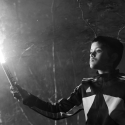
Dovzhenko’s “poetic” style is often contrasted with Eisenstein’s montage technique (most notable in Battleship Potemkin), but there’s actually plenty of fast-cut stuff in Arsenal that looks closer to Eisenstein than might be expected, including the iconic imagery (see main picture) and angled shots that resemble the photographic style of contemporary Alexander Rodchenko. (Eisenstein described his feeling on leaving an early screening of Dovchenko’s film thus: “As the lights went on, we felt that we had just witnessed a memorable event in the development of cinema.”)
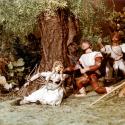
Lead actor Semyon Svashenko as Timosh returns in Zvenigora (lit “the ringing hills”), opposite veteran Nikolai Nademsky (the village patriach of the opening scenes of Earth). This is weirder territory, celebrating a quasi-mythical treasure that seems to symbolise Ukraine’s national consciousness and guarded over the centuries by Nademsky’s character – implicitly against the industrial progress that brings trains and mining. The nation’s new treasure, the film’s conclusion seems to argue, is new industrial power, but its poetic style, as technically innovative as anything of its time in the world, seems to be telling a different story. Some scenes are as wild and wacky as could be – much more so than any Soviet director would have been able to get away with a few years later. Revel in them.
Not least in the sheer aesthetic visuals of Zvenigora’s historical fantasies, which look glorious in remastered versions from restored prints that Mosfilm made in the early 1970s. Mr Bongo Films don't go in for sleeve notes, so look to American academic Ray Uzwyshyn’s magisterial studies of the historical and visual context of Arsenal and Zvenigora. The furious, string-dominated scores are by Vyacheslav Ovchinnikov, better known for his collaborations with Sergei Bondarchuk (War and Peace) and Andrei Tarkovsky.