The opening night of the autumn season brings a gala first night, Carlos Acosta’s staging of Petipa’s Hispano-Russo-Austro-Hungarische castanet-fest, Don Quixote, with starry leads (Marianela Nuñez and Acosta himself), a very obviously expensive new production courtesy of West End musical designer Tim Hatley (Shrek and Spamalot), and an amped-up re-orchestrated score from conductor Martin Yates.
Acosta (pictured below by Johan Persson) has previously mounted shows of his own – Tocororo, A Cuban Tale was the most prominent – but Don Q is his first outing in the classical repertoire, and for the most part he’s managed well.
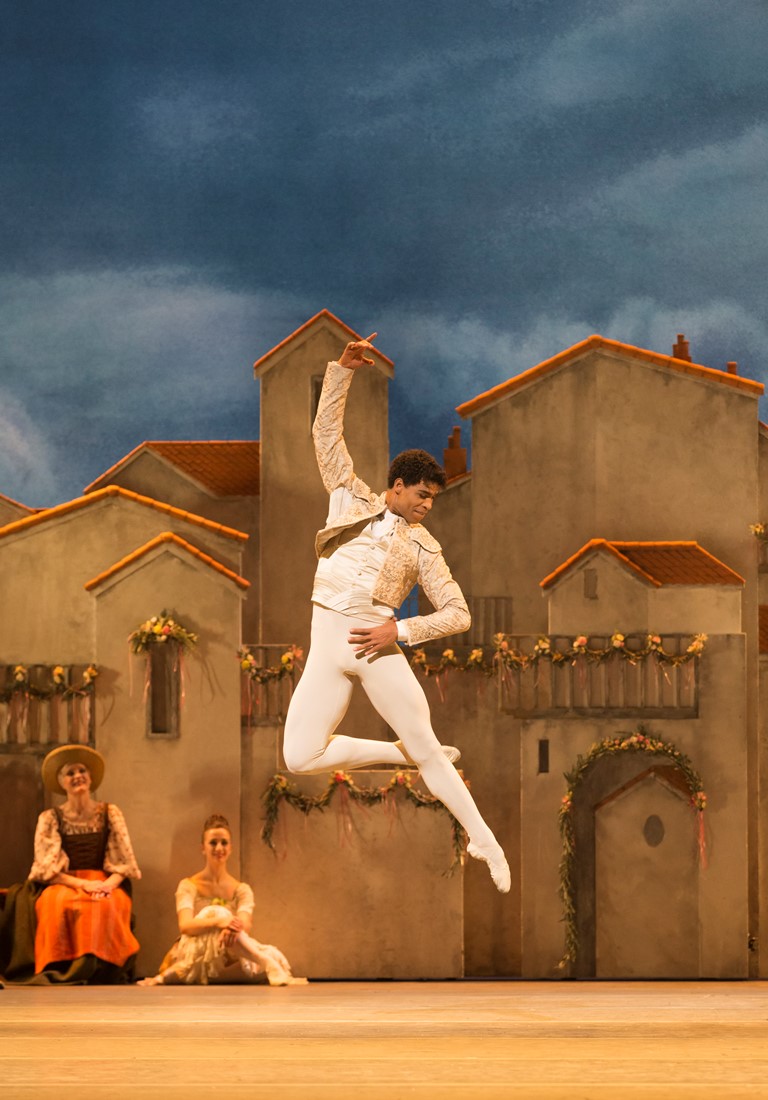 The second act, the gypsy encampment, is a real pleasure, with a genuinely touching pas de deux for Nuñez and Acosta – a welcome break from the pouting and stamping of the mostly mimed first act. (I wondered, during the prologue, if the young corps dancer had ever thought that, if she worked hard, one day she would be standing on the Royal Opera House stage, miming, “He stole my chicken.” But I digress.)
There are lovely incidental pleasures to the evening: good choreography and charming performances for Kitri’s friends (Yuhui Choe and Beatriz Stix-Brunell); and the same from the six toreador demi-soloists (sadly uncredited); a gypsy chieftain (Thomas Whitehead) who had apparently been watching Bob Fosse movies, such were his jazzy snake-hips.
Nuñez’s final variation in Act I was a thing of joy as she unleashed her inner ferocity and let rip. Acosta’s partnering, his care of Nuñez, was also a pleasure to watch, even allowing for a few bobbles at the end. In truth, the company altogether looked short of rehearsal, with the corps dancing more in relay than in sync in some stretches.
Acosta has worked hard to paper over the longueurs of the original 19th-century production: instead of the demi-caractère dances for the gypsies, we have an (almost) authentic guitar-and-dance session while the Don wanders about doing his windmill stuff; the vision scene has been cut down to only a small corps, but the structure and shape is nicely retained.
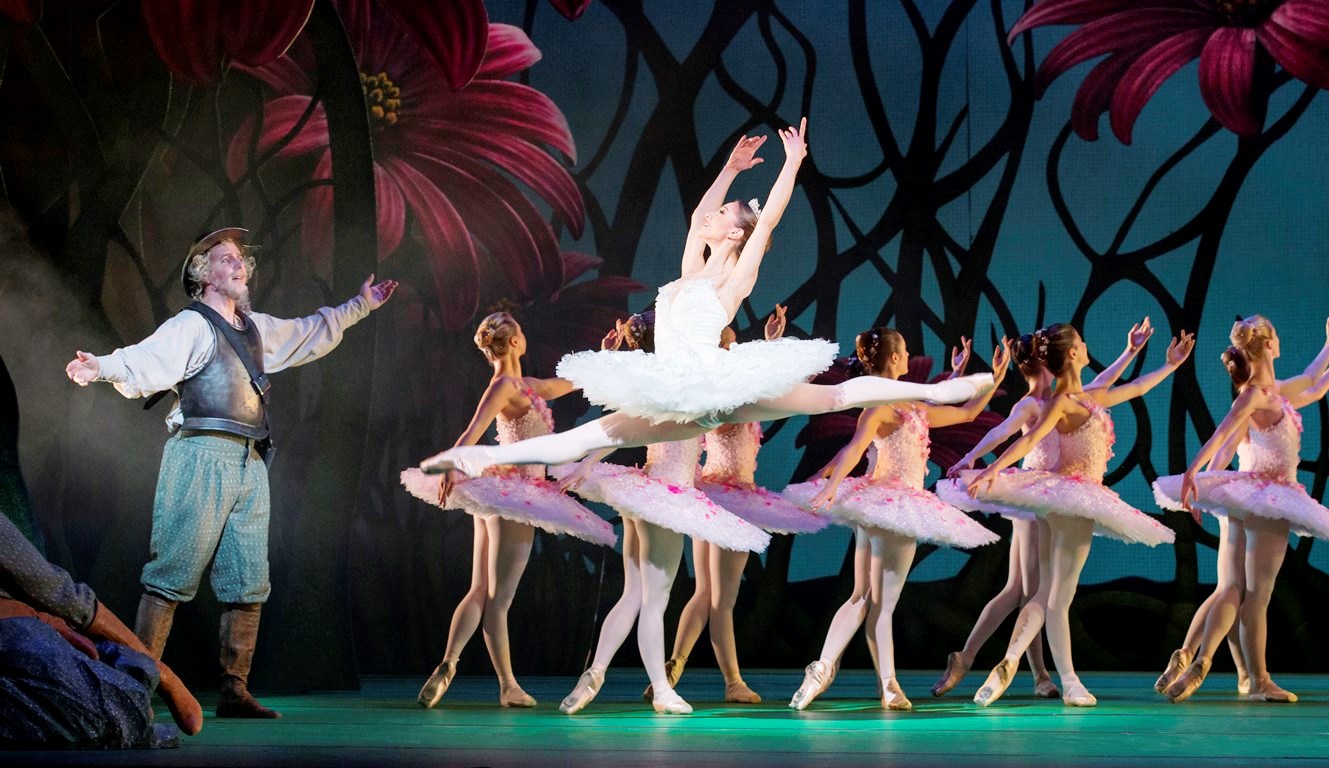 The design is the patchiest part of the evening. Some of it is very nice indeed: the Don’s fabulously derelict puppet horse (credit to Antony Barnett and the props department at ROH for this and the rest of a very prop-ey evening), the gypsy encampment, the vision scene, with its huge, overgrown hot-pink flowers (above, with Nuñez, photo Johan Persson). But this is Hatley’s first ballet, and in places his inexperience unnecessarily clutters the action. The scenery for the market square, in particular, bustles about almost as much as the dancers in front of it – in theatre, the changing shape of a set can bring some movement to a scene; in dance, the movement is by definition written into the piece, and more is generally a distraction.
Given how Petipa mashed together his cultural references, it is probably churlish to complain about more, but many of the corps’ costumes would have been equally believable in a production of Giselle, while apparitions dressed as the Confraternity of the Penitents seem to have little to do with religious orders, and are merely shorthand for “Spain”, the way on the news a caption appears under a talking head: “Victim’s Mother”.
But if some of the un-funny business can be replaced with more dancing, if the rough edges are tidied, this looks like a production that might be very useful for many years to come.
Overleaf: Watch Carlos Acosta in rehearsal for Don Quixote