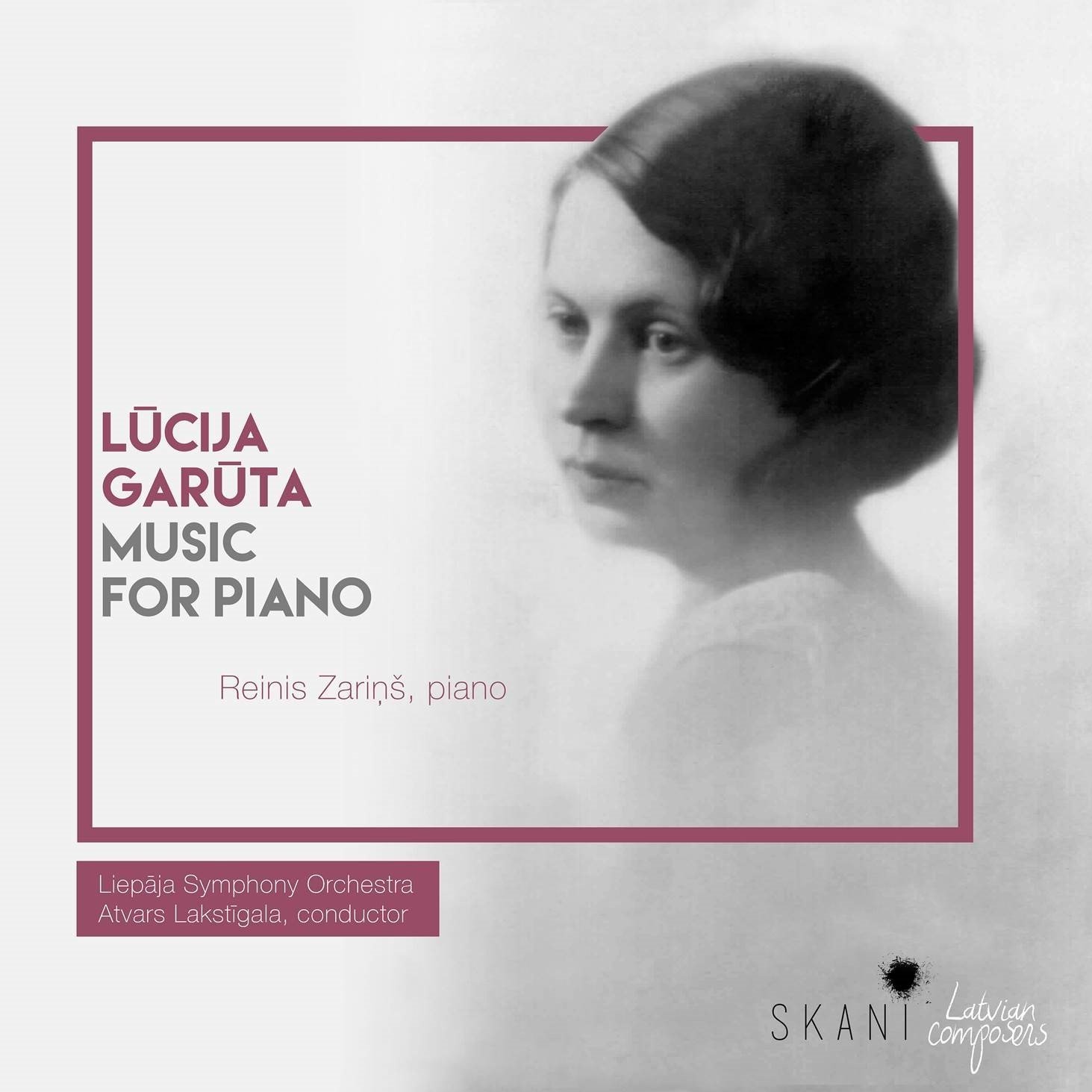
 Lūcija Garūta: Music for Piano Reinis Zariņš (piano), Liepāja Symphony Orchestra/Atvars Lakstīgala (LMIC/SKANI)
The Latvian composer Lūcija Garūta (1902-1977) reached maturity in the early days of Latvian independence, a supremely talented pianist, composer and polymath. Garūta was among the first Latvian women to drive a car, besides sailing a private yacht and pursuing an interest in science. She travelled to Paris and studied, briefly, with Alfred Cortot and Paul Dukas, identifying with Latvia’s musical “new romanticism”, a movement which sought to look forward rather than idealise the past. So far, so good… until Soviet occupation in the early years of World War II prompted most of the country’s intelligentsia to flee. Garūta stayed, slyly demonstrating her feelings in 1944 by writing an unashamedly religious cantata which the Soviet authorities suppressed. But, against the odds, she was offered a senior position at the Latvian Conservatory, where she taught until her retirement.
What we hear on this CD is fascinating. Four piano preludes composed in the late 1920s sound like exploratory improvisations, and there’s a languid, very Gallic Meditation. An extended set of variations on a Latvian folk song The Soldiers Are Sorrowful takes off on a range of unexpected directions, and the tiny The Little Doll’s Lulling Song from 1943 is heartrending, dispatched with emotion by pianist Reinis Zariņš. Most surprising is a flamboyant, large-scale piano concerto from 1951, disconcertingly melancholy despite its romantic trappings and use of folk song. Zariņš writes movingly of the concerto’s effect on him as a listener (“in it I sometimes hear the pain of our entire nation”), and he’s superbly accompanied by Atvars Lakstīgala’s Liepaja players. A historically important release, as well as a musically satisfying one.
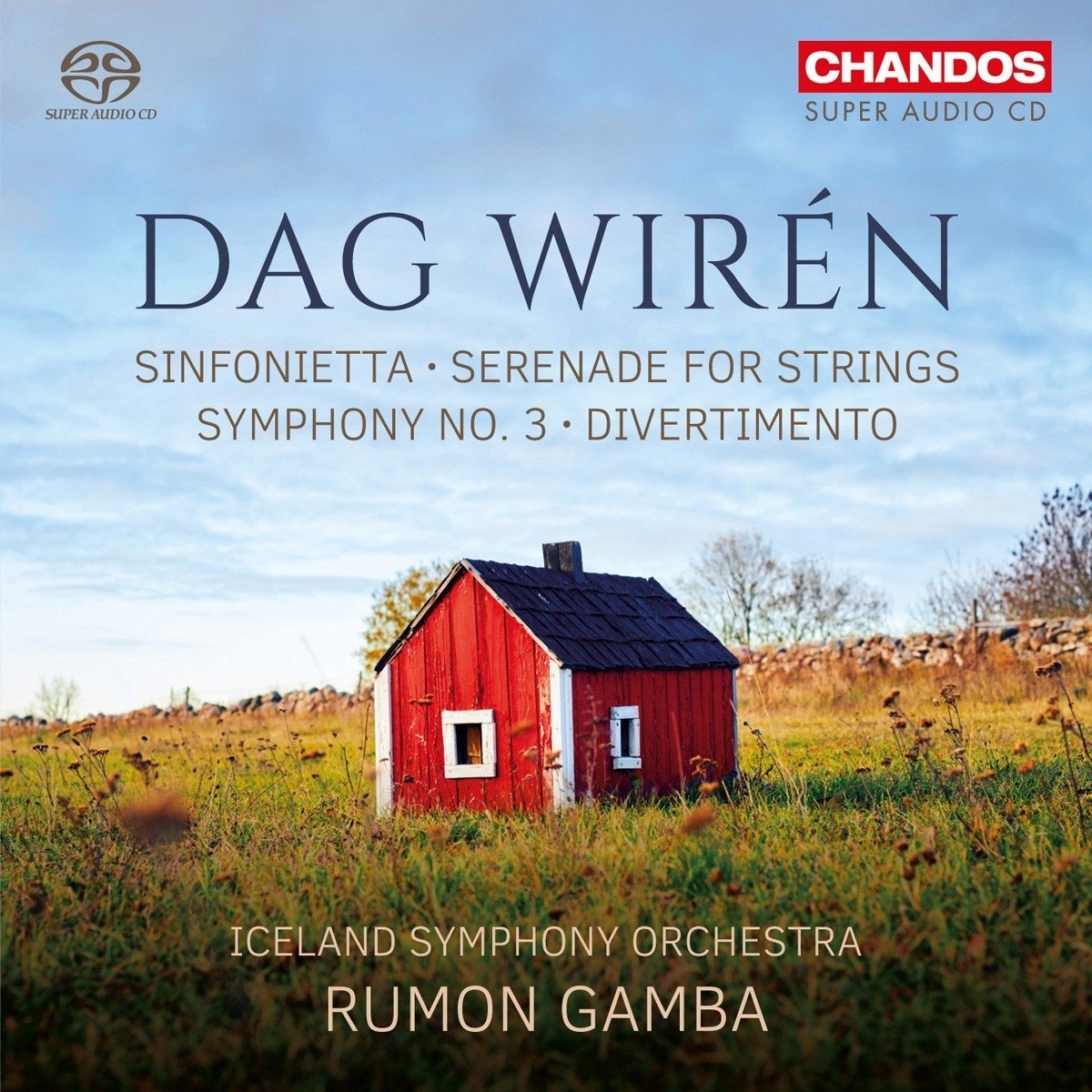 Dag Wirén: Orchestral Music Iceland Symphony Orchestra/Rumon Gamba (Chandos)
Stig Jacobsson’s enjoyable booklet essay brackets the Swedish composer Dag Wirén (1905-1986) alongside contemporaries such as Lars-Erik Larsson and Erland von Koch. Which, presumably, won’t mean much to non-Swedes. Still, the fact that you’ve never heard of a composer doesn’t mean they’re not any good (see the review above this one), and spending 70 minutes listening to Dag Wirén’s music is an experience to be recommended to anyone. Back in the analogue era, the closing march from his 1937 Serenade for Strings was used as the theme tune to the BBC’s arts programme Monitor. Play it to anyone above a certain age and watch their eyes light up. It’s seriously enjoyable music – unpretentious, immaculately scored and not a note too long. Just what you’d expect from a composer whose creative credo was, “I believe in Bach, Mozart, Nielsen and absolute music.”
Wirén’s ready accessibility went hand in hand with a striking technical confidence, as witnessed in his Symphony No. 3 from 1944. What a superb beginning this piece has, its wind writing lifted from late Sibelius, though the brassy, percussive writing is highly individual. Wirén organises his material brilliantly, the three short movements components in a large scale sonata form structure. Where has this music been hiding? Rumon Gamba secures enthusiastic, colourful playing from the Iceland Symphony Orchestra, with Chandos’s glowing sound reflecting the superb acoustics of the ensemble’s Reykjavik concert hall. Wirén’s 1953 Divertimento has a weight and seriousness which belies its title, whereas a youthful Sinfonietta is frothy fun from start to finish. All good, and there’s a cool photo on the sleeve.
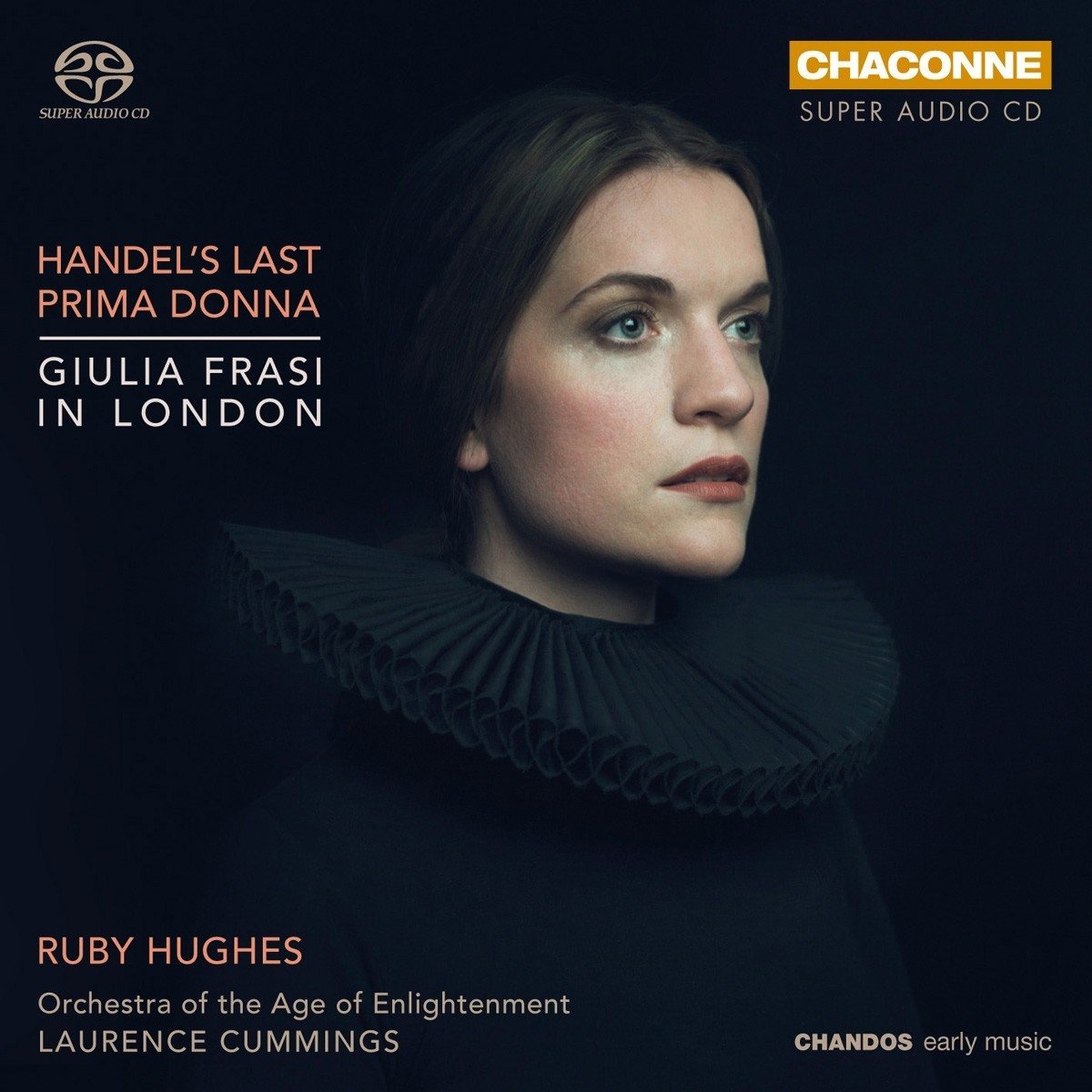 Handel’s Last Prima Donna - Giulia Frasi in London Ruby Hughes (soprano), Orchestra of the Age of Enlightenment/Laurence Cummings (Chandos Chaconne)
This disc sprang from soprano Ruby Hughes’s discovery that many of her favourite Handel oratorio roles had been composed for the Milanese singer Giulia Frasi. Frasi arrived in London in 1742, attracting Handel’s attention four years later by her determination to sing well in English. There’s a pleasing contemporary quote from Charles Burney in David Vickers’ booklet essay: “Having come to this country at an early period of her life, she pronounced our language in singing in a more articulate and intelligible manner than the natives.” Were Frasi in London now, she’d presumably be weighing up her post-Brexit options and planning her return home, but she sustained a career lasting for 34 years. Handel gave her solo roles in his subsequent oratorios. Extracts are given here, along with snippets showcasing Frasi’s other repertoire.
Hughes’s honeyed tone is balm on the ears: there’s never a hint of shrillness and her impeccable diction means that you never have to refer to the texts. The Handel excerpts are wonderful, taken from Susanna, Theodora, Jeptha and Solomon. Arias like Theodora’s “With Darkness deep as is my Woe” carry a potent dramatic punch, given delicious support by the Orchestra of the Age of Enlightenment under Laurence Cummings. The rarities make this disc a mandatory purchase, though: numbers like “Là per l’ombrosa sponda’ from Vincenzo Ciampi’s Il trionfo di Camilla erupt with startling force, Hughes’s energy conveying just how much Frasi must have startled sleepy London audiences. “It comes! It comes! It must be death!” from John Christopher Smith’s Paradise Lost oratorio is sublime, as is an air by one Philip Hayes. Not just for baroque buffs: this is one of the most thrilling vocal recitals I’ve heard in ages. Hughes’s career will presumably pan out better than poor Frasi’s did: faced with a decline in her musical prowess and mounting debts, she fled to Calais in 1774 and died in poverty.