

Never mind the singing, Roderick Williams could have been a great TV presenter or even stand-up, on the evidence of his spoken introduction at the Wigmore Hall last night. It was the best pre-concert speech I’ve heard for a long time – relaxed, witty, authoritative and engaging – and this is not damning with faint praise, as the recital that followed was completely delightful. The fact it also featured Williams as composer was further evidence that nature does not hand out talent equitably.
The programme, of Williams’s devising, saw him revisit and update an idea from about 10 years ago. As someone who has sung Schubert’s Winterreise in English, this is a different kind of “English Winterreise”: 24 songs in English that map one-for-one onto the songs of Winterreise, linked by their tone, musical content or something in the text, or just Williams’s whim. It works really well, whether following the connections (for example, Schubert’s “Der Lindenbaum” becomes Vaughan Williams’s “Linden Lea”) or just enjoying the sequence on its own terms.
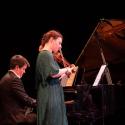
Williams makes a classy team with pianist Christopher Glynn, one of the very best collaborative pianists around. Where Williams’s singing was endlessly flexible and sensitive to the text, Glynn was endlessly sensitive to Williams. The subtlety and variety of his playing was notable: more than just an accompanist, this was masterful teamwork.
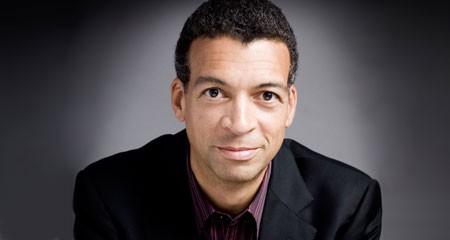
As for the repertoire (which Williams described, in sporting terms, as “45 minutes each way”), the 12 songs of the first half came mainly from the early years of the 20th century. Vaughan Williams’s “The Vagabond” from Songs of Travel has the same uneasy trudge as Schubert’s “Gute Nacht”. Madeleine Dring’s “Weep You No More, Sad Fountains” was a revelation, a wonderfully off-kilter harmonic sensibility and mellifluous vocal floated over the top. Williams sang RVW’s “Linden Lea” in the Dorset dialect of its writer William Barnes, which gave it a real freshness. Bridge’s “Tears, idle tears” was the emotional heart of the half while the first two of three songs by Ivor Gurney were beautifully contrasting. “On the Downs” had a slightly wild energy, while in “Lights Out” Glynn let the chords ring in a web of resonance.
In the second half, we ventured further into the 20th century – and even into the 21st. Britten’s “Midnight on the Great Western” had an icy-cold strangeness which fitted with the weather outside. Williams’s own “The Angel” was written when he was a teenager, and as such was remarkable. Judith Weir’s “Written on Terrestrial Things” was spiky and sparse, and a brilliant summary of her style of vocal writing – and one of many settings of Thomas Hardy through the evening. I am, I suppose, less enthusiastic about Gerald Finzi than Williams clearly is – if I had one quibble it was that five songs by this composer was at least one too many. But I was delighted to get to know Elizabeth Maconchy’s vigorous “The Wind and the Rain” (which I preferred to the Tippett Shakespeare setting that preceded it) and Doreen Carwithen’s miniature gem “Echo”. And Errollyn Wallen’s “Peace on Earth” (the most recent piece, written in 2006) worked so well as a finale, matching the hypnotic stasis of Schubert’s “Der Leiermann”.
Williams’s performance throughout was animated, and the songs dramatised – this was very much not a stand-and-deliver recital. He roamed the stage, he made eye contact with the audience, at times he sang as if to himself, and at others to the back of the balcony. I loved it, and never more than when Williams – having promised us initially a Winterreise evening with no Schubert – finished with a Schubert encore of exquisite pathos and stillness.



Add comment