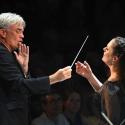
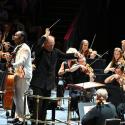
Anyone who’d booked to hear soprano Sally Matthews or to witness the rapid progress of conductor Daniele Rustioni – the initial draw for me – could not have been disappointed in their late-stage replacements. Elizabeth Watts is as much of a national treasure among singers as Matthews, and Jader Bignamini, music director of the Detroit Symphony Orchestra, negotiated his first Barbican concert with absolute mastery.
The short curtain-raiser, Camille Pépin’s Les eaux célestes, immediately gave us a BBC Symphony Orchestra on top form, but there was nothing very freshwater here: pretty textures, some sonic variety but little in the way of hooks (the pattern of notes allegedly borrowed from Debussy’s “Nuages” could also be the Dies Irae, which connected it with Berlioz's Symphonie fantastique, the big work in the second half of the programme). Poulenc in 1959, on the other hand, grips us from the start with the fanfares which return to be extensively, and originally, mined in the final “Qui sedes” of his idiosyncratic Gloria. The way it ends up always takes me by surprise, however well I think I know the piece.
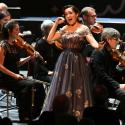
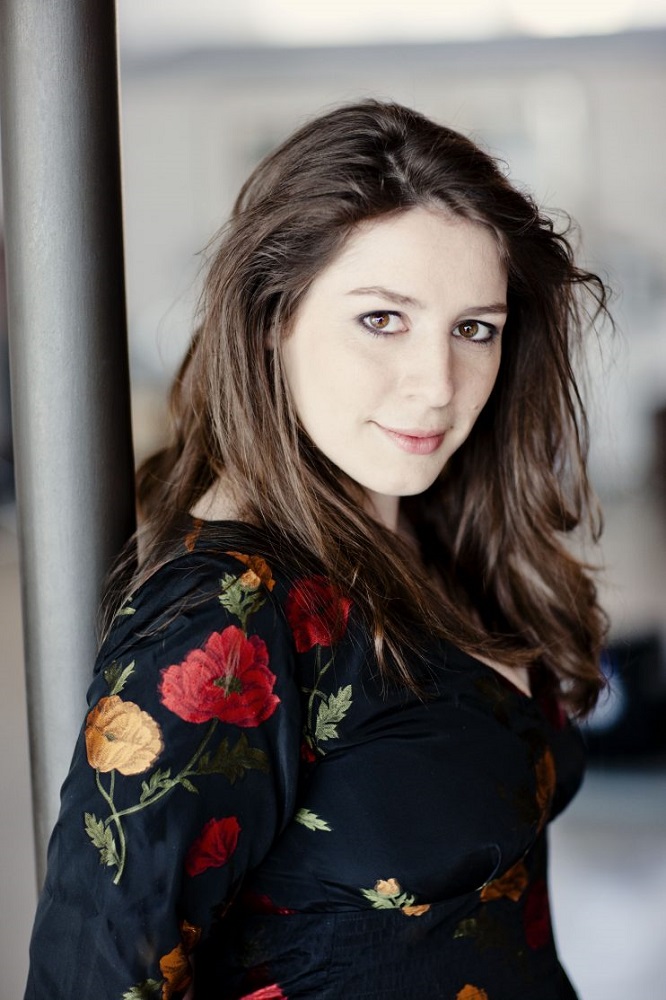 It certainly has something to do with Poulenc's personal setting of the Latin that every word was clear from the BBC Symphony Chorus, surely well drilled by Grace Rossiter; but small, young professional ensembles could take a note out of their book when it comes to injecting meaning in religious texts. Watts (pictured left) not only floated the heavenly and original lines of her crucial role to luminous effect, but her once lightish lyric soprano is now much fuller, providing the tingle quotient in her fabulously affirmative “Amen”. Bignamini held focus but didn’t miss the magic of the most Poulencian holy harmonies amongst personalised homages to Stravinsky and Prokofiev; it was all over too soon. The programme note, by Christopher Cook, was as lively as the work: a model of vivacious writing and good selection of detail.
Launching ten Thursday Zoom classes on the concert music of Berlioz, I was able to source a recording of an early song – one he destroyed, but he not only gives us the text in his wonderful memoirs but also tells us that he used the notes, unaltered, as the first extended idea in his Symphonie fantastique. A large part of the cue to success is to give full vocalization to this, along with the famous “idée fixe” of the elusive beloved and so much else in the work. Bignamini drew vivid, operatic lyricism from the BBCSO strings throughout, with bass lines of exceptional character and vigour. He brought some of his own dynamic finesse to bear, too, and gave both breathing space when needed – above all in the “Scene in the Country”, led by rustic poetry from cor anglais player Charis Lai – and continuity, hair-raising in the quick uptakes of the Witches’ Sabbath. From the players’ reception of him, and heads nodding in approval, it seems they’ll ask him again.
So many of Berlioz’s ideas, hand in glove with unorthodox orchestral apparel, strike as freshly as they would have done in 1830. Bassoon and tuba work was as impressive as they come; veteran flautist Daniel Pailthorpe and 23-year-old clarinettist Ángel Martín Mora reminded me, after too long a gap of hearing the BBCSO in the Barbican, that the woodwind department is every bit as good as that of the LSO, spotlit in last week’s phenomenal Daphnis et Chloé. In a few days' time we'll find out what this backbone orchestra of the Proms will have to offer us this summer.