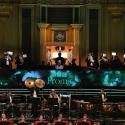
As Mahler symphonies rain down from heaven - or flare up from hell, according to your viewpoint - in this second anniversary year, it's wise to choose carefully. But why earmark Jiří Bělohlávek's performance of the Sixth above the likes of Gergiev, Dudamel, Jurowski or Maazel? Because he's been working his way through the cycle with his BBC orchestra at the careful rate of one a year; because he knows what space to give, and what colours to draw; and above all, because he refuses to batter our hearts too fiercely too soon - crucial for the most insistent tragic chapter in Mahler's symphonic chronicle.
Even the companion piece was wisely chosen, though strictly speaking there needn't have been one given the exhausting dimensions of the symphony. It was healthy to pick a Mozart piano concerto, better still one that, if it's hardly the least played of the entire series as onstage presenter Catherine Bott asserted, pops up relatively rarely and makes few demands on our deeper sensibilities. Which is not to say that No 16 in D major, K451, is in any way lacking in melodic distinction (another bizarre assertion, this time in the programme).
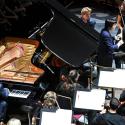
It teems with those quirky turns of phrase we expect from the mature Mozart, and it even has one of those sudden transformations - in this case the ultimate slipping of the Rondo into minuetto allegretto mode - which make us smile. As it did, especially, in the hands of Bělohlávek, consistently wonderful over the seasons in the phrase-roundings of his Mozart and Haydn. I was even ready with my pat observation that a Mozart piano concerto without clarinets is like a spring day without sunshine, but flautist Daniel Pailthorpe provided all the sun we needed. Lars Vogt, most thoughtful of pianists, if sometimes too introspective, was just a stitch or two behind his orchestral colleagues in deft turn of phrase. He did excel, though, in the coolly charming central Andante and, above all, in the two (Mozart) cadenzas of the outer movements, rolled out with an evenness that added to the general sense of wellbeing.
Which, of course, was to be demolished, albeit with energy rather than enervating sickliness, in the Mahler Sixth. The insistent dark march of the first movement unfurled its details, including the exposed first trumpet (Bo Fuglsang, superb throughout), with classical care, even the frenetic triumph of its feminine, lyric contrast - played with true romantic schwung by the BBC Symphony strings on well-muscled form - hardly leaving us prostrate with exhaustion.
Was it necessary, then, to place the blue remembered hills of the Andante next? In the ongoing controversy over what order Mahler wanted for his middle movements, I can think of six good reasons why the scary Scherzo should follow the Allegro energico, its more epic counterpart, and none why the slow movement should make an early appearance. Bělohlávek almost persuaded me there was one. Having unfolded the plains of heaven slowly, but with loving care and an infallible sense of long line which held through to the climax and the final well-earned rest on the high pastures, he tore into the Scherzo's Grimm fairy tale as he hadn't done with the first movement. We were now in nightmare territory, an opium-fuelled dream to follow high-minded epic in the manner of Berlioz's Symphonie fantastique.
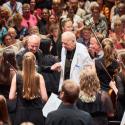
And the fleshcreep continued to pile up in the introduction to the vast finale, with lurid contributions from harps, celesta and tuba (Lee Tsarmaklis, balefully present throughout the symphony). Any conductor's ultimate test is how to look sharp in the momentum, the hysterical hopes and fears of the last half-hour's march-mania. Bělohlávek kept it clear, stunningly so in the string welters following the first two hammer-blows of fate, and raised the supreme, short-lived optimism to nobly coloured heights. The final dying embers of funeral march were as finely textured by the brass ensemble as anything in this symphony: we could only admire with pounding hearts and eyes blurred by tears. Yes, that's what Mahler is all about. The BBC players and the Barbican audiences may miss Bělohlávek when he returns to the Czech Philharmonic in a couple of seasons' time, but we'll have had our visions.
- The concert was broadcast live by BBC Radio 3, available on the BBC iPlayer for the next seven days
- Next BBC Symphony Orchestra concert is on Friday, 11 February