A 150th birthday cornucopia was anticipated: vintage chamber and vocal Vaughan Williams in a big Wigmore Hall three-parter alongside music by other great Brits. It turned out, instead, to be a handsome if overlarge horn sounding several cracked notes.
None of those had to do with the performances, which were first-class throughout: could it be otherwise with players from the Nash Ensemble, baritone Roderick Williams and 14 other remarkable British-based singers? Let’s get the moans out of the way first. This was proof that VW’s Five Mystical Songs and Serenade to Music, typical of his taste in first-rate texts – George Herbert and Shakespeare respectively – work best in the original versions with orchestra (not that you’d know the state of play from the programme notes).
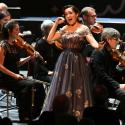
 Williams, R saved the day in the songs, a bright spirit sharing the composer’s wholesome integrity and his love of word-pointing (even if the concluding “Antiphon” hymn felt a little too hail-fellow-well-met). The Serenade, though, badly needs the cushioning air of a place like its original venue, the Royal Albert Hall, and summer-night orchestral strings. Still, pianists Simon Crawford-Phillips and Philip Moore were as poetic as they could be, the solos lovely from the seraphic top notes of Nardus Williams (pictured right by Bertie Watson) to the striking contralto of Jess Dandy – all deserve a mention, but given 15 (with Rebecca Evans doing the honours for an indisposed Lucy Crowe in addition to her own role), it would become a shopping-list. You want, though, to engage with each artist placed at the front of the stage, not as here crammed in along the Wigmore platform’s curved back wall.
The “right” group for On Wenlock Edge – VW later made an orchestral version, but here the string quartet and piano shimmer more – was there for tenor Alessandro Fisher. The tenor’s bright and lovely sound sometime needs ballast, especially for the “living” voice of the dialogue in “Is my team ploughing” (here I prefer Butterworth’s more direct, less directional Housman setting). But it was rightly riveting, in consort with the instruments, for the big drama of “Bredon Hill”.
The only other reservations would be over the insertion of Bax’s Elegiac Trio – forgettable in substance, for all the beauty of the playing from flautist Philippa Davis, harpist Sally Pryce and viola-player Lars Anders Tomter – in the first part and three violin-and-piano pieces by Elgar in the third; Stephen Waarts’ high style made us treasure the invention in the miniatures Salut d’amour and La capricieuse, but the sudden elegiac mood of Sospiri again works better as first conceived for strings, harp and organ.
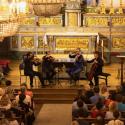
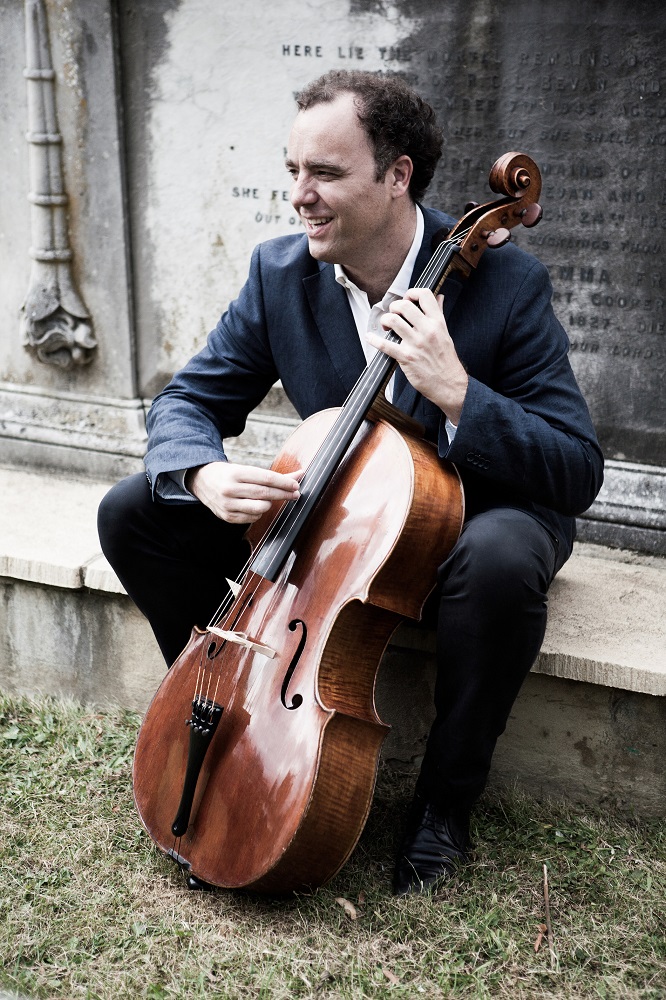 There was, at least, one revelation among the fellow-composers featured – Frank Bridge’s “Phantasie” Piano Quartet, perfectly compact, shot through with imaginative originality. “Phantasy” with a y in VW’s own unconstructed exercise in the genre, composed two years later in 1912, takes the shape of very personal takes on folksong contours, led by Tomter’s exquisite viola solo. The danger of gathering together so much of the composer’s chamber music is that the very sincere folksong mode can be samey (never the case in the symphonies). It was good to start with the startling chromatic angst which kicks off the Nocturne and Scherzo – more the Schoenberg of Verklärte Nacht than English idyll – while the core of musicality in the programme was very decidedly the masterly subtlety of cellist Adrian Brendel (pictured above by Jack Liebeck) in the Six Studies in English Folksong.
The core Wigmore audience seemed to love it all, but there was a noticeable bolt for the exits way past 10pm – back to the ‘burbs and shires. Kudos to the planning, but a bit less, and a few different choices, might have been more. Five stars for the performances, three for the overall impact. And a big minus to the Wigmore for not having a professional photographer on hand to chronicle the star line-ups.