At first sight, Vaughan Williams’ Second and Seventh Symphonies might seem to have a lot in common. Both are quite programmatic and pictorial, the second (the London) including music that might have finished up as a tone poem, and the seventh (Sinfonia antartica) adapted from his score for the film Scott of the Antarctic (1948).
But it seemed that John Wilson, conducting the first of two contributions to the Hallé/BBC Philharmonic celebration of Vaughan Williams (the second is with the Hallé on 21st April) found more real symphonic qualities in the earlier work than the later one.
Rightly so, in my opinion, although the Sinfonia antartica has an opening theme that’s repeated near the end, and a striking moment where the third movement’s massively heartless “Landscape” segues without a break into the tenderness of the “Intermezzo”. For all its rich sonic palette (loads of percussion, including a wind machine, ethereal voices and some brilliantly calculated instrumental effects), it still sounds like film music more than anything organically grown. That opening theme, even in this form, fades at its close as if the opening titles of the film have just run, and the Scherzo is, for VW, relatively prolix, as if it was written to fill a scene of pre-determined length. Perhaps he felt that the craftsmanship and colour that are there deserved to be heard in more auspicious surroundings than ground out by the picture house amplification systems of those days: and who can say that was an unworthy ambition?
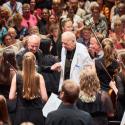
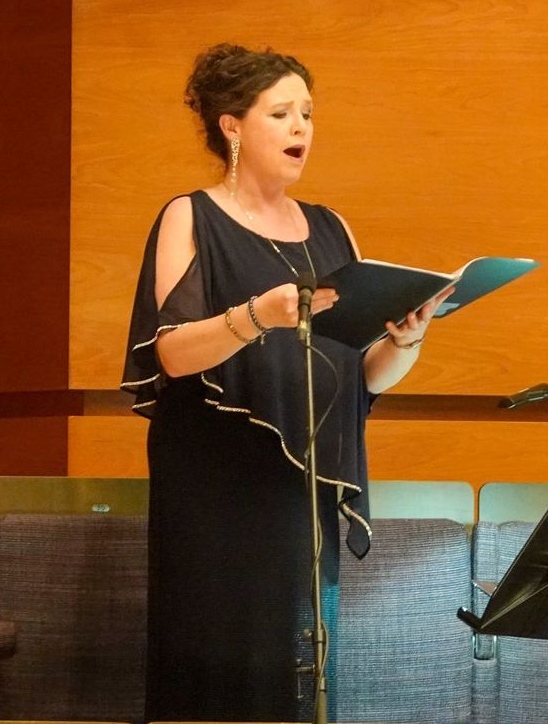 John Wilson loves film scores. He began the concert with an unscheduled extra, the main titles music from Vaughan Williams’ score for another film, The 49th Parallel (1941), and it was clear from that two-minute introduction that we were hearing the Wilson Sound. He transforms each orchestra he conducts: precision is everything, and the effects are vivid. It was there in Sinfonia antartica, too, and with Sarah Fox (pictured) the near-invisible but sweetly and icily audible solo soprano, and the ladies of Manchester Chamber Choir spot-on in their wordless wailings, the music made its telling impact. There was no letting up in the big sounds of the “Landscape” climax, and the final “Epilogue” movement brought another full, rich sound in the return of the first movement’s tune, before the re-entry of the female voices of doom.
Then, after the break, we came to A London Symphony. It’s a real symphony, not merely in its four-movement plan but in its internal structures and motivic development, and demonstrating a mind that could, ground-breakingly, incorporate the spirit of English folk song and dance tunes and his own original harmonic language into the classic tradition. Here Wilson was transformed into a passionate advocate, and the BBC Philharmonic were with him.
The beauty of the string ensemble’s playing (with Zoe Beyers again in the leader’s chair and contributing delightful solos) was in perfect balance, the brass were vigorous in their jollifications, and the textures were super-transparent when the music quietened – all that was apparent even in the first movement. The solo playing from horn and trumpet in the slow movement was tender and the solo viola haunting, and the Scherzo Nocturne delicate and alive.
There’s a bigger emotional payload in this symphony than possibly any of the others, and much of it lies in the finale, as Vaughan Williams supplies something like an antidote to the sentiment and grandiosity of Elgar’s London in the Cockaigne overture. Pomp and circumstance, in Wilson’s hands, became just slightly swaggering, and the climax was powerfully tragic, implying that all that earthly glory could come crashing down. The symphony’s final dying moments were as effective as its opening ones had been, casting a spell that appreciative applause made hard to break.
- Broadcast on Radio 3 tomorrow (12th April) at 7.30pm
- More classical music reviews on theartsdesk