It was melody versus the machine last night as Sakari Oramo’s six voyages around the Nielsen symphonies with the BBC Symphony Orchestra hit the high noon of the 1920s. The fallout from the First World War found three composers scarred but fighting fit. Prokofiev seemed less than his essential insouciant self in a Third Piano Concerto of more than usual bizarreries, and it was twice through the human meat grinder for the Viennese of Ravel’s La Valse and his Spanish proletarians in Boléro. The bookending made programmatic sense but in the end proved one work too many, exhausting for both players and listeners after what comes more than ever to seem like the ultimate symphonic battleground of the 20th century, the two colossal movements which make up Nielsen’s Fifth.
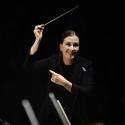
No stranger sounds are to be found in a symphony than Nielsen’s wild, careering woodwind – blisteringly handled by the best in the business – or the side-drum which returns to battle out a newly confident tune in a different metre, finally going ad-lib crazy. Yet he keeps his feet planted in the Beethoven tradition, finding unique solutions in a work that's short in minutes but huge on ideas and their workouts. The almost frightening alertness which last month gave us a Fourth, Inexitinguishable Symphony of unremitting tension allowed Oramo to transfix even an unfamiliar listener through the countless suspensions and mood-swings of an electrifying masterpiece.
There was a sustained energy here at a much deeper level than anything found in Rattle’s over-valued Sibelius cycleThough I was expecting them, I still nearly jumped out of my seat at a belated percussion tattoo from the bombers which tear brutally through the rareified air of the opening, and at the shock of the second side-drummer – fortissimo but behind the stage – which splatters the start of the lone clarinet’s last post at the end of the movement. That crucial signing-off was ineffably taken by James Burke in an evening of incredible hard work for the clarinets (and the intensified flattened notes inherent right from the start in the idea the player transforms made an unequivocal link with the “blues” of the Boléro theme’s second half).
Then it was on to what has to be one of the greatest, for me the greatest, of symphonic finales, Mahler included. If Oramo chose not to emphasise the universal-waltz quality of Nielsen's 3/4 scything, his continuity and dovetailing took the breath away – as did the playing, especially in the strings’ fiendish thickets of notes which spring up in the way of all that exuberance. There was a sustained energy here at a much deeper level than anything you would have found in Rattle’s over-valued Sibelius cycle with the Berlin Philharmonic earlier this year, and a string sound of a more convincing rootedness in the second fugue where Nielsen truly sounds the music of the spheres.
 After the last-minute euphoria as Nielsen steers us unexpectedly into a triumphant E flat major, we needed to go away and think, but there remained Boléro, composed two years after the Paris premiere of Nielsen's Fifth which Ravel may well have attended. It was a saving grace that Oramo’s version tended to the jolly rather than the smoky or the sensuous, with a trademark spring in the heels – literally, sometimes – and a delight in the bright accumulation of colour to support the side-drum tattoo. The solos of this unique concerto for orchestra – hard to think of its ground-breaking novelty in 1928 – got off to a classy start with flautist Michael Cox, and peaked in expressiveness with the multiple nudges Helen Vollam brought to the not-so-lounge lizard trombone solo. Yet though this and the opening La Valse, crystal clear after the opening mists had cleared, full of details like the weird little three-note tuba twist, kept the shocks relatively light, there was almost too much hyperaesthesia for an evening’s programme.
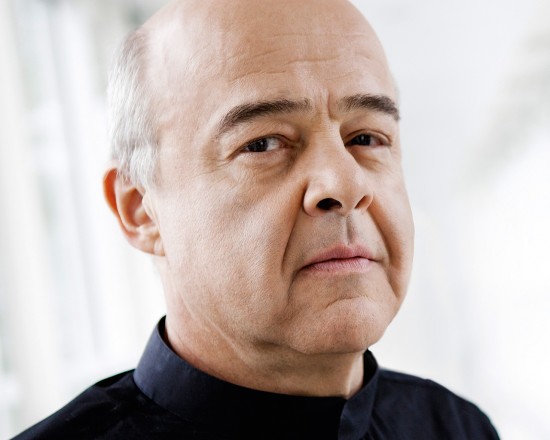
Praise Oramo’s exceptional vigilance and smiling encouragement, though, that it wasn’t heavier than it might have been. He had to keep a keen eye on his soloist in the Prokofiev, Alexander Toradze (pictured above), whose appearance on the programme had made me nervous but who seemed to love the partnership and treasure his fellow players. A basher in the romantic repertoire, one-time jester at the court of Tsar Valery Gergiev, Toradze is also a pianist of unconventional intelligence, range and creativity. If that meant adding all sorts of dynamic tricks and manners to Prokofiev’s already fiendish score, then the fact that he could play nearly all the notes – unlike Argerich or the composer as pianist – won him that licence.
Whenever he decided to go breathtakingly slow, as in the reveries at the heart of the first two movements, the orchestra went equally evocatively with him. And the fact that he had rethought the mad first-movement coda in parallel thirds, from the fastest-on-record dash with Gergiev to the comic accelerando here, shows he’s capable of fresh thinking. As with Oramo’s Nielsen, there wasn’t a moment here where thoughts could drift. And Toradze’s encore, Scarlatti’s simple-sad D minor “Aria” Sonata, dedicated to a lady who had been present at all his London concerts but was now, he said, here only in spirit, gave us the one real moment of respite in a psychedelic programme as the pianist switched gears from steely control to a voice from another planet.