

The heart of Prom 33 was Brahms’s massive German Requiem, a piece that eschews Christian dogma and Day-of-Judgment terrors for a humanism focusing on consolation of the bereaved. It feels very much like a requiem for our times as much as the composer’s, and last night’s performance by the BBC Symphony Orchestra and Chorus under Richard Farnes, although very traditional in style, had a striking immediacy.
But first came Thea Musgrave’s Phoenix Rising, the Proms premiere of a 20-year-old piece. In the year the Proms committed to increasing its representation of women composers it is also marking the 90th birthday of one who has been at the forefront of her profession for over 50 years. The 20-minute piece is a fine example of her gripping musical narrative and brilliant orchestration, especially in the early stages where the music’s jagged edges and bracing harmony made for a sit-up-and-listen start to the concert.
Musgrave (pictured below) has always had a penchant for spatial arrangement of the orchestra and here the percussion (busy throughout) are spread around the back, the pair of harps antiphonally placed either side of the strings (and used effectively in the almost Tchaikovskian coda) and a solo horn starting out apart from the section. More regrettably, there is theatrical by-play between the timpanist (representing the forces of darkness) and the roving horn player (representing hope) in which the timpanist is banished from the stage in high dudgeon. It’s a silly bit of pantomime and detracts from the excellent music.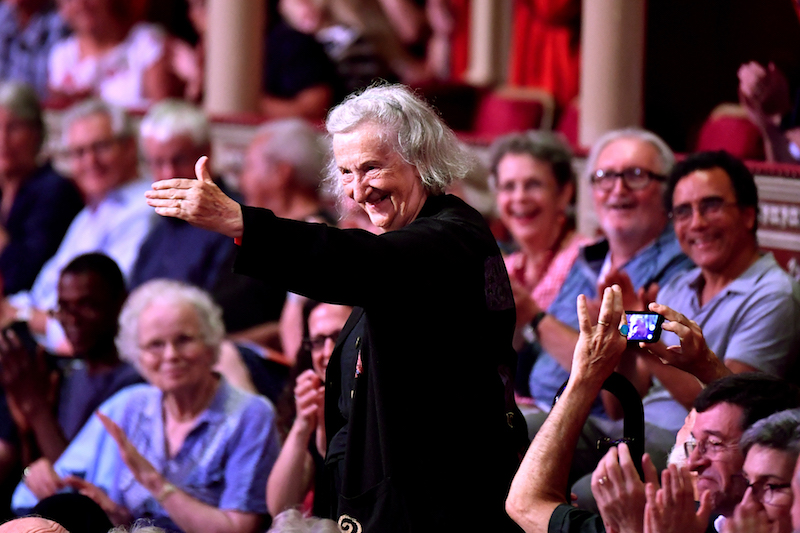 Martin Owen’s horn solo was combative and noble, the timpanist Antoine Bedewi rapping out strident rhythms until his departure (then appearing in the coda from off-stage) and the whole percussion section lit up the ending with its metallic sounds. Farnes, making his Proms debut, shepherded the orchestra through the piece with authority and it was great that Musgrave herself was there to take a bow.
Where the phoenix in Musgrave’s piece takes wing not in glory but in melody, so Brahms’s music puts song at the heart of his very personal music. Inspired by both the death of his mother and his beloved Robert Schumann, the work also has clear roots in the church music of Bach and even Schütz.
It is all about the choir, who sing almost uninterrupted for its 65 minutes, and the BBC Symphony Chorus were terrific, from the hushed opening calling for a blessing on those that mourn, to the drama of “O death, where is thy sting” in the sixth movement – one of the most stirring passages in all choral music. I was completely engrossed throughout. I have always felt the German Requiem was too long (without necessarily being sure which bits I’d cut) but here everyone seemed held right to the end – and for a Proms audience not to cough through the tranquil final bars is a very good sign.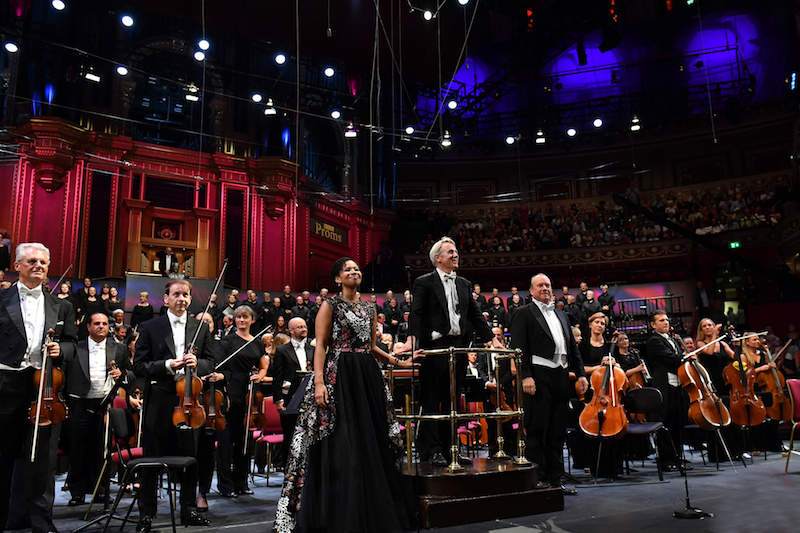 Although there are recordings with small choral forces playing up the intimacy, this was an old-fashioned massed-choir approach, and what is lost in precision and flexibility was made up for in weight and depth of sound. The BBC Symphony Chorus was heroic and demonstrated fantastic stamina, with crisp terminal consonants and focus on the text, whether in hymn-like homophony or in the massive fugal sections. The dynamics of the piece are all about gradual swells up and down and these were seamless, with no audible gear changes. The tenors in particular have very difficult high lines and they were valiant, enjoying the spotlight. Only in the outer movements were there any slight imprecisions of pitch: overall the singing reflected very well on chorus-master Neil Ferris.
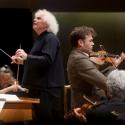
The soloists were also good. Danish bass-baritone Johan Reuter doesn’t have the biggest voice but sang with intensity. Even better was the South African soprano Golda Schultz (pictured above, with Reuter and Farnes), whose gorgeously floating “As one whom his mother comforteth, so I will comfort you” is the emotional centre of the piece.
And holding it all together with assurance, clear beat and attention to orchestral detail was Farnes. Best known as an opera conductor, he found drama in the music, but also was in touch with human emotions of grief and sadness that occasionally give way to hope.




Add comment