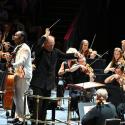
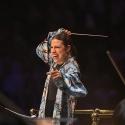
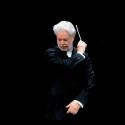
Ben Gernon is only 30 (and looks about ten years younger) but has been Principal Guest Conductor of the BBC Philharmonic since 2017. He really impressed in last night’s Prom but, after an exciting overture, things fell away a bit with an under-nourished Rachmaninov concerto and an enjoyable if not faultless second half of Tchaikovsky.
The first item augured very well. Malcolm Arnold’s Overture Peterloo is an odd piece, but gripping. Written in 1967 it shows two sides to the composer at once: first an effortless melodist but also a musical experimenter. The first two minutes have a filmic, noble melody in the strings which is suddenly interrupted, Charles Ives-style, by a tattoo on a pair of snare drums in a contradictory pulse, brutally pushing the tune aside. This leads to the violent central music representing the Peterloo massacre of 1819, where a dissonant cavalcade of brass and percussion (who were excellent throughout the concert) demonstrated Arnold’s skills in orchestration. Then the opening melody returns in valediction for the dead, ending in triumph in a halo of tubular bells.
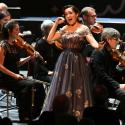
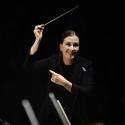
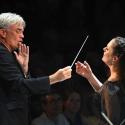
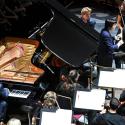
Gernon was a commanding figure, equally at home in the broad sweep of melody or in the well-balanced textures of the middle section. He has a low centre of gravity when conducting, which gives him somewhere to go at climaxes, and his distinctive “swooping” right hand gesture is reminiscent of Colin Davis: I hope he has a similarly distinguished career. 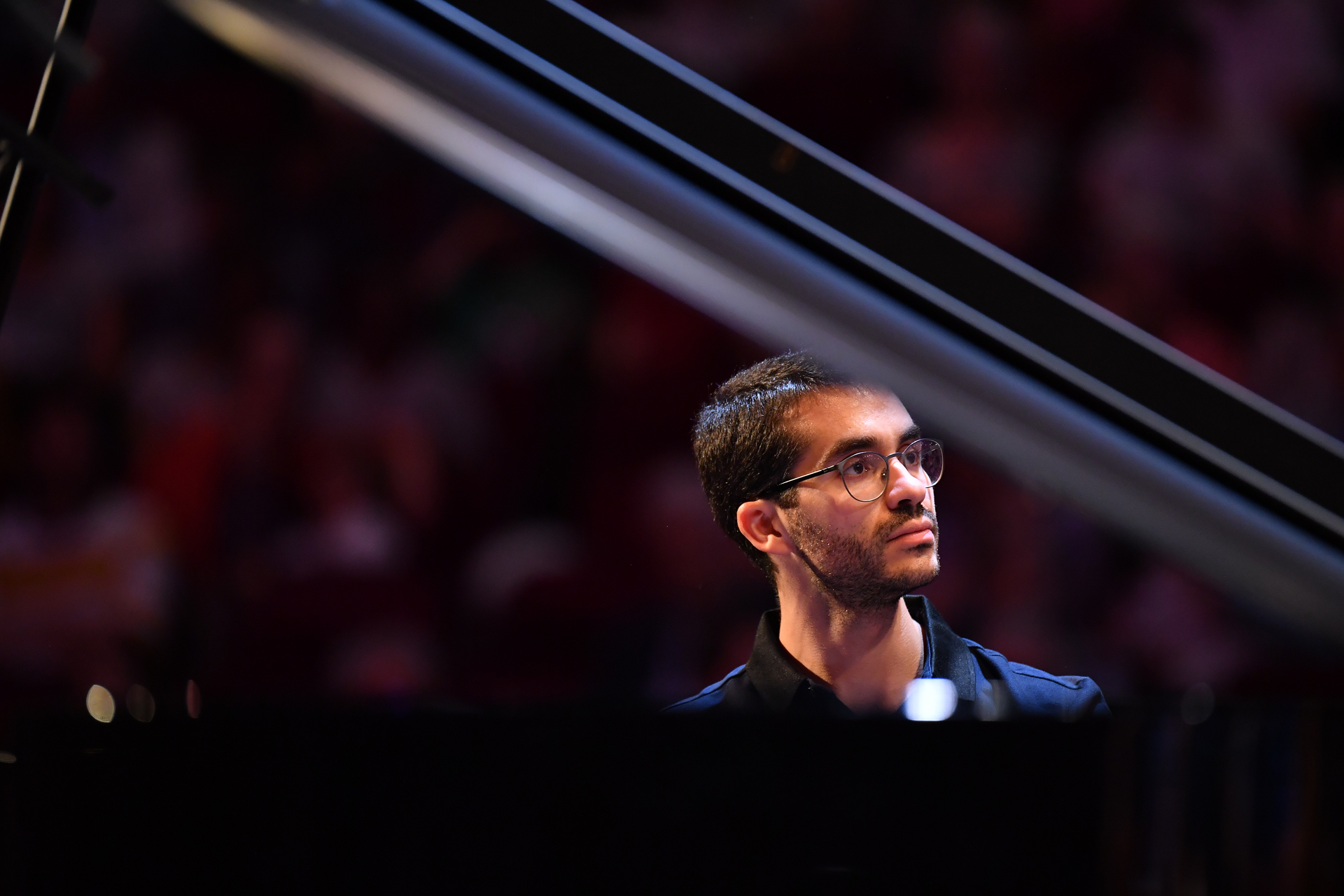 Sadly, what seemed like an enticing amuse-bouche turned out to the be the evening’s peak. The pianist billed for this Prom was Alexander Gavryluk, but he was replaced – at what degree of short notice I don’t know – by Juan Pérez Floristán (pictured above). It is difficult to be too critical in circumstances like this, but Floristán and Gernon didn’t always seem to be on the same page in Rachmaninov’s Rhapsody on a Theme of Paganini. Where Gernon set steady tempos, Floristán seemed to want to press on, and the result was several moments of shaky ensemble. Floristán took a fairly laid-back approach in terms of his sound, not really finding the weight needed in the piece’s pounding climaxes. (This, as always in the Albert Hall, needs to be hedged by the fact that others elsewhere in the hall might have found the balance better.) But I feel that if you have played the Rhapsody without breaking sweat you are doing something wrong: it needs beef.
Floristán was at his best in the quiet music, and particularly in the Big Tune of variation 18, where his unsentimental approach, without the excessive rubato you sometimes hear, was well judged and drew me in. But for all that Gernon found some spiky details in the scoring and marshalled his troops authoritatively, there some questionable woodwind intonation (also an issue at one point in the Arnold) and the whole thing didn’t quite fly.
The second half was a selection of movements from Tchaikovsky’s Swan Lake. It was not one of the formally designated suites and perhaps at 50 minutes of music was a bit too long – I’m not sure we needed as many as four of the Act 3 national dances. Gernon went for extremes of tempo – the “Scene” of Act 1 was a whirlwind but elsewhere he was notably slow. But his pacing of events within movements was excellent and he found wit and good humour in the score. There was an evident rapport between orchestra and conductor that was a pleasure to see, but there were sticky moments again, including a problematic trumpet solo in the Act 1 Waltz. I read in the programme that Valery Gergiev gave the first complete performance of Swan Lake at the Proms in 2011 and was left with the thought that, whatever your opinions of Gergiev, there would have been an edge-of-the-seat excitement at that event that wasn’t quite there last night.
- Listen to this Prom for the next month on the BBC iPlayer
- 'Relaxed Prom' version on 6 August at 11.30am
- Read more classical reviews on theartsdesk