

How do you get five thousand plus people into the Albert Hall to hear two Sanskrit-based rarities by British-born composers? Simple: place the Elgar Cello Concerto in between them. Here was another daring Prom programme that totally worked, not least since cellist Senja Rummukainen, compatriot of the BBC Symphony Orchestra much-loved Finnish chief conductor Sakari Oramo, proved as sensitive as him and his players to the elusive core of what's surprisingly become a popular classic.
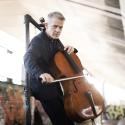
At first it seemed as if this interpretation was going to be the polar opposite of the one I'd heard previously, from Alban Gerhardt and Edward Gardner conducting the London Philharmonic Orchestra at the Aldeburgh Festival. Where that felt almost too brisk and cheery, Rummukainen's initial ruminations augured too slow and tragic a burn. There was no need to worry: she lived in every moment, the fantastical and the gruff as well as the introspective. True concerto collaborations don't come along every week, but this was one, Oramo ensuring perfect repartee with Elgar's exquisite woodwind writing and his cellist listening to her fellow strings. Heartbreak happened where it has to but so rarely does: at the furthest point of inner exile towards the end of the Adagio. And all this came across so well with the cello playing out and slightly away from a seat above and at the side of the orchestra. Rummukainen's encore was brief and ephemeral in the best sense: the second of late, much missed fellow Finn Kaija Saariaho's Papillons. 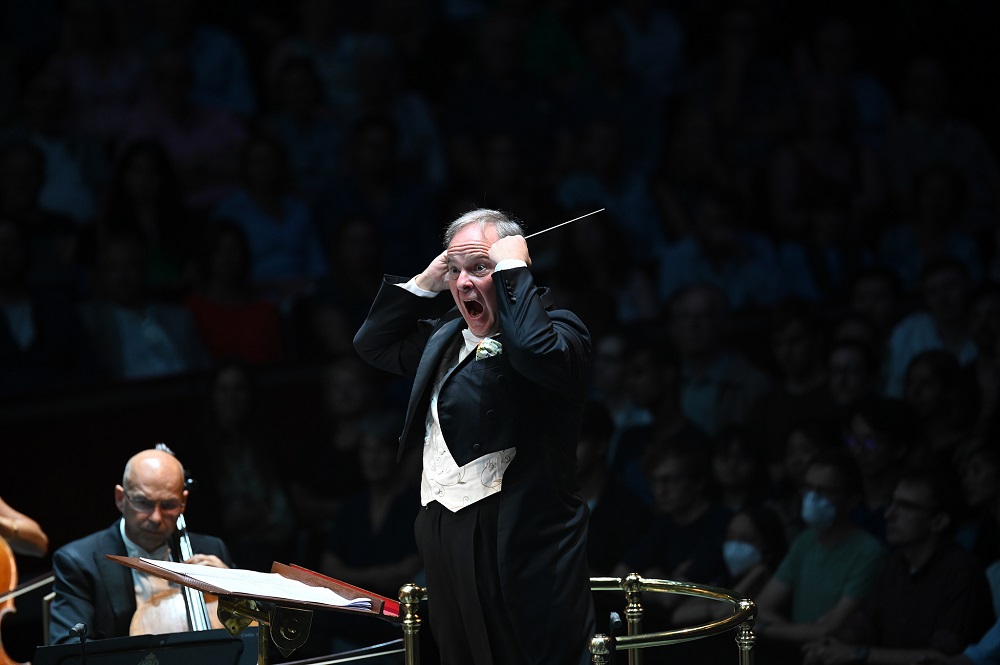 It's always surprising what works well in this space. Elgar's most withdrawn moments, certainly, so long as the soloist and conductor know how to draw in the audience, as they did here, rather than force the sound outwards. And there's always acoustic help to hand for a sense of the numinous, which is why the related works by Jonathan Harvey and Holst worked so well. Harvey's Tranquil Abiding is a musical portrait of what many of us have experienced in the best meditations: a self-centring breath in and out - magical string chords - followed by intrusions which you learn to accept as part of the experience. The woodwind flurries and careful use of the more exotic percussion keep any sense of placidity at bay, and in spite of everything calm is achieved and deepened: anything but "holy minimalism", but certainly reaching to the essence.
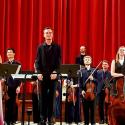
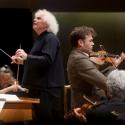
Holst now seems more bound to his time in the early 20th century, but for all that, as a big work for chorus and orchestra, The Cloud Messenger deserves to be heard more often (this was its Proms premiere, very surprisingly). The tale by the author of the Sanskrit poem Meghadūta, Kālidāsa, of an exiled nature-spirit who urges a cloud to send a message to his wife allows for a symmetry of splendour around the central mystical evocation of the "early widowed" love object, the only section in which the contralto soloist sings (and Jess Dandy, pictured below with Oramo surrounded by the BBC Symphony Orchestra and Chorus, did her moment under the cloud rich justice). 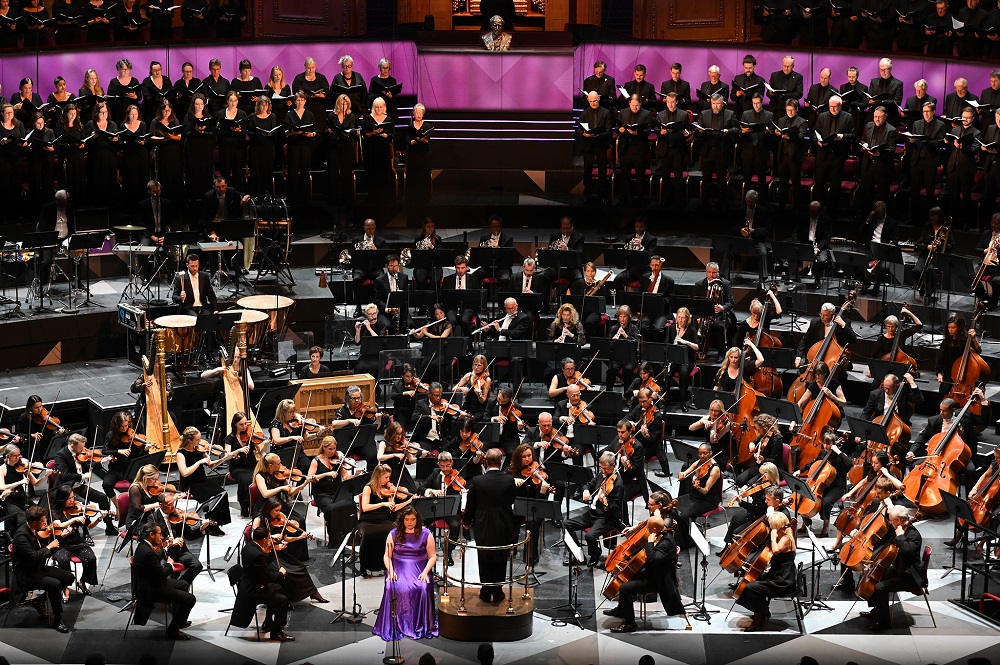 On the one side of this languid centre are the wonders of nature, evoked by some of Holst's most exquisite orchestration; on the other oriental songs and dances leading to the climactic manifestation of "the great God himself whose tread shakes the mountains". Prologue and epilogue swathe the story in a melodically and harmonically unusual mist; the retreat might have baffled the audience at the unsuccessful premiere, though apparently the chorus fell apart too.
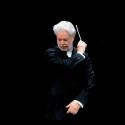
No danger of that here with the BBC Symphony Chorus, articulating much of the variously-set text with as much clarity as possible, urged on by Oramo, who seemed to know all the words by heart (Holst managed to struggle towards his own translation of the Sanskrt, dictionary in hand, a cut above the usual efforts of the musical orientalists). Holdng up well against comparable contemporary works such as Elgar's The Music Makers, Vaughan Williams' A Sea Symphony and Delius's Song of the High Hills, The Cloud Messenger will surely repay repeated hearing; I'll be sure to catch this performance again on BBC Sounds.




Add comment