Shostakovich’s First Cello Concerto combines the composer’s usual angst and nerviness with a sardonic humour, right from the opening bars, where the cello and orchestra seem to be playing in contradictory keys. At last night’s Prom, cellist Alisa Weilerstein played the opening motto not as a challenge, but as the continuation of a conversation already in progress. It was also very fast, which issued a different kind of challenge to the orchestra.
The woodwind of the BBC Symphony Orchestra, heavily featured in this concerto as they so often are in Shostakovich, responded with some sparkling solos, but – for example in Nicholas Korth’s first movement horn solo – it sounded like they were trying to gently restrain a charging horse. The second movement was more convincing, with some beautiful playing from the strings. Weilerstein’s intimate sound and droopy portamento as a coloration was seductive, the cantilena line of the second half of the movement disappearing into a chilly nothing at the end.
In the Albert Hall’s acoustic, where at times the cello struggled to cut through the orchestra, the most successful passage was the cadenza which is more rhetoric than virtuoso display. Weilerstein commanded the room, owning the pauses, making complete sense of the disjointed texture as it moved from melodic foray to impassioned outburst.
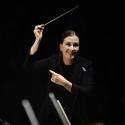
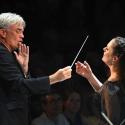
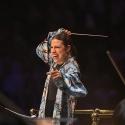
Where Shostakovich’s “Leningrad” Symphony (featured in Prom 4) is prolix, there is no fat on the First Cello Concerto, even though it is 30 minutes long. Weilerstein’s encore, a Bach sarabande played with a viola da gamba-like edge to the sound and again an intriguing use of portamento, was fully six minutes and – regardless of academic propriety – would have had more bite without the repeats.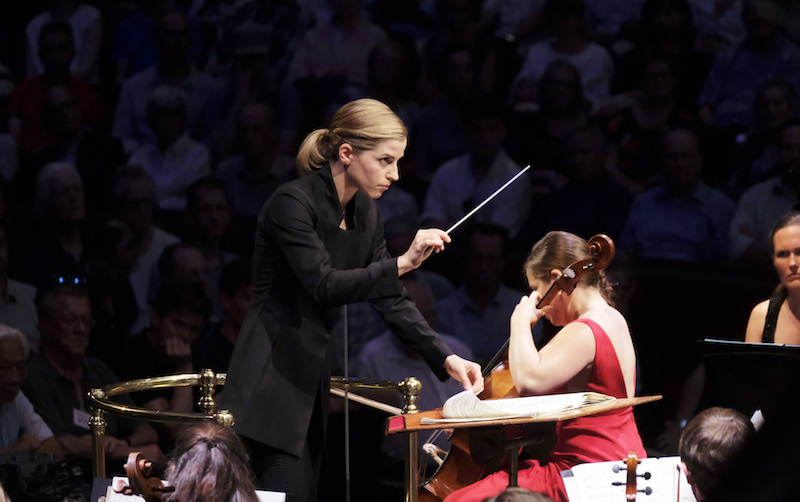 The programme began with Beethoven’s “Coriolan” Overture, the opening moments of which are a conductor’s obstacle race. As in the Shostakovich, the American Karina Canellakis (pictured above) took the music at a brisk lick, the opening chords of whipcrack intensity but perhaps in need of slightly more space. Canellakis made her Proms debut only last season and it is clear why she has been immediately invited back. She has a no-nonsense approach and throughout the concert it was clear that she was getting what she wanted from the orchestra, who were willing collaborators.
The only slight disappointment of the evening was the London premiere of Andrew Norman’s Spiral, premiered by the Berlin Philharmonic only six weeks ago. To be fair to the piece, it felt like the wrong space, the early moments of shimmering strings virtually imperceptible and masked by very loud coughs around the hall. As the music developed – essentially one single crescendo – it had echoes of John Adams’s Shaker Loops, but where Norman’s orchestration is more subtle, he didn’t achieve the mad abandon of Adams’s climaxes. It also felt a bit out of proportion, lots of build-up only to be cut off in its prime, just as things were getting interesting. I have not heard any of Norman’s music before and would be keen to hear the enterprising orchestration of Spiral combined with the “fine sense of melody” described in the programme, but deliberately absent here.
Rachmaninov’s Symphonic Dances, his final work, completed the programme. It is intriguing to hear the composer at once being thoroughly Americanised but also losing himself in nostalgia for his lost Russia. Again the woodwind were heroic, with a terrific alto saxophone solo in the first movement from Martin Robertson (strangely not credited in the programme). Elsewhere there were excellent solos from leader Zoe Beyers and clarinettist James Burke was terrific throughout the evening. The waltzing second movement was the highlight, Canellakis teasing the rhythm and shaping the phrases with suave decadence. The final movement is a mini-concerto which, even if it doesn’t perhaps quite dance enough (I think this is the piece rather than the performance) offers a rousing last couple of brass and percussion-filled minutes.