Never make your mind up too soon about any large-scale work by a genius. Back in 2010, I had my doubts about James MacMillan’s first Passion, hearing in the impact of Colin Davis’s Barbican performance a halfway house between the composer's shattering best and his more contrived side.
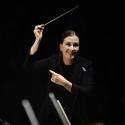
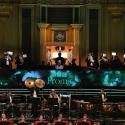
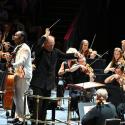
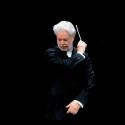
This time everything combined to convince: a more generous acoustic, professional voices as collective narrator (Chamber Choir Ireland), a committed amateur chorus clearly well rehearsed by David Young and top-notch orchestra with a stunning brass section – special guests included – held on a tight rein by conductor David Hill, and a knockout performance by baritone Seán Boylan as a Christ on whom even more depends than in the Bach Passions.
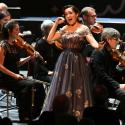
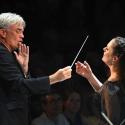
The early stages reminded me what was troubling a decade and a half ago: rather too many brutal full-orchestral blitzes too soon, perhaps, alongside instrumental felicities which didn't always seem to support the dramatic argument, and florid writing both for the "narrator chorus" and Christ himself when simplicity might have seemed the more obvious course. 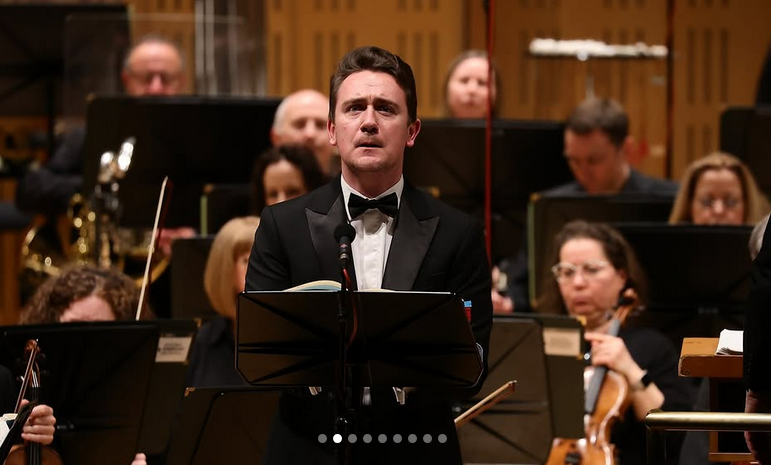 A decade and a half ago, it hadn't helped that Christopher Maltman as Christ, the only solo voice – other roles in the passion drama are taken by the bigger choir – was suffering from a throat infection. This time, Boylan (pictured above), replacing Christopher Purves, surpassed expectations in everything he sang. Previous reservations about what seemed like excessive stylisation for what in the Gospel are simple responses were swept aside by the brilliance of his upper register: a young, strong Jesus indeed.
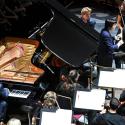
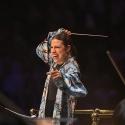
Boylan delivered three key sequences with indefatigable clarity of intention and dramatic range. First came the strenuously melismatic "My kingship is not of this world" before Pilate, framed by brass blazes of staggering impact (among the players on this occasion were one of the world's best horn soloists, Alec Frank Gemmill, new principal trumpet of the NSO Darren Moore and bass trombonist Josiah Walters). Then a moment of moving but still highly original repose in MacMillan's exquisite setting of that outstanding sequence where Christ says to his mother "Woman, behold your son!" and to the disciple "Behold your mother!", melting into the commentary of the Stabat Mater combined with a lullaby, where "your sacred head is wounded" finally resolves the melt into the chorale which plays a vital part in Bach's St Matthew Passion. The St John narrative gives way to operatics in "The Reproaches" – a litany of complaint which could verge on self-pity but kept us riveted here. 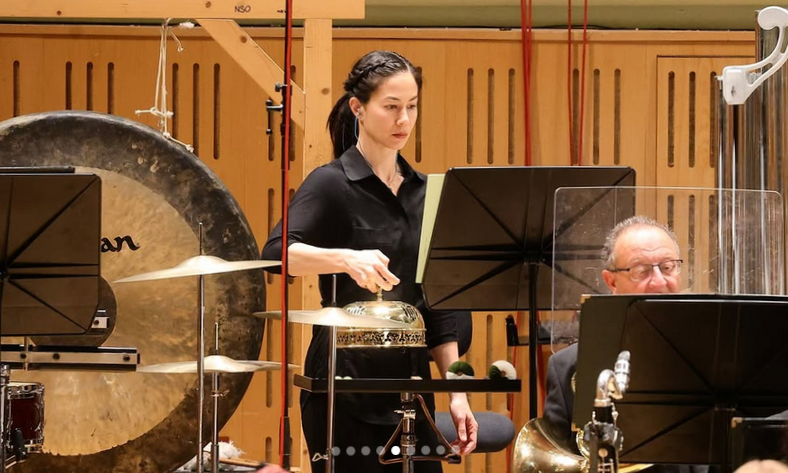 MacMillan ensures maximum variety not only in the orchestration, from the three seraphic violins occasionally floating above Christus to the wide range of percussion effects handled by a single player, Rebecca Celebuski (pictured above), but also in the choral commentaries he places at the end of each section. The surprising release of "Tu es Petrus" and the mysterious chords above which drift instrumental lamentations in "Crucifixus etiam pro nobis" stood out in Part One; in Part Two, the response to the "Narrator Chorus" in its weird bendings of sound, "Peccantem me quotidie" and the "mother" sequence already mentioned.
Most daringly, MacMillan leaves the final section, "Sanctus immortalis, miserere nobis", to the orchestra. It didn't work for me back in 2010, but the way Hill and the superb strings especially of the NSO articulated its Mahlerian arch to triumph and back to lament held the tearful emotion of the flawless Chamber Choir Ireland's final "And he bowed his head and gave up his spirit". A perfect fulfilment.