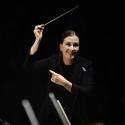
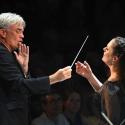
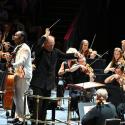
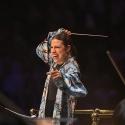
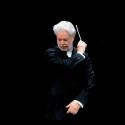
French orchestras haven’t sounded distinctively Gallic for decades; François-Xavier Roth’s brilliant period band Les Siécles does use idiosyncratic French instruments but their polish and sheen is very modern. Still, close your eyes while Alexandre Bloch’s Orchestre National de Lille are playing Ravel and you’re struck by the polish, the elegance of the playing. Open them and marvel at how Bloch’s dance-like podium manner is matched by the musicians’ fluid movements. Even a castanet and tambourine exchange during Debussy’s Ibéria was a visual treat. The relationship between conductor and orchestra is clearly a happy one, judging by the smiles on display, Bloch having led the ensemble since 2016.
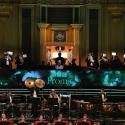
That Leeds’s ornate Town Hall was so full was probably down to a starry soloist. We’ll get to him later. The real treats for me here were masterpieces by Debussy and Ravel, and hearing both composers side by side accentuated their differences as much as similarities. Ravel’s Ma mère l’Oye gleamed here, its sequence of exquisitely shaped miniatures dispatched with rare refinement. High spots included some nifty xylophone work and an eloquent contrabassoon solo. The closing minutes, anticipating the sunrise in Daphnis, duly worked their magic. Every exposed solo was perfectly placed, and Ravel’s quirky special effects prompted paroxysms of pleasure.
Hearing the full sized orchestra in Ibéria straight afterwards was a surprise, the first fortissimo brass chord in “Par les rues et par les chemins” a delicious shock. Debussy’s brush strokes, in the outer movements at least, are broader than Ravel’s, and Bloch’s players understood this. We got a superbly woozy nocturne, the transition to the last section’s dawn brilliantly done, Debussy’s “man selling water-melon and urchins whistling” in plain sight. What a fabulous work this is, with one elderly audience member sat in the row behind me unable to contain his delight.
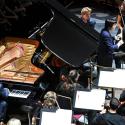
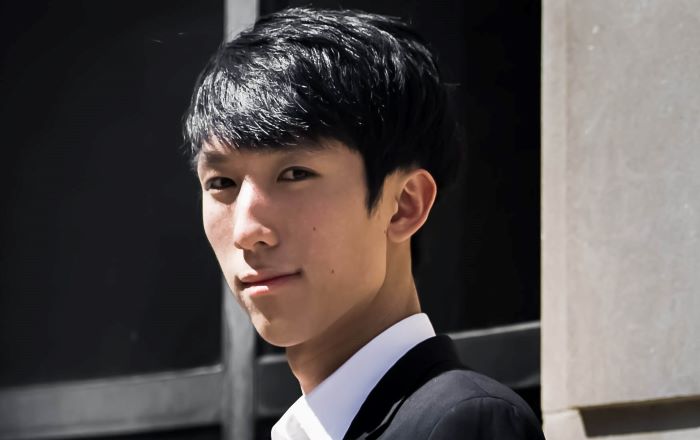 He’d presumably come to see Eric Lu (pictured right), winner of the 2018 Leeds Piano Competition, perform Beethoven’s 4th Concerto. That a musician this young can play with such sensitivity is humbling, and Lu’s modest, unshowy manner makes you like him even more. This isn’t a conventionally showy concerto, and Lu’s whispered introduction was daringly quiet. You wondered whether Bloch’s strings would actually respond at all, and the fact that Beethoven has them enter in a remote key surprises me no matter how many times I hear it. Lu can do big and bold when he wants to – the first movement recapitulation was thrilling – but he’s a poet at heart. The gnomic grunts in the “Andante con moto” were gradually calmed by Lu’s soft replies, and Beethoven’s finale skipped along merrily. The full orchestra reappeared for Ravel’s La Valse, Bloch’s players fully attuned to the work’s dark heart. That violent close, the sleazy Viennese waltzes morphing into screams, clunks and thuds, always reminds me of Stravinsky’s Rite.
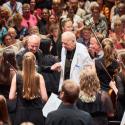
Was this nihilistic depiction of societal collapse the best way to bid us farewell? Of course not, especially given Saturday's date. Leeds has been twinned with Lille since the late 1960s, and there’s a long tradition of cultural collaboration between the two cities. After thanking the musicians, Bloch turned to the audience and payed tribute to the importance of maintaining strong links, whatever the future might hold. “We absolutely want to come back!” he grinned. As a parting gift, we got the “Feria” from Ravel’s Rapsodie espagnole, an exhilarating, upbeat end to what's been a very long week. Merci les Lillois, and please return soon.