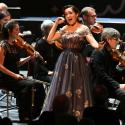
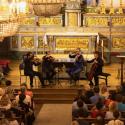
You can get away with playing ballet music of the Ancien Régime on Bastille Day so long as you end with a revolution. That was how live wire François-Xavier Roth and his mostly French musicians angled it, covering nearly 250 years of Parisian dance premieres on their way to the Proms centenary performance of Stravinsky’s The Rite of Spring. Roth promised surprises in heading back to Stravinsky’s 1913 autograph manuscript, but those mostly came in the last minute, and plenty of other novelties delighted on the way to the sacrifice.
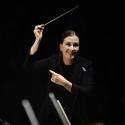
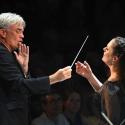
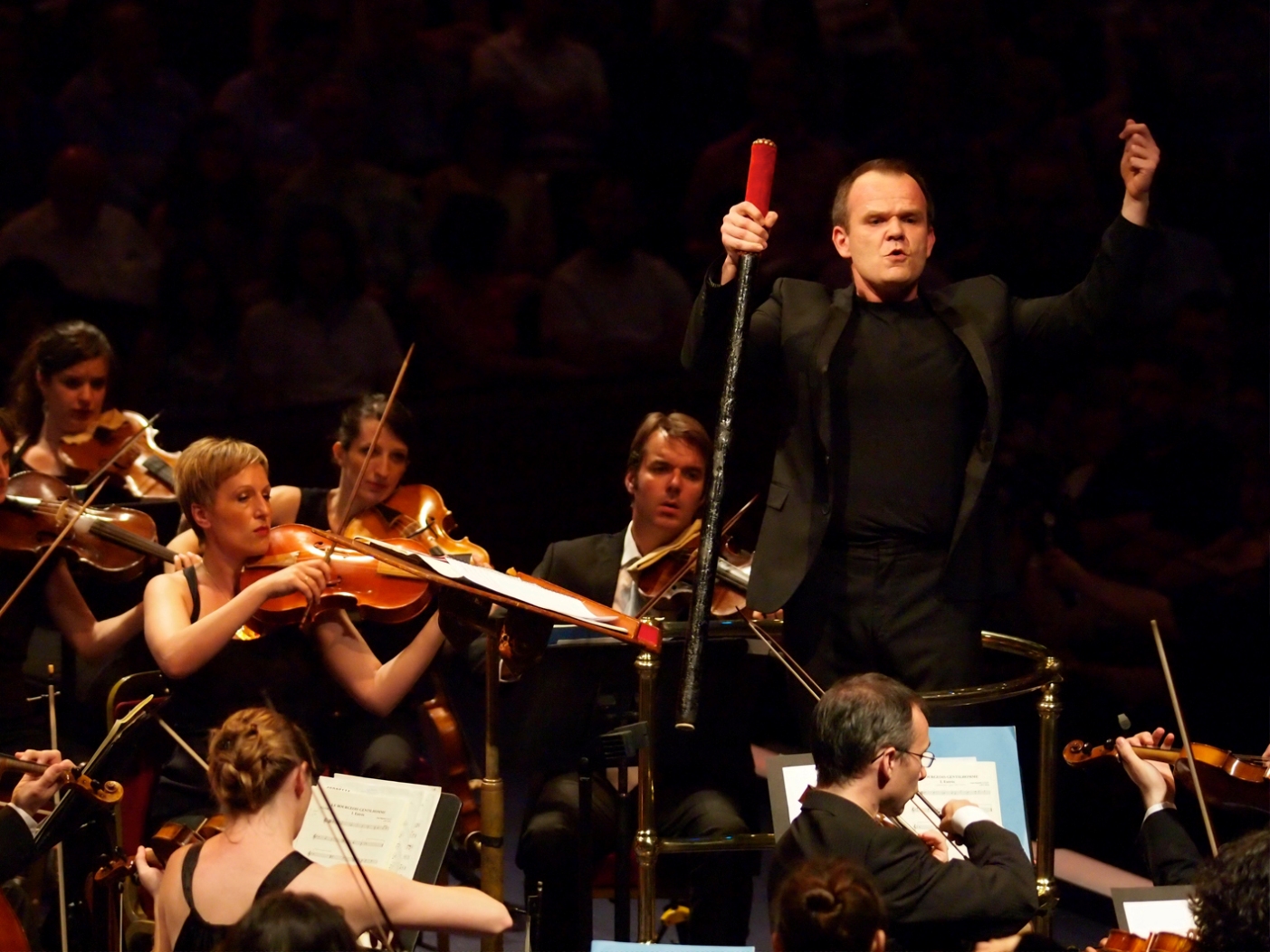
There were spectacles few, if any, will have seen at the Proms. Roth beginning proceedings by striking his red-handled staff, in homage to the very pre-baton instrument which struck Lully’s toe in 1687 and killed him from a gangrenous infection (Roth pictured below last night by Sisi Burn). Shaking of a handsome bell tree or Turkish crescent during the two most exotic court dances. Fresh, post-18th century fiddles waiting on stage to take the place of the oldsters. Players turning to salute the bust of Sir Henry Wood and, more specifically, the audience seated either side of the organ.
 Yet there were also the notorious Albert Hall acoustics which flattened, sometimes killed stone dead, Roth’s attempts to bring the gut and bite of the authentic approach (why don't I trust my instincts and head straight down into the Arena, the only place where anything registers properly?). Hearing Lully and Rameau through a gauze came as a special shock only a week after I’d been overwhelmed by the ferocity of the Orchestra of the Age of Enlightenment under William Christie in Glyndebourne’s stunning Hippolyte et Aricie.
No matter; Lully was shaped with as much affection as his formality would allow, and it’s little wonder if Rameau came off as much the more adventurous; after all, there are 65 years between the comedy-ballet Le bourgeois gentilhomme in 1670 and Les Indes galantes in 1735 (as much time as elapsed between Strauss’s Der Rosenkavalier and Britten’s Death in Venice). Still, you wonder if Lully would ever have reached the weird harmonic descents Rameau plumbs in the middle of his Danse du grand Calumet de la paix.
Violins were exchanged, extra players brought on: midway through the first half we moved on to the 19th century and, alas, only half the originally promised quarter-hour of music from Delibes’s Coppélia. Only the whole ballet score will do next time at the Proms. As it was, we got not the Musique des Automates, the doll music which would have continued a sense of le merveilleux originating in Louis XIV’s court, but the ubiquitous waltz and mazurka, both inappropriately automatic and too fast (unless Roth knows something about Delibes’s metronome markings that I don’t).
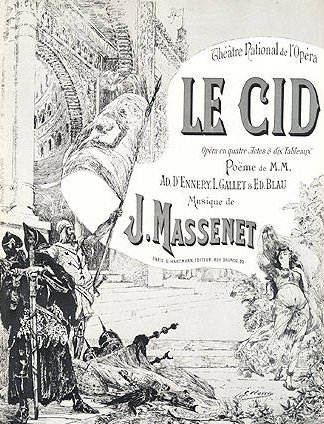 There was more playfulness about the Spanish divertissement from Massenet’s Le Cid (original poster for the opera pictured left), but why lop two of the seven equally inventive dances? Anyway, you couldn’t ask for more from Massenet in terms of piquant orchestration and melody. Among many woodwind colourings of pure delight, Stéphane Morvan’s cor anglais solo before the Madrilène's giddying take-off told us that Massenet got there way before Rodrigo in terms of Spanish soulfulness.
Perhaps it was apt in this company that the Les Siècles view of The Rite of Spring was often brisk, bright and snappy. Roth’s promise of more colours in the use of 1913-era brass certainly materialized in the incisive, garish trumpets, less so in the sometimes dodgy horn ensemble. There was no question, though, of the disgrace which the last French visitor to the Proms in this work, the Orchestre National de France under Daniele Gatti, brought upon itself with a disastrous botched entry. Roth had his own ideas about timing of attack and precision of those famous reiterated chords, and everything seemed to work as he wanted it to.
No special novelties struck us for some time after the hideous coughing obbligatos that accompanied the opening pipes; was it Stravinsky’s weaker original scoring or just the lack of string power that failed to bring out one of the many melodies in Part One? You had to wait until the Chosen One had virtually danced herself to death before subtleties struck which the composer must have thought didn’t sound well enough leading up to ultimate collapse. And that, at least, with cymbals and guero or lion’s roar adding their voices to the final chord, was something none of us would have heard before.