Anna Lapwood may not be the only virtuoso organist to celebrate the centenary of Joseph Jongen’s Symphonie concertante this year, but with her performance with the Hallé under Katharina Wincor she was almost certainly the first. It’s one of the most taxing – if only for the sheer stamina required of its soloist – and multi-faceted works for organ and orchestra ever written. Its four movements come in at around 35 minutes, concluding with a moto perpetuo romp of a toccata in classic French celebratory style, and the organist is required to handle fistfuls (and feetfuls) of notes from the start and at almost every moment throughout.
Saint-Saëns’ Organ Symphony and Poulenc’s concerto may be heard more often when it comes to orchestral pieces with a prominent organ solo element, but this is undoubtedly the big one, and for only the brave. Lapwood has no fear, however, and danced to and from the console on the Bridgewater Hall platform (as is her wont) as if it was all a walk in the park. “This is the one I have been waiting to play … it feels special …” she said in a pre-concert on-stage interview, revealing that it was a first time experience, not only for most of the orchestra but also for her (except for the final movement).
The piece was written in 1926 for the planned opening of the huge six-manual “Wanamaker” pipe organ in the multi-storey atrium of Macy’s department store in Philadelphia, PA. The unveiling didn’t happen until after Jongen had premiered the piece in Europe, and in fact it wasn’t played on that instrument until 2008.
That doesn’t mean that its interpreter should aim to simulate the variety of the 400 or so stops of the Wanamaker organ, but the piece is still a thing of its time. Jongen’s friend Eugène Ysaÿe was right to say that the organ’s role seems to be that of a second orchestra – but the score specifies relatively few individual stop names (beyond a unison “flûte” sound at some points, the use or otherwise of the reeds and mixtures, and an “organo pleno” – which can mean different things to different schools of thought), instead indicating only overall intensities and contrasts.
What makes the piece most fascinating is the variety of styles of organ writing it embodies and its equal mastery of orchestral textures. The harmonic language is varied, beginning in the “Doric” mode (which doesn’t sound any more exotic than it does in those of Bach’s works that use it), but in a combination of fugue and sonata structure, and thick contrapuntal writing. At other times it hovers on the edge of the so-called “impressionist” sound of Debussy and Ravel.
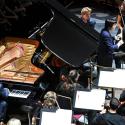
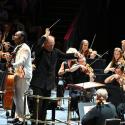
Anna Lapwood (main picture) started it with a big, reedy sound, but was quick to moderate that as the opening movement proceeded, sparing in her use of the organ’s loudest resources. The second movement (which is called a Divertimento and opens in 7/2) is, as she said before the show, “quite silly”: it alternates its jollity with “religioso” and gave her the chance for a touch of humour in the successive registrations of the opening theme’s first phrase as it’s reprised. The third movement at first shows the organ in spooky, horror-sci-fi mode, with celestes and rumbling pedal, and though she built its big crescendo with a less than prominent bass line she made the long solo passage sound warm and romantic.
The final Toccata wasn’t quite the blast it might have been on another instrument – as a battle between solo and orchestra it was a bit unequal, with the organ on the losing side, though constantly showing the pursuing horde a clean pair of heels. The Bridgewater Hall organ is probably not the ideal vehicle for this movement, with its light wind pressures, rather watery flue choruses and somewhat undifferentiated (except for loudness) chorus reeds, but Lapwood is scrupulously correct in her registrations and for her many fans can do no wrong, so who am I to complain?
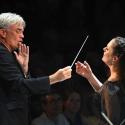
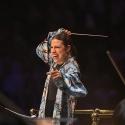
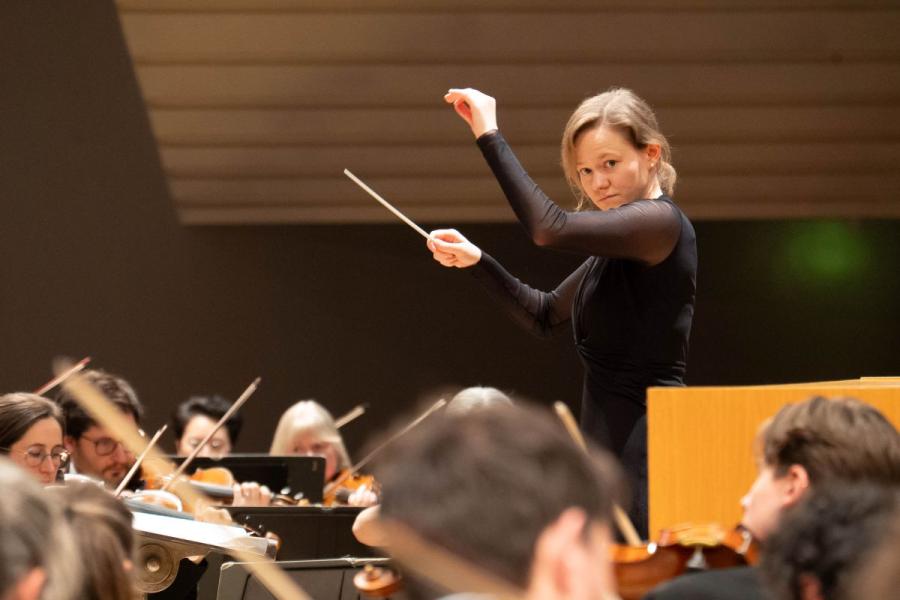
She commented in that chat session that the Jongen work has near-quotations of both Korngold and Richard Strauss in it, so what better to set alongside it than the former’s Schauspiel-Ouverture and the latter’s music from Der Rosenkavalier (in the form of the 1945 orchestral suite which has no known compiler – some have said it was Artur Rodzinski, another supposition is Henry Wood). Austrian conductor Katharina Wincor (pictured above), who was to be a highly effective partner to Lapwood in the Jongen, had the orchestra to herself for these.
She and the Hallé began Korngold’s piece as if it was the product – as in fact it is – of a precocious 14-year-old, big and brash, but ensured clarity in its dynamic contrasts and a good hearing for its broadly conceived textures. In the Rosenkavalier suite (once a staple of many a Barbirolli “Viennese night”), she again made a fast and furious start, but this time it was part of what became a bit of a deconstructionist account, with an acute sense of the ridiculous, in its exploration of Strauss’s music, and particularly his exaggerations of the waltz tradition. Her Baron Ochs was a vivid caricature, played for laughs, and her version of the Act 3 Trio lush and gorgeous, but it was the satire more than the subtlety that remained in the mind.