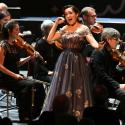
“Let the organ thunder!” is the sentiment a lot of us will associate with an orchestral concert featuring the king of instruments. The Hallé’s programme with Anna Lapwood as soloist (repeating, from her BBC Proms debut with them in 2021, the Saint-Saëns “Organ” Symphony) seemed designed to evoke that thought.
But the organ in the Bridgewater Hall isn’t exactly made for thundering. Big Bertha it is not. What it is really good at is a light, clear and sometimes fiery sound – ideal for Poulenc’s 1939 Organ Concerto, which was the undoubted highlight of the evening.
There was light and airy French music to begin with from the orchestra alone, conducted by Corinna Niemeyer in her debut with the Hallé. That was auspicious: she got a gentle but precise pizzicato underlay from the start for the beautiful tune of Fauré’s Pavane, controlled the ends of its phrases delightfully, and made the violas charmingly audible in the central section.
Then it was time for Anna Lapwood and the Poulenc. There isn’t anything else quite like it in the repertoire: it makes the organ dance and sing, and when it brashly references Bach’s Fantasia in G minor you’re never quite sure whether it’s a send-up or a tribute.
 The gentler passages are full of the characteristic sounds of the classic 19th-century French organ – with help from the great organist-composer Maurice Duruflé, Poulenc specified exactly which ones he wanted us to hear – and Thomas Trotter, its original consultant, designed the Bridgewater Hall organ to have them too. Anna Lapwood followed these instructions fastidiously. They were all there: flûte, cor de nuit, clarinette, nazard, quintaton, octavin, gambe and voix celeste, with the choruses in full body and the reeds rasping out among them. It was fun and it was exemplary, and the orchestra’s contribution, with expressive violins (led by Peter Liang) and a lovely viola solo from Timothy Pooley, was finely judged and sympathetic.
The Hallé’s artist-in-residence, Dobrinka Tabakova, was the writer of the organ solo work which opened the second part of the concert, in a kind of joint world premiere performance (as the entire programme is duplicated this week) of Sanctus from Orbis Factor, one of a set of 12 pieces commissioned and curated by Anna Lapwood. It was a product of lockdown, the soloist said in a brief introduction, when “we worked on it together”, and like all the pieces in the collection (titled Gregoriana) it’s based on a Gregorian chant melody. Tabakova made it to explore the variety of an organ’s sounds, from transparent and floating to earthy and rich, and it did exactly that, gradually adding to the tonal palette through to a triumphant major-third ending.
The work that gave this concert programme its title, and the longest on the list, came last. I’ve always been a bit puzzled as to why Saint-Saëns’ “Organ” Symphony (no. 3 in C minor) seems such a box-office draw. I guess it’s partly because he hammers away at his tunes and their variants so much that you really have them like ear-worms in your head by the time it’s over – and partly that we in England (it was written for the English) love the noise that music makes. There aren’t many works that make more noise than the Organ Symphony.
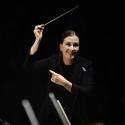
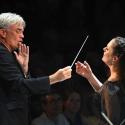
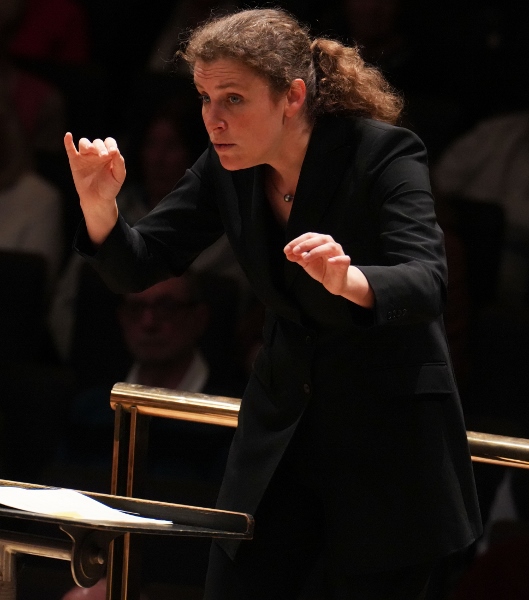
There was, glad to relate, more than just noise in this performance. Corinna Niemeyer (pictured above) worked up tension in the first movement and drew some full-throated and brassy climaxes. Thde slow movement was warmly and emotionally articulated, and in the scherzo-like third the switches of tempo were pretty neatly negotiated, with the ’s oboe and clarinet solos elevating the discourse with necessary crispness. Tension built again effectively towards the end, as Saint-Saëns gives us the crescendo to beat all crescendos. I was hoping for the Bridgewater Beast to be unleashed by Anna Lapwood just a little more freely for its final moment of glory – but then you can’t always have everything you wish for.