

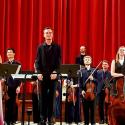
Three Beethoven quartets, early, middle and late, in a single evening – inevitably as part of a cycle, like the Jerusalems’ Wigmore Hall triptych last night – is demanding on the audience, supremely tough on the players.
We could have left this concert enriched and on a high at the half-way mark, open-mouthed at the brilliance of the tumultuous fugal finale in the third “Razumovsky” Quartet, Op. 59 No. 3 in C. Never was an interval needed more before the four players returned to the awesome challenge of the great, seven-movement C shap minor Quartet Op. 131 (one of Beethoven's sketches pictured below): exhausting for all concerned, but riveting in every bar.
Never underestimate the challenges of what for me is the most memorable quartet in the Op.18 set of six, No. 3 in D. The Jerusalems took us from the supremely elegant opening gambit of Alexander Pavlovsky to cellist Kyril Zlotnikov’s rocking of the foundations before the witty-soft conclusion. Zlotnikov seems to urge the most creative responses, making us inwardly exclaim another “what on earth?” in the swelling resonance of the stalking 6/8 pizzicati of the C major Quartet’s mysterious slow-movement ballad. But that’s not to suggest any unevenness among the four; and their takes, though very much adapted to the special demands of each quartet, always kept a balance between shock and sophistication: ideal Beethoven, in other words. 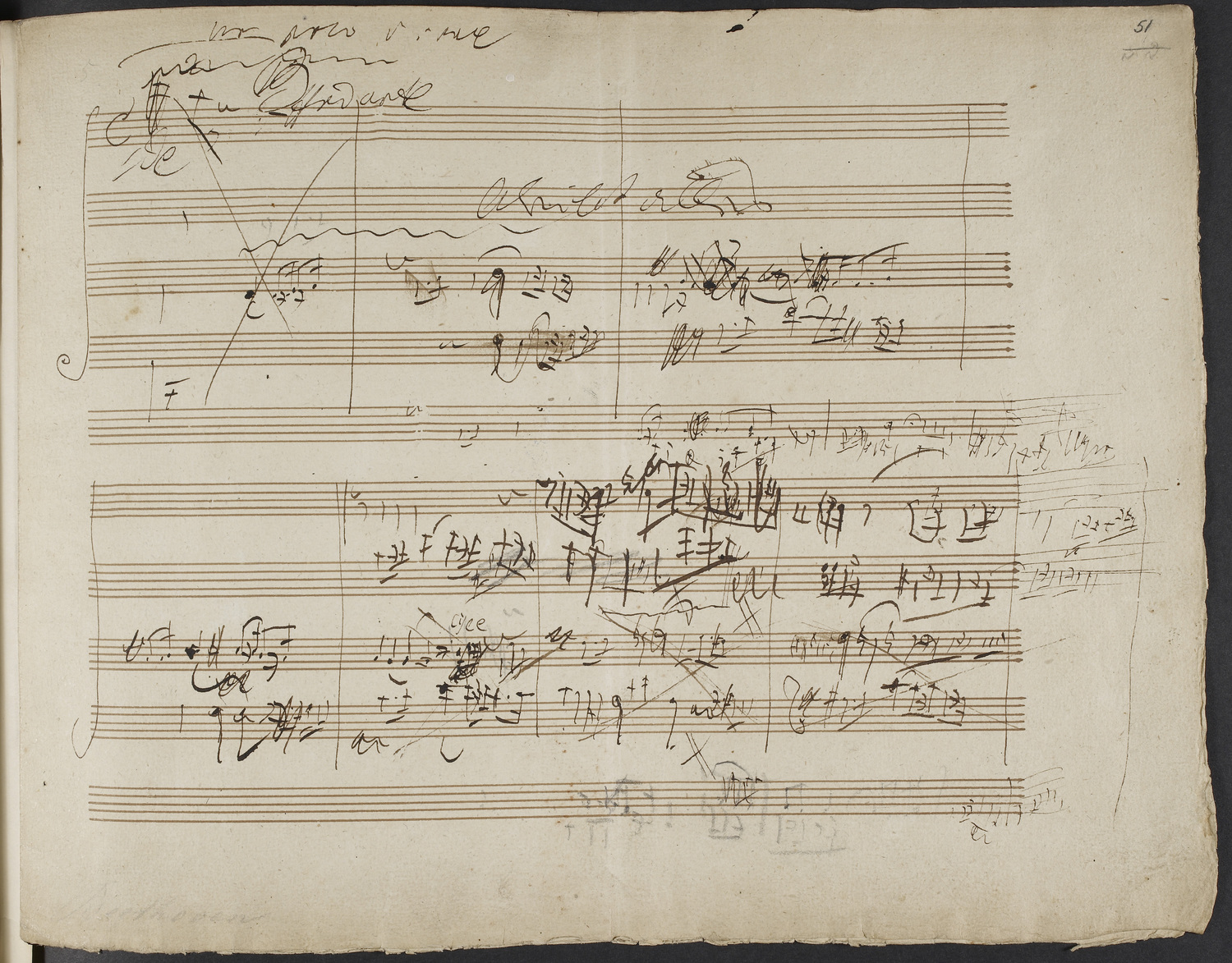 Go to any music festival and you’ll probably encounter yet another of the many hundreds, if not thousands, of fine string quartets in the world. Setting the Jerusalems in the top half-dozen are the unstinting focus of articulation, the subtle freedoms, above all the dynamic nuancing: how that in particular was possible at the daunting speed they set themselves in the joyous fugal finale of the third “Razumovsky” – here Vivacissimo rather than just Allegro molto – gave us one of the reasons for breathless enthusiasm at interval time.
The flipside came at the start of the C sharp minor Quartet after we’d taken 20 minutes to gather composure: the contrasting slow fugue of the opening Adagio ma non troppo e molto espressivo. Only fleetingly was this as Wagner described it, “the saddest thing ever said in notes”; after the unearthly voices of first and second violins, there is a warming to life, even radiance which makes the heaven’s-gate sequence of inner movements possible. I still can’t say I understand what Beethoven was up to here, but with such a great team compelling the listener’s focus on every phrase, every sudden oddity, it was impossible to lose concentration. How they held out to the galloping rigour of the intense finale was a miracle; the sense of near-exhaustion merely added to the thrill.
No doubt about it: great works in great performances. We felt, as ever, the connection to the pathos and horror of the present time without the need for anyone to spell it out. Though Israeli citizens, violinists Pavlovsky and Sergei Bresler were born in Ukraine, Zlotnikov in Belarus. I now wish I hadn’t missed the first two concerts in the series; I’ll be there, if I can, for the two in June.
- Next concerts in the Jerusalem Quartet's Beethoven cycle on Friday 10 June and Saturday 11 June
- More classical music reviews on theartsdesk




Add comment