

Why go to hear a cello-and-piano recital in a large hall, and a rather unsatisfying programme (delayed without explanation for 15 minutes, incidentally) spotlighting a transcription of a work which was created for the violin? Two good answers would be Gautier Capuçon and Yuja Wang, sophisticated artists right at the top their respective leagues, communicative in a way that can reach out, tone-wise, into big spaces or pull you in to another, magical world.
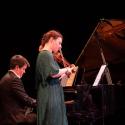
Capuçon the cellist didn't solve all problems in Jules Delsart's arrangement of Franck's A major Violin Sonata - a work ideally played by his brother Renaud. First, yes, a great singer among instrumentalists can capture most of the essence, just as sopranos and mezzos can reign supreme in Schubert and Mahler song cycles composed for tenors and baritones. But the restless, leaping and plunging theme which turns up in the slow movement and finale needs to hit the stratosphere. Fine-tuned to Wang's every subtlety, and she to his, Capuçon didn't seem best served by her fast tempi for scherzo and finale; these both needed just a bit more space to capture the singularity of their respective angst and heartease. 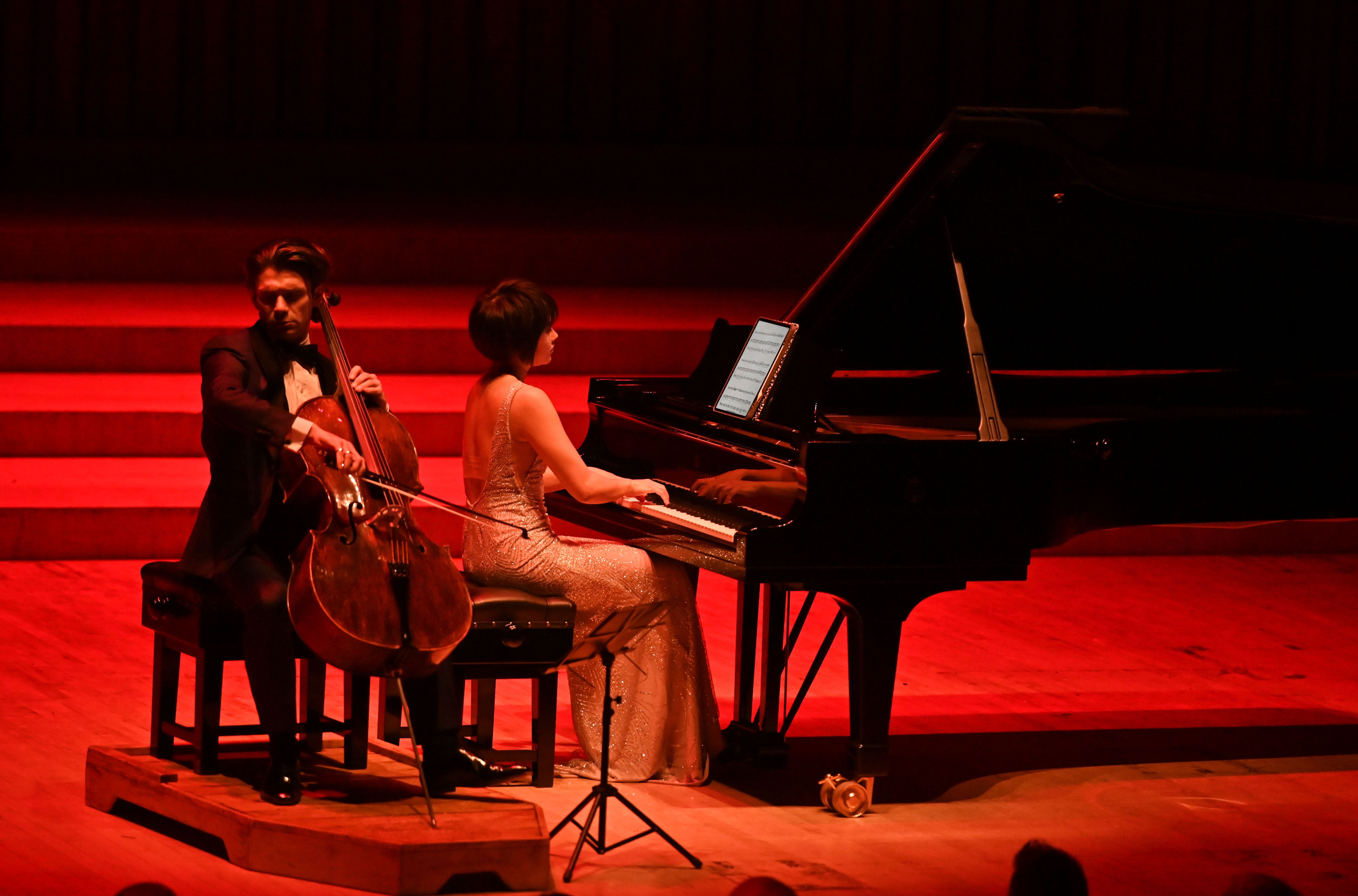 The not-quite 20-year-old Chopin's Introduction and Polonaise brillante puts pianistic transcendentalism very much in the spotlight, and Wang dazzled here; Capucon sang again, but the themes aren't so interesting (and the work's not a patch on the Andante spianato and Grande Polonaise brillante for piano solo). Maybe this should have been the encore, and not the big, unadvertised Le Grand Tango by Astor Piazzolla. Its dancing energy set the audience (and the lighting, pictured above) on fire; the central reverie had the same magical inwardness that made the Largo of Chopin's Cello Sonata another highlight: no overt sentimentality, only consummate proof that this is one of the most original elegies of the 19th century.
There's a comparably memorable idea in the Scherzo. But for all Wang's suspension of time in the opening Allegro moderato, and a totally together tumultuousness in the finale, this late work isn't as strikingly modern and adventurous as many of Chopin's contemporary pieces for solo piano. Nor are the outer movements among the greatest cello sonata inspirations. Another, more probing specimen from the 20th century - Martinů, Hindemith, Prokofiev, Shostakovich spring immediately to mind - would have rounded out a recital which still felt rather short measure. These are great artists, undoubtedly; one just wanted more. Which undoubtedly we'll get when Wang, "spotlit" Barbican artist, returns for a solo piano recital on 31 March.




Add comment