The theremin is still a relatively rare visitor to concert halls, particularly in a solo role, but Carolina Eyck is changing that. Her instrument, invented by Lev Termen just 100 years ago, is a relatively simple piece of kit – a tone generator controlled by the player’s hands, which never touch it but rather appear to be conjuring sound out of thin air.
In many ways its most daunting characteristic is the sheer range of sounds it can create. The right hand controls pitch, and that can vary over a wide range of the normally audible spectrum, with the distinctive notes of conventional scales or freewheeling portamento; the left controls volume, which in practice means articulation as well as power, as it’s responsible for the "envelope" of everything we hear.
It’s also possible to switch the monophonic output between different tone qualities – on the evidence of last night it can be made to sound like a solo cello, or a Wurlitzer-like tibia flute, or something akin to a diapason or clarinet as evoked by a combinative electronic instrument such as a Hammond. Or you can throw caution to the winds and go for wild, wailing modulations like we used to get on Long Wave radio when searching for a station wavelength, or imitate birdsong quite effectively.
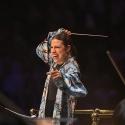
Kalevi Aho’s Concerto for Theremin, titled Eight Seasons, written for Carolina Eyck and recorded by her with John Storgårds and the Lapland Chamber Orchestra in 2014, uses all those devices but wisely keeps to sounds that are identifiably musical, most of the time. This was its UK premiere. We’re in programme music territory, the structure of the piece being built from the eight seasons of the year known to the Sámi people of Lapland – beginning with harvest, moving on to autumn, the coming of snow, darkness, frost, frozen snow, melting ice and then the midnight sun. Percussion and strings are often used to evoke the weather effects, and in the most extreme of them the music becomes furiously graphic – you can almost see the snow flurries – in a way that would not disgrace a David Attenborough film about the world’s most hostile environments. Aho likes to use the best ideas from the classical tradition’s masters, whether it’s freezing sul ponticello string tones or rich multi-part chording.
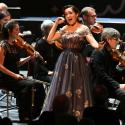
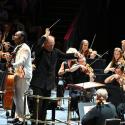
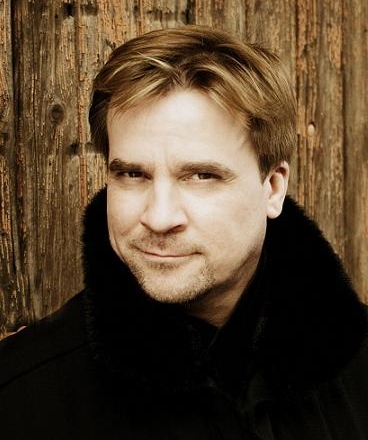 The soloist is also enabled to duet with herself, by singing into a microphone as well as playing, an ability which created some of the most haunting music of the piece. The BBC Philharmonic, reduced to chamber orchestra size with just over 30 strings, five wind players and percussion, bonded beautifully with her, and Storgårds ensured there was never a dull moment in this survey of a year outdoors in Lapland.
With the full-strength orchestra on stage, they followed it with Outi Tarkiainen’s Midnight Sun Variations, a 10-minute piece they performed together in the recent Proms, which is also very evocative of the Nordic climate and builds to a massive climax of sound, with echoes (it seems to me) of the textures, harmonies and energy of some of Sibelius’s depictions.
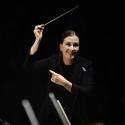
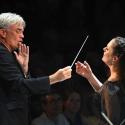
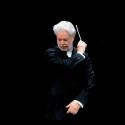
The big piece of the evening was Shostakovich’s Symphony No. 12, the one he sub-titled The Year 1917. John Storgårds (pictured above) is working on the later Shostakovich symphonies with the Philharmonic (in the Prom programme it was No. 11): this is both one of the more straightforward and one of the most difficult.
It’s conventional - by 20th century standards - in cyclic, four-movement structure and a journey from grimness to triumph – as of course befitted music about the dawn of the glorious era of Soviet Communism. The opening boasted superb string tone (the orchestra under the leadership of Yuri Torchinsky) whether in militaristic or warm and vital mood, and there were very distinguished contributions from the wind principals, and indeed all the wind players collectively, throughout the work.
Its puzzle lies in what it’s saying beneath the surface – if there is in fact anything to hear beyond how to write an optimistic symphony. Storgårds marked the point where, near the end, you think everything’s working up to the biggest climax of all and then are suddenly made to step back and contemplate something quieter and more thoughtful. After that, though, it’s straight on to the last thwack of the big bass drum, when all is victory.
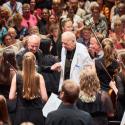
That last thwack – and many before it, no doubt – earned percussionist Rob Lea a special moment of applause and glory ahead of everyone else, at the end, as with it he retired after a long and distinguished career with the Philharmonic. What a way to go!