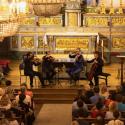
I was looking forward to this Prom by the Manchester Collective, an exciting young group founded in 2016, which has quickly established a reputation for innovative presentation of contemporary repertoire. And while I found the playing excellent, demonstrating the commitment and intensity of the performers, I had some reservations about the programme, particularly some questions of proportion. It felt a bit out of balance.
There was a nice mixture of in-your-face music – the equivalent of getting stared down by an Indian fast bowler – and a more genial second half. String ensembles often try to sound honeyed and warm, but here the Collective was brittle and edgy, aided by the ubiquitous harpsichord and by music that threatens to generate business for the RSI clinic.
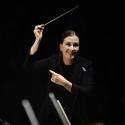
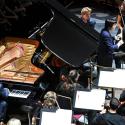
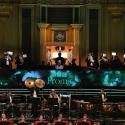
The programme was bookended by harpsichord concertos, played by the charismatic Mahan Esfahani. Henryk Górecki’s, from 1980, is uncompromising and unremitting, playing with ideas of baroque music in a minimalist manner. There is none of the interplay of orchestra and soloist familiar from the classical concerto: here they plough their own furrow, harpsichordist doing frantic finger-exercises and the strings in an inscrutable unison. Only in the second half do things relax a little, with some knowing nods from the composer. Esfahani handled the endless repeated chords (a terrifying technical challenge) with energy and enthusiasm, but it’s a hard piece to love. 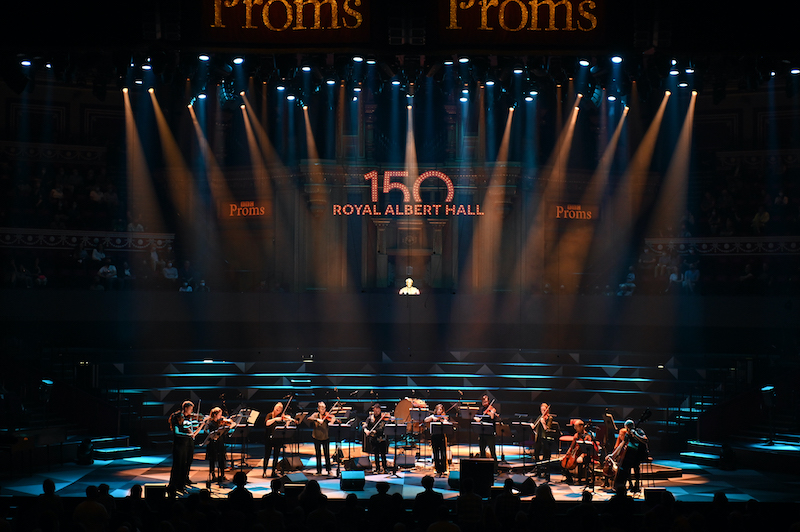 Edmund Finnis’s The Centre is Everywhere made a good contrast, starting with “white noise” creaks and scrapes from the strings (subtly amplified, as was the whole programme), opening out into a rich chorale. The lighting effects – dim blue becoming bright uplights – helped delineate this progression, which then reversed, receding to harmonics and darkness. The Collective, playing without a conductor, felt like a single organism, and only at a couple of points in the whole evening did I feel a conductor might have helped (and a few times when one might have made things worse).
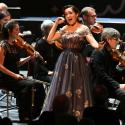
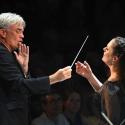
Even more uncompromising and fierce than the Górecki was Julius Eastman’s The Holy Presence of Joan d’Arc. The story of the survival of this piece is extraordinary: the music was thrown away when the composer became homeless, but the piece was reconstructed from the tape of a performance that was fortuitously extant. It is a ferocious 20 minutes of rock bass riffs (the main groove was unashamedly lifted from a Patti Smith song) and dissonant upper strings. It defies categorisation or description but the Collective were staunch advocates, bassist Toby Hughes and leader Rakhi Singh busily impressive. But it felt too long for itself, and I had had my fill a bit before the end. 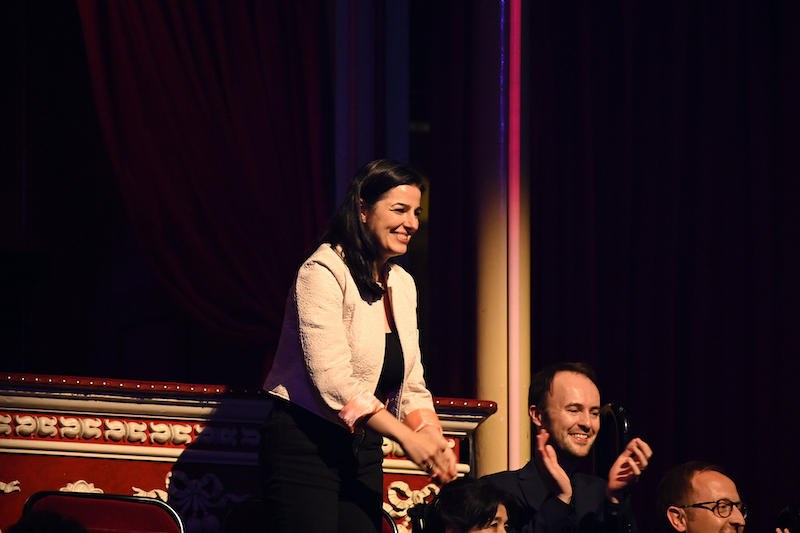 Much more approachable were both Dobrinka Tabakova’s Suite in Old Style and the Jazz Harpsichord Concerto by Joseph Horovitz that rounded off the programme, written in the 1960s by the now 95-year-old composer. The Tabakova (pictured above) takes Rameau as its starting point, although this isn’t especially audible in a piece that more readily conjures Bartók, Ravel, even Vivaldi. Viola soloist Ruth Gibson emerged from the orchestra at the end of the prelude and led the rest of the piece from the front, equally convincing in the quirky waltz and the fugal third movement. The slow movement was gorgeous, Gibson rich and impassioned, but here, as elsewhere, I had some doubts about the proportions of the movements: was the finale long enough to balance the slow music?
This was also a problem in the Horovitz in that the addition of long bass and drumkit solos at the beginning and end of the slow movement threw it out of kilter. They were both well-crafted (by Misha Mullov-Abbado and Alan Taylor respectively) but interrupted the flow. The outer movements though were full of wit and fun, Esfahani supple and crisp, the strings revelling in the stylistic switches. The bravura ending was very winning and they should have stopped there: the 12-minute encore was a final indulgence that I could have done without, and a final bit of imbalance.