

Like a supermarket "Christmas Dinner" sandwich, cramming the delights of a full festive lunch into every bite, Epiphoni Consort’s The Christmas Truce was at once historical play, choral concert and carol service, and so wonderfully enjoyable I didn’t want it to end.
It was also for me the discovery of another great London-based choir. Founded in 2014 by conductor Tim Reader, Epiphoni (pictured below by Kaupo Kikkas) is peopled predominantly by young singers with advanced vocal training who have followed careers outside music. They make a terrific sound: the upper voices are very good, the lower ones sensational. Epiphoni is up there with the best professional choirs such as Tenebrae and Sonoro.
But they were not content just to sing a regulation Christmas concert, instead reviving their production, originally presented in 2014, of a play by Rufus Stilgoe, weaving itself around Christmas music from Pretorius to Graham Fitkin. Two actors presented the story of the 1914 Christmas truce on the Western Front, focusing not on the famous (mythical?) football match, but on the idea of choirs on both sides coming together to sing carols. 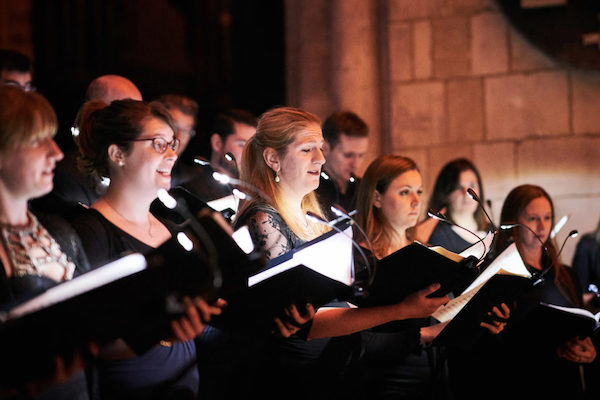 Hadley Fraser was the likeable English everyman sergeant who promotes the idea of the truce to his superior. The versatile Matt Mella played a range of characters from a British padre to a German soldier. Eloïse Poulton’s direction used the whole of St Paul’s church, with the choir stationed variously around the space, Fraser singing from the pulpit, and – at the climactic meeting of enemy soldiers in No Man’s Land – the two actors calling to each other from the furthest points, before edging tentatively together.
Stilgoe’s dialogue was simple but touching and down to earth. There were moments of humour – the senior British officer worrying that a truce might cause “drunkenness: someone could get hurt”. Above all was a sense of the soldiers for whom the war was a problem but not their fault, for whom a truce would be a defiant gesture, but ultimately nothing more, in the face of the war machine.
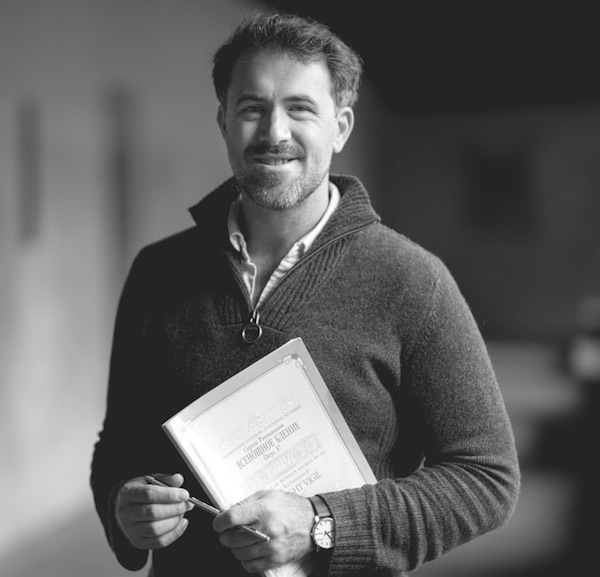
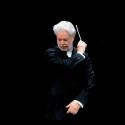
But for all of Fraser and Mella’s understated, very humane performances, the choir deserved star billing. The selection of music, supporting and enhancing the drama, was well chosen and beautifully sung. Tim Reader (pictured below by Ben Tomlin) led his choir and orchestra sensitively but unostentatiously, and the players and singers responded with spirit.
 Vaughan Williams’s Fantasia on Christmas Carols, broken into three episodes, gave full rein to the tenors and basses in “Come all you worthy gentlemen!” and Hadley Fraser sang the solo part unpretentiously: his voice more “musicals” than “opera” but none the worse for that. Elgar’s The Snow was heard in an orchestration by Alan Charlton, who also wrote the atmospheric orchestral interludes (Charlton died this year at the age of 47, and the concert was dedicated to his memory).
The most haunting passage was Jan Sanström’s arrangement of Pretorius’s “Es ist ein Ros entsprungen”, with a semi-choir in the gallery whose chorale was shrouded in smudged harmony by the choir on stage. It is a magical arrangement and utterly fitting for its point in the story, as the Germans’ singing floats over to the British trench. Also effective was having “Silent Night/Stille Nacht” sung simultaneously in two languages.
After four vigorous movements from Bach’s Christmas Oratorio, in which the trumpets sparkled and the choir’s up-front sound gloriously filled the church, there was a congregational carol to bind the audience further into the drama. This subtle combination of play and music, staged with imagination and performed with complete commitment, rightly earned a standing ovation, and marked out Epiphoni as a group to follow.




Add comment