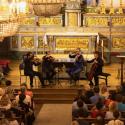
Wonderful as the livestreamed Proms are for players working together again and for viewers/listeners who wouldn’t be able to get to the Royal Albert Hall even if they could be admitted, I’d sacrifice them all for one evening of live musical communication like this. There’s nothing like late Mozart in serene mode to make you feel connected to your surroundings, at one with a world in which everything seems completely right, especially on a sunny evening with the first hint of autumn in it; from the first bars of the Quartet in B flat, K589, led by Alex Redington's supremely cultured melodic line, it brought on the same sense of tearful gratitude I’d felt when the Opera Holland Park operetta evening began with the Act 1 Quintet from The Magic Flute.
First praise must go to clarinettist Anthony Friend. Like him, I’d wandered through the heart of Battersea Park, in my case for the first time, on a lockdown afternoon, seen the handsomely repainted bandstand in a grove of London planes and thought what a wonderful venue it would make for chamber music. But he acted, putting together a series of chamber concerts which the support of Wandsworth Council and various generous benefactors made possible.
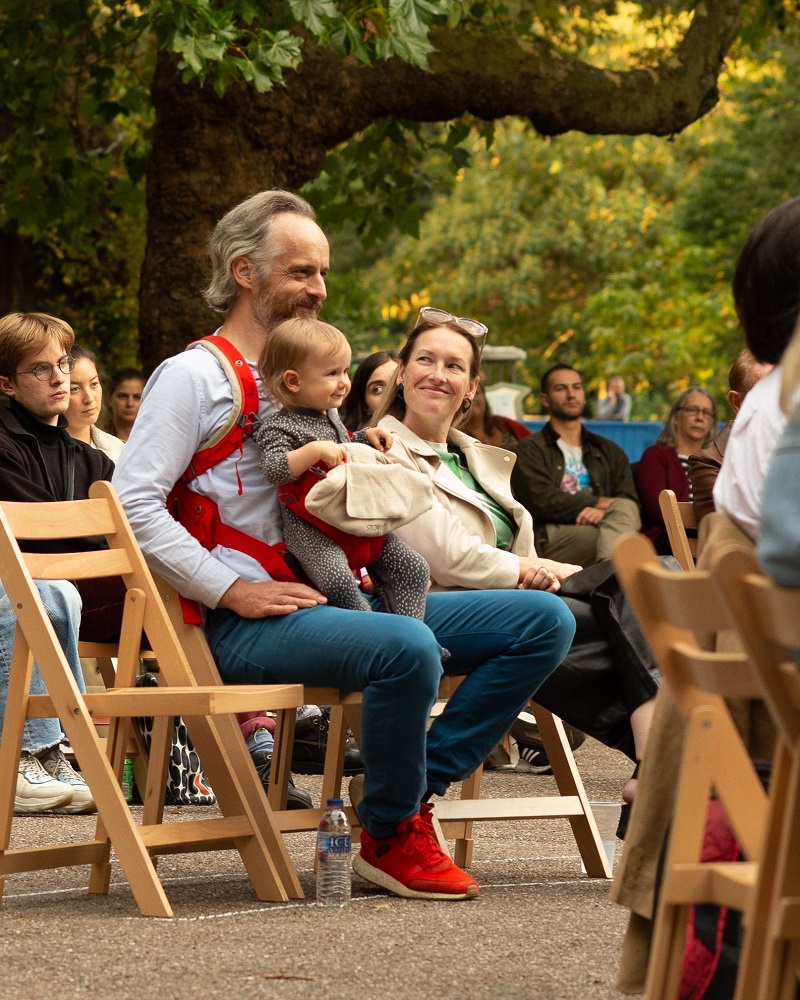 Love Parks, as the aegis goes? Totally, at a peaceful time with the background of the occasional dog barks, baby gurgles (the delightful one behind me pictured left), brief stereophonic shrieks of ring-necked parakeets and the gentle thud of passing joggers. A helicopter loomed before the miraculously natural Andante of Mendelssohn’s E minor Quartet, just in time for the players to hold fire before rippling along in the perfect serene expression of the occasion, quickened to life before returning to the source.
Of course senses are heightened to the wonders of quartet dialogue at a time like this, especially when Mozart makes his lines so very vocal (cellist John Myerscough made special magic from the melody line of the Larghetto, moving effortlessly to the heights; this is a quartet which so often seems to want to touch the sky). The surprises in such a fluent context were all the greater: the sudden buffeting of the first movement development, with a welcome repeat, the sudden halt and radical harmonies of the minuet’s trio, Mozart’s longest. But all was righted in the sheer delight of the finale.
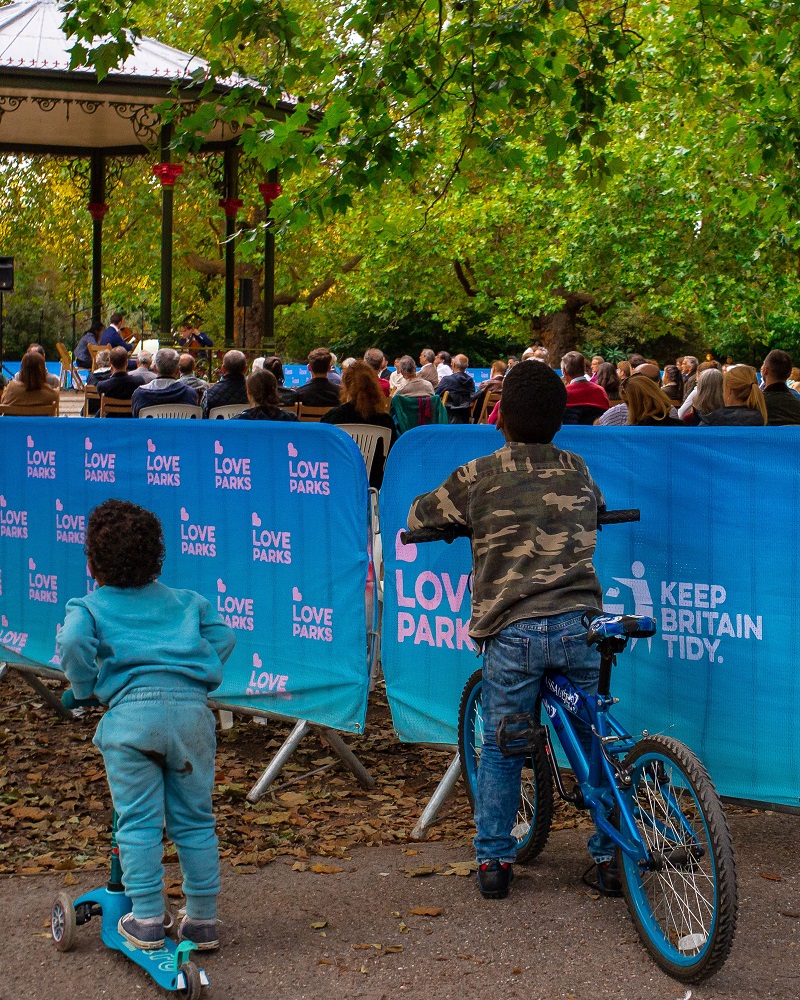 For contrast, the Dorics chose one of the three Mendelssohn quartets out of the six in a minor key, the E minor, Op. 44 No. 2. His very last, Op. 80, is a lacerating tragedy, composed after the death of his beloved sister Fanny and shortly before his own. But here the happy Felix is never far from the scene; a chorale-like theme rises from the turbulence of the first movement, seamlessly so in the Dorics’ performance, while the typically original and spirit-of-delightish scherzo and aforementioned slow movement seem imperturbably joyful (though shades flit across the Allegro di molto).
How the finale will end is anyone’s guess; in the minor, as it turns out, but it could so easily go either way. At any rate we were in no mood for real tragedy last night. Just as I’ll never forget hearing the final quartet for the first time from the Calidore Quartet at the East Neuk Festival, rain wind-driven against Kilrenny Church's windows, this supreme concert will for ever lodge in the memory alongside its surrounding trees and setting sun. I can’t wait for the next in the series. Tickets are free, but you need to book; if you're unsuccessful, you can stand around the edges or sit on one of the benches - the well-handled amplification will make sure you hear all the subtleties. Utopia in a London park.
- In the next event, on Friday 4 September, the Maggini Quartet plays Beethoven and Dvořák. Full details here
- More classical reviews on theartsdesk