There is no mention of Marc-Antoine Charpentier in David Cairns's comprehensive Berlioz biography. It seems extraordinary that the master of the most intimate and moving of musical Christmas stories, L'enfance du Christ, knew nothing of the next best, Charpentier's Pastorale sur la naissance de Notre Seigneur Jésus-Christ composed 175 years earlier, with its similar move from darkness to light, its music of tender intimacy and childlike joy as well as sorrow, an elaborate metaphysical final chorus common to both.
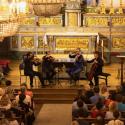
Would an all-Charpentier evening be too much of a good thing? At the end of the slightly later In navitatem Domini canticum, the first-half work, sympathetic presenter, bass and founding artistic director Jonathan Sells (pictured below in rehearsal with Alex Ashworth, first of two images by Alexander Barnes/Apple and Biscuit) announced that if we'd had enough of Charpentier, we could buy the group's new CD of Bach's Magnificat. Strange to think that in the year of the Pastorale, a boy was born in Eisenach who would become the most wonderful of all. 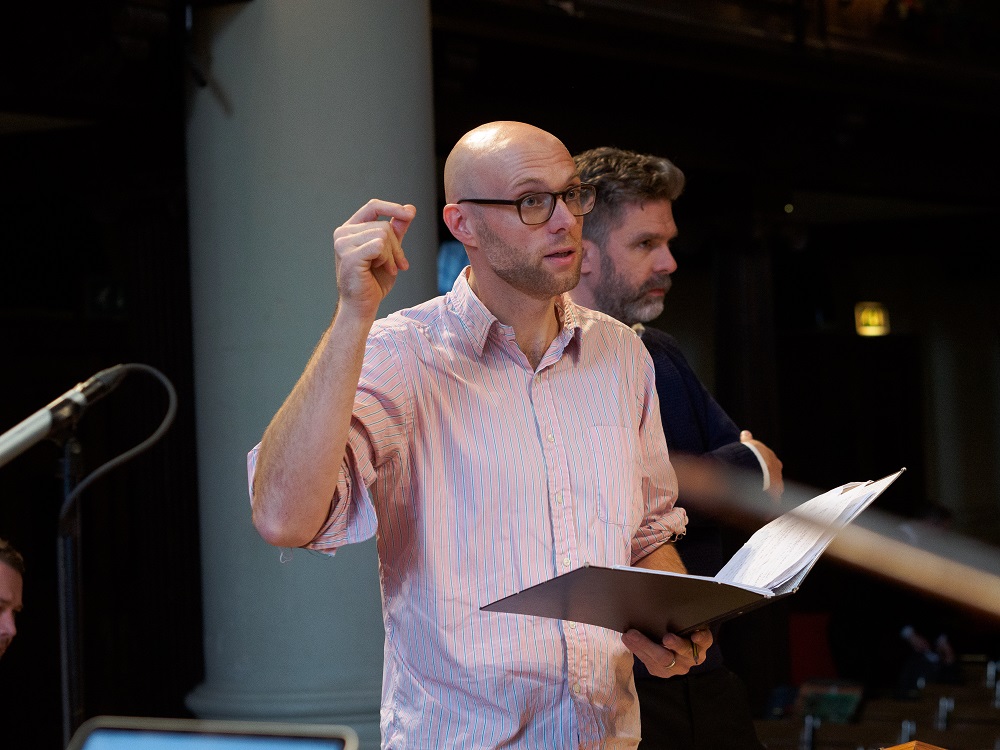 No, Charpentier doesn't entirely transcend the manners of his Lully-centric Parisian time; the wonders are more in the sequences and contrasts of two works that begin with mankind in dire need of salvation, proceed gently with two instrumental night pictures conventional in essence but moving in presentation - especially the string-quintet magic of In nativitatem - and then set shepherds dancing with good news (Sells' tambourine joining the other players).
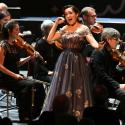
In fact there was sufficient contrast between the two works: In nativitatem slightly more austere as well as shorter, in church Latin for St Paul-St Louis in the Marais, with its unique halting reminder of Christ born into poverty ("you are so needy, you cry so, you are so cold, you love so"), the Pastorale composed to a more naive French text for the household of Mademoiselle de Guise (with the added pathos that the last male heir of the house of Guise had died at the age of five a decade earlier). Its highlights - detachable if anyone's looking for special Christmas numbers - are the "Gloire"s of four angels (the women's spangly tops and dresses paying off here as visual complement to singing vibrant in excelsis) and the simple but touching polyphony of the final shepherd's chorus, with a beautiful phrase resounding as it's passed around each voice-part). What a talented household of singers, chambermaids included, the Hotel de Guise's must have been. 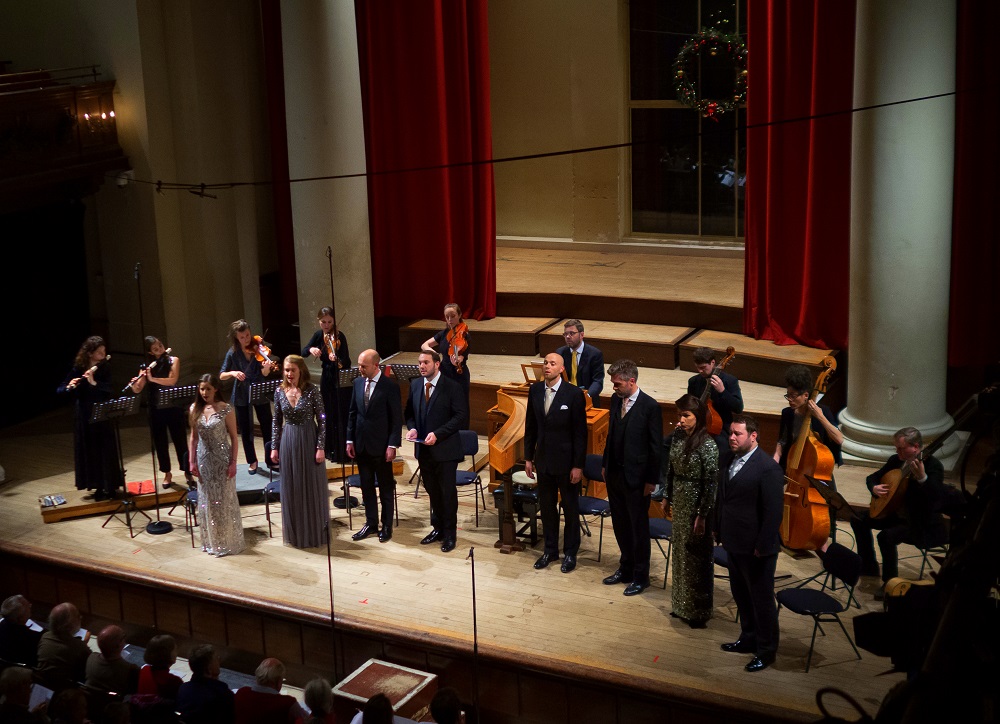 Solos were taken with character, even if in their dramatic presentation most of Solomon's Knot could do with a lesson or two in learning to stand naturally and seem relaxed (Marcus Farnsworth, with plenty of stage experience, is used to it). The group is lucky, or has simply chosen well, to have a clarion high tenor in Peter Davoren, crucial in the first of the evening's works, and a true bass in Alex Ashworth. Claire Lloyd-Griffiths brought light and intensity as the Pastorale's announcing Angel - originally sung by a clearly talented 20 year old soprano - and Zoë Brookshaw landed the plum cameo of a shepherdess lamenting the death of her favourite ewe, devoured by a wolf while most of the others have rushed off to see the Christ Child. Fatuously, one might suggest a final touch à la Peter and the Wolf - the sheep, swallowed whole, bleating from within the belly of the beast - but by the end, Charpentier has turned universal before a final joyous dance march.
The sunrise aspect is fascinating, too, especially as text (the sun illumines only half the world; Christ is all-encompassing): a special salute there to artistic advisor James Halliday for fusing versions to give a London premiere of sorts. The encore, Charpentier's O oriens, encapsulated the twin poles of gravity and tripping joy. Who couldn't feel the better for hearing this?