Where did all the terrific programming energy of last year’s The Rest is Noise festival go? One answer – surprising given the orchestra’s former Friday night lite status – is into a two-concert adventure by the BBCCO. World to Come, World Once Known has been devised by Principal Conductor Keith Lockhart to reflect the Janus-headed phenomenon of music just before, during and after the First World War.
While the first concert, to be broadcast this afternoon on BBC Radio 3, registered the shock of the new following the cataclysm, last night’s poignant sextet of works examined grief – for lost loved ones, past times and the devastated communities where, paradoxically, nationalism had been a decisive factor in creating the monster of 1914-18.
We should hardly be surprised that this orchestra is capable of such brilliant thinking and execution, as well as the enviable marketing-led skill of bringing in a full audience of all ages; its concert in The Rest is Noise was one of the most imaginative I caught in that year-long celebration of 20th-century culture. But World Once Known surpassed it with a perfect symmetry. Of the six works, I’d only ever caught the framing dance-suites in concert before. Ravel’s Le tombeau de Couperin - a memorial to friends killed in the war and to past eras in French music – kept its sphinx-like smile partly due to the fact that from where I was sitting the woodwind felt and sounded quite a way back in the orchestra, with Rebecca Wood’s prominent oboe solos staying spectral if soulful, and that Ravel’s characteristic spareness and significance in using the only trumpet – Catherine Moore, excellent throughout – could be seen as well as heard.
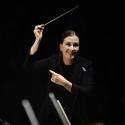
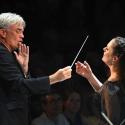
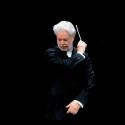
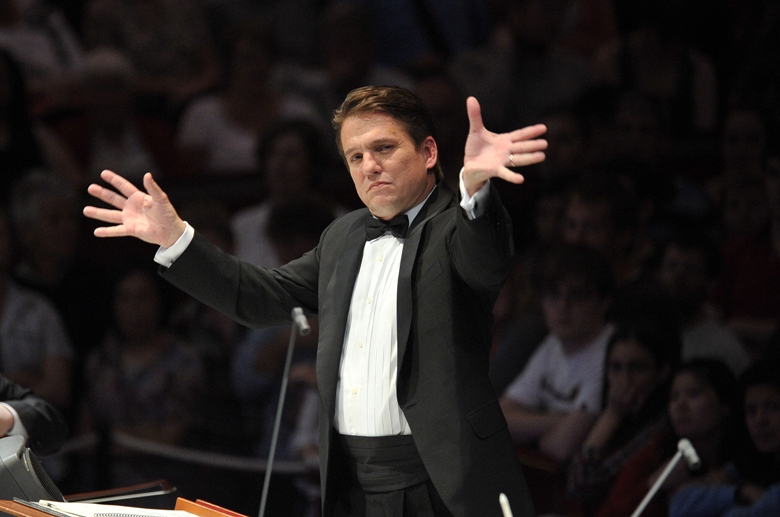 Lockhart’s batonless hands (pictured right by Chris Christodoulou) shaped the circular motions of Ravel’s grace beautifully. Perhaps a stick might helped to give a spring to the more motoric rhythms of Bartók’s 1923 Dance Suite, a resolutely un-nationalistic blend of Arabic and Romanian as well as Hungarian folk idioms, but at least there was definition here, and splendid muted playing from the fine trombonists.
Moving in towards and away from the centrepieces, it was a revelation to hear Debussy’s Berceuse heroïque, a nocturne for dead and sleeping soldiers which is right to touch on the dark forest of Pelléas et Mélisande where the old oppress and destroy the young; to me, it says with its fleeting, intangible colours in several minutes what the overtouted Jeux takes much longer to convey. Butterworth’s orchestral rhapsody on one and a bit songs from his settings of Housman’s A Shropshire Lad poems builds a bit more obviously at the core, but is shrouded in mystery and, ultimately, sadness in quoting just the first line of “With rue my heart is laden”. Three years later, Vaughan Williams’ young friend and musical soulmate was killed in action, aged 31.
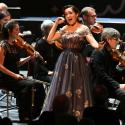
It was in the most resonant line-settings, culminating with 'remember them kindly in their time of trouble' that Cabell stirred the profoundest depths of the eveningEven so, tears came to the eyes more readily in the two most explicitly emotional works. The Fiddler’s Child is vintage Janáček in its sudden rough heartsurges, the unorthodox sighings of divided violas and the brief brass cushionings. Leader Charles Mutter soulfully captured the dark soul of the poor fiddler who returns after death to lead his child away to another world from the potential horrors of the workhouse. As for the depiction of a happier childhood pierced only by regretful adult perspectives in Barber’s Knoxville: Summer of 1915, we’re so used to hearing – at least on CD – lighter singers that the lyric-dramatic intensity, the sheer opulence of the wonderful American soprano Nicole Cabell took me by surprise.
After the deceptively Coplandy-folksy opening and a slight difficulty in catching all the words of its sequel, it was in the most resonant line-settings, culminating with "remember them kindly in their time of trouble" that Cabell stirred the profoundest depths of the evening. Both the prose-poet, James Agee, and Barber remembered their father’s deaths; so many of us could relate to that. Who knows? Maybe the players did too: they look like a middle-of-the-road, diffident crowd, but their playing throughout the evening told us otherwise. What a relief, too, to have platform presentation for the live broadcast by Louise Fryer, who neither patronised, falsely ingratiated nor gabbled her words like one colleague recently captured in similar circumstances: the ideal icing on a rich cake rather than a sour contrasting flavour.