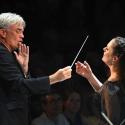
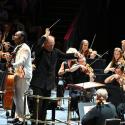
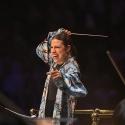
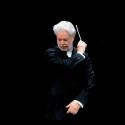
Two nights after the Scottish Chamber Orchestra had brought the first great E flat major symphony to the Proms – Mozart’s 39th – a serendipitous change of programme on Tuesday gave us the second: Haydn’s “Drumroll”. An equally serendipitous change of conductor saw Ben Gernon get the evening off to a deceptively simple start: no fancy-dan cadenza from the BBC Philharmonic’s timpanist, just enough of a flourish to get everyone’s attention as Haydn probably had in mind. Then the happy-face Dies Irae of the introduction’s theme, bassoon and basses nicely to the fore, and it was soon clear that Gernon has the tricky measure of Haydn, who made an entire career out of “deceptively simple”.
After a fairly plain address to the main Allegro, the good sense – and timing – of Gernon’s approach really paid off in the sudden irruption of the recapitulation by the drumroll's return: a moment to catch everyone off guard, and a neat piece of programming to precede Beethoven’s Fourth, where the timpani play a no less crucial role at a similar point, but to put the argument back on track rather than derail its apparently serene progress.
The “town meets country” of Haydn’s double-variation Andante was peaceably handled if a touch rocky in rhythm, with Zoë Beyers applying some stylish ornamentation to her solo violin turn. Gernon’s firm grip on the pulse straitjacketed the movement’s sudden lurch into the minor, but he made amends in a coda pointed with splendour. Better was to come, in the sturdy pace of a minuet so characterfully phrased that one could almost smell the leather of an elderly but still nimble Austro-Hungarian general’s polished boots, perhaps guiding a younger and shapelier consort across the ballroom. More ad hoc ornamentation in the double-clarinet Trio – not even Mozart had thought of that one – and some properly quiet playing actually scored over the SCO on Sunday night. 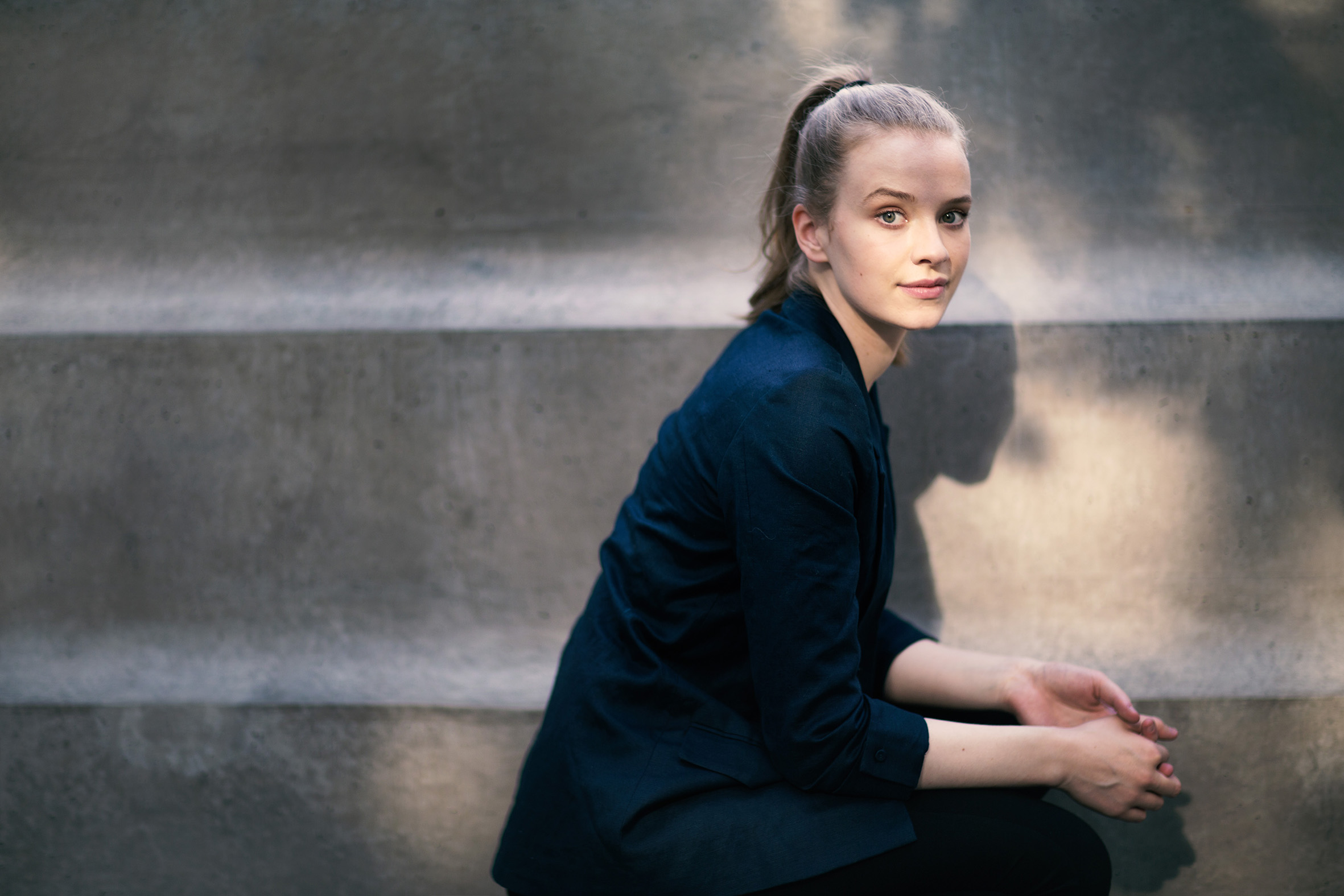 To complete the joy of paid-up Haydn nerds in attendance, Gernon dug out the symphony’s original ending complete with its blink-and-you’ll-miss-it wacko modulation into C flat major (even Haydn thought he’d gone too far, and cut it): something I never thought to hear live, but then Haydn is so under-performed – and under-played when performed at all – that passing slips paled into insignificance. This was an evening to remember and relive the BBC Philharmonic’s distinguished heritage in Haydn, stretching back to symphonies led by Elgar Howarth and Sir Peter Maxwell Davies, and before them George Hurst: like them, Gernon knows not to take anything in Haydn for granted.
It took a little while for the young German pianist Elisabeth Brauss (pictured above by Felix Broede) to settle in to Mozart’s Concerto K488, but once she did, with a nicely darkened turn of the first episode’s tail, she sketched in the passing clouds to the concerto’s A major sunshine, and might have gone further with a less rigid pulse. Whenever she gave herself time – in the pause for thought before the recapitulation, and in Mozart’s cadenza – she used it well. Notably so in the Adagio, unusually spacious compared to the one-in-a-bar approach prevalent today, which opened a window onto Mozart’s reflective premonitions of Chopin (the movement’s key of F sharp minor tellingly shared by the some of the later composer’s most haunted pieces). In the hall it seemed as though Brauss was playing within herself for the finale, though of course the broadcast is better balanced.
It would be nice but wrong to say that Beethoven’s Fourth Symphony lived up to the first half’s stylish classicism. Too much was plainly done (clarinets far more characterful in Haydn than the Adagio of the Beethoven) or fell by the wayside in a litter of imprecisions (string chords in the introduction never quite together). Tempi, too, seemed chosen by the book and not for the hall’s acoustic or the available rehearsal period. No one minded, I don’t suppose: when did you last hear a symphonic orchestra give a full concert of Haydn, Mozart and Beethoven? Even the pandemic has its silver linings.