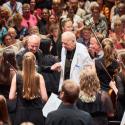
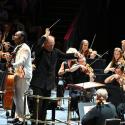
You can’t help liking Joshua Bell. The Peter Pan violin soloist of the classical world has been in the business for more than 30 years and still has his boyish looks and, more importantly, his enthusiasm and sense of enjoyment in making music. At the Bridgewater Hall last night the pages of his score stuck together at one point between movements, but he had a quip for the audience and carried on with a smile.
Recalling Beecham’s line that Herbert von Karajan was “like a musical Malcolm Sargent”, I thought of saying that Bell’s playing in Vivaldi’s The Four Seasons was “like a musical…” – well, you fill in the name, as plenty of lesser soloists have packed ’em in with these four little concertos before.
The birdsong of the opening was as chirpy as you could wish for
But Bell’s approach is supremely musical and stimulating to hear. He and the Academy of St Martin in the Fields (he’s their music director) don’t do authentic. Their sound for this music, as in others, is full and modern, with plenty of vibrato. But it’s full of life and imagination. It was sweetness personified in the "Summer" Concerto, No. 2, before the storms broke in theatrical style, with fades and swells to gladden any Romantic’s heart. The opening of "Autumn" (the peasants’ celebrations) became a bit of a hoe-down, giving way to a splendidly dreamy interlude to represent the alcoholic haze that follows – and for the hunting finale, blow me, we got some “Bartók pizzicato” (strings thwacking against fingerboards as they were plucked) in one episode… to represent the popping of guns, I guess. The players looked mighty pleased with themselves after that one.
The birdsong of the opening was as chirpy as you could wish for, and "Winter" began with squeaky, close-to-the-bridge trills to illustrate its iciness. The only thing I didn’t completely take to completely was the raucous sound of the solo viola interjections in the slow movement of Spring, while everyone else was whispering their figuration: is it really a barking dog we’re hearing there, or just a quietly snoring one? 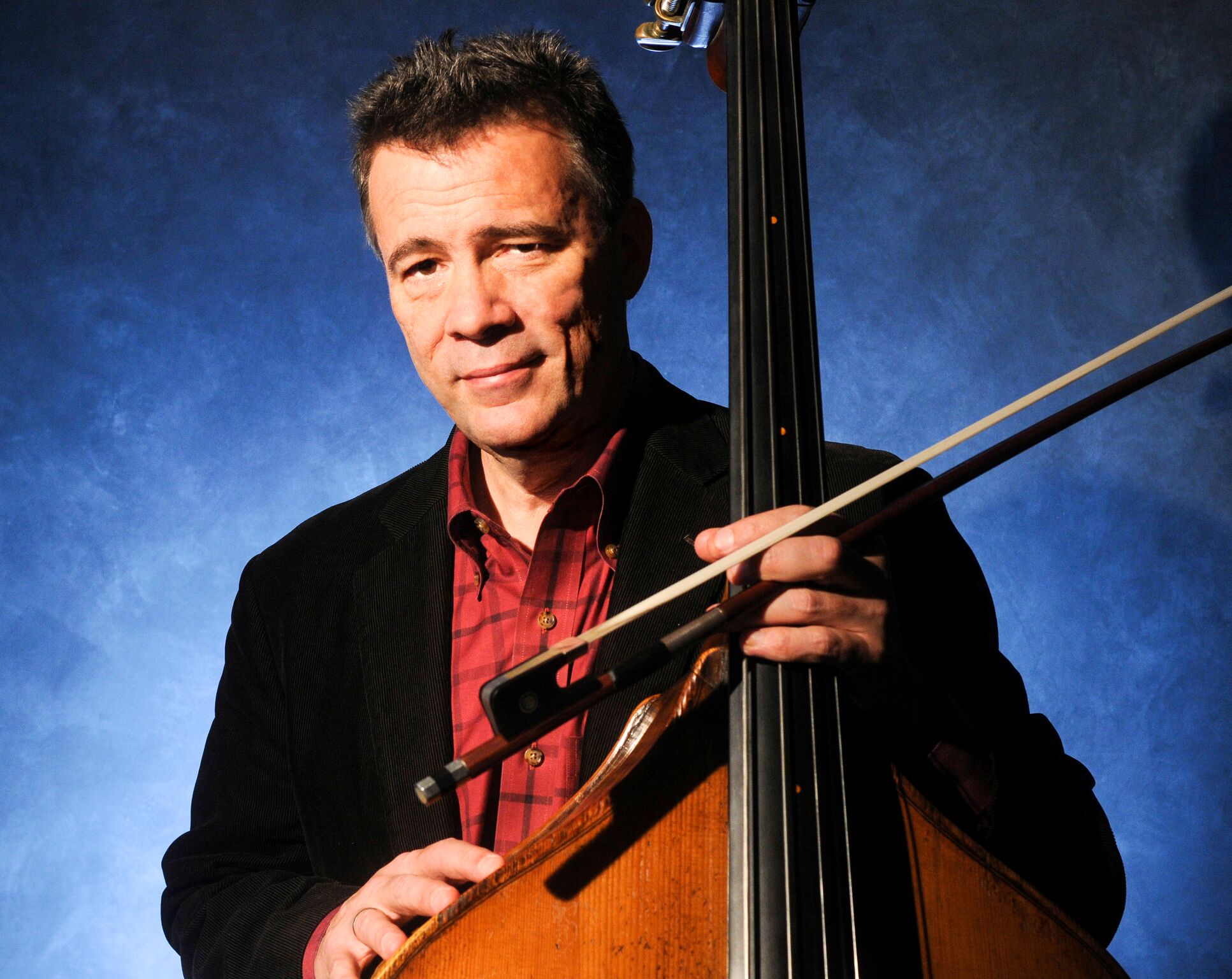 A piece of new music followed: Overture for Violin and Orchestra, by Edgar Meyer (pictured above by Jim McGuire), Bell’s old friend from Indiana days and a virtuoso double-bass player. Meyer wrote the work for Bell and the Academy, who premiered it in the US last year and now present it in each concert on this tour here. It’s quite brief, beginning in lyrical and engaging vein and fulfilling Meyer’s stated intention “to establish trust and to provoke interest” as it goes on. The busy and undulating triplets at the outset, with their syncopations, stimulate feelings of controlled energy, and the repeated pedal points, as the music moves into jazzier idioms, build momentum. It gets to a clear climax and keeps reminding you of themes you’ve heard before: in short, an expertly crafted piece of writing, which went down extremely well. Bell has spoken about the “bluegrass” and Nashville roots of Meyer’s music-making, which might not be an obvious commendation to a UK audience, but the piece has plenty more virtues than those.
Finally Bell directed Beethoven’s Second Symphony from the leader’s chair. Like the Eighth on the Academy’s tour a year ago (they’re in process of recording the whole set), this had lively speeds, spiky articulation and vivid colours. It is, after all, Beethoven sunny side up, in symphonic terms, and the supposedly slow introduction to the first movement chugged along with determination and emphatic forward momentum. When they hit the Allegro con brio it was energetic and vivacious, and, in the second main theme, sprightly and dance-like. The Academy musicians punched out the counterpoint in the development section, and if anything even more forcefully in the coda.
The second movement became a gentle serenade, warmly flowing, with classical rise-and-fall in its melodic shapes, Bell demonstrating the finest points of articulation from his position at the front. The scherzo was spiky and precise, dramatically contrasted but still refined in phrasing, and the finale was smooth and elegant while taking no prisoners in terms of pace and impetus. There were semi-humorous echo effects, and fade-outs and slow-downs – the spirit of Prometheus was not far away.