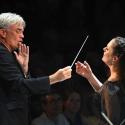
“Some are born to sweet delight, some are born to endless night,” quoth Blake. Beethoven and Bartók knew both extremes, but Iván Fischer and the Budapest Festival Orchestra led us from the most dancing of Seventh Symphonies to the endless night of Duke Bluebeard’s Castle, from explosive A major to quietest C sharp minor. If not everything along the way was perfect, or even in one major case present, the outlines were bold and engaging.
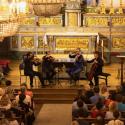
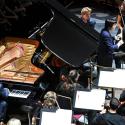
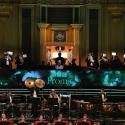
Beethoven's Seventh Symphony was the last major work I heard at the Pärnu Music Festival only a fortnight ago. It bears repeating that young Palestinian conductor Lamar Elias described the interpretation as "life-changing". Without the burning commitment and chameleonic responses of Paavo Järvi's Estonian Festival Orchestra, his radical rethink might have come across as mannered, but it all blazed. Not quite what you could say of Fischer's interpretation, chiefly remarkable for its clean lines and textures (though remember that I was at a greater distance, which made the clarity all the more impressive. Pictured below: the orchestra in the Beethoven – four double-basses high centre back; later there were six for the Bartók). There were gutty string sounds, too, to match the authentic timpani (the modern set was used in the second half).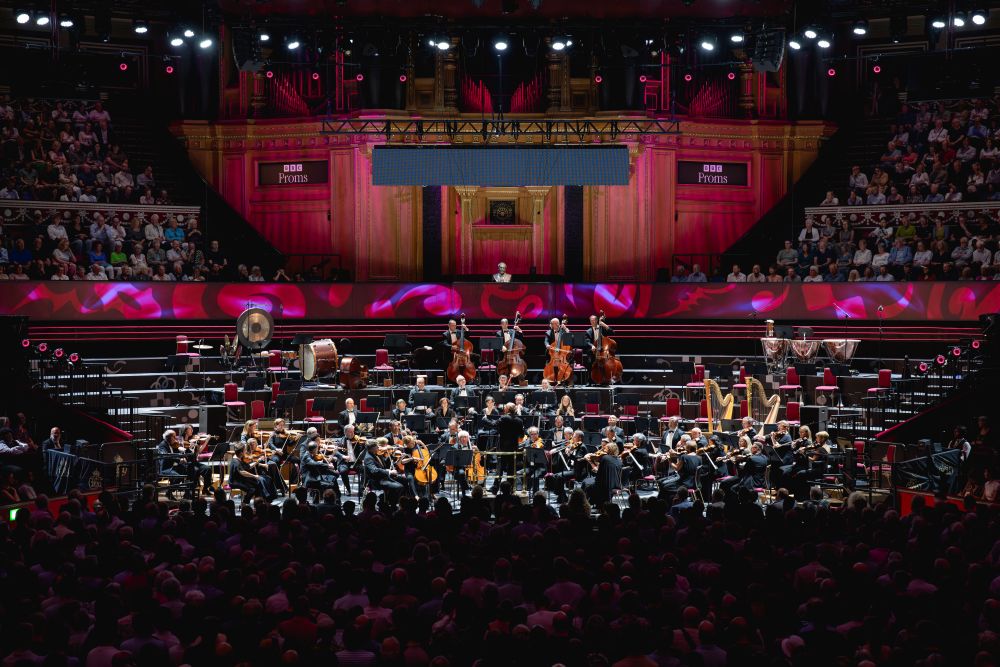 The occasional quirk in a stress on a third or fourth note to lift a phrase certainly worked; and I probably preferred Fischer's slower, more tragic take on the Allegretto to Järvi's. But that had been a through-conducted whole, with barely a pause for breath between movements (Fischer has done the same with Bartok's Concerto for Orchestra). Curiously, after so much space for articulation, the finale here felt a bit rushed, exciting but in a more generalised way – and, for once, with no exposition repeat. Kudos especially to first flautist Gabriella Pivon, keeping the main Vivace theme after the winsome introduction high, lucid and bright.
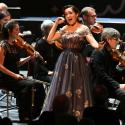
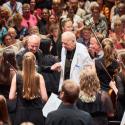
It was difficult at first to go within the dark atmosphere of Duke Bluebeard's Castle. Fischer himself took on Béla Balázs' spoken Prologue, and he has a genial way that makes the audience want to laugh; that and the persistent coughing around me made the mood difficult to establish. But once we were into the story of Judith's curiosity, her desire to break down the literal and metaphorical boundaries of her strange new husband, the magic and the fleshcreep started to work. 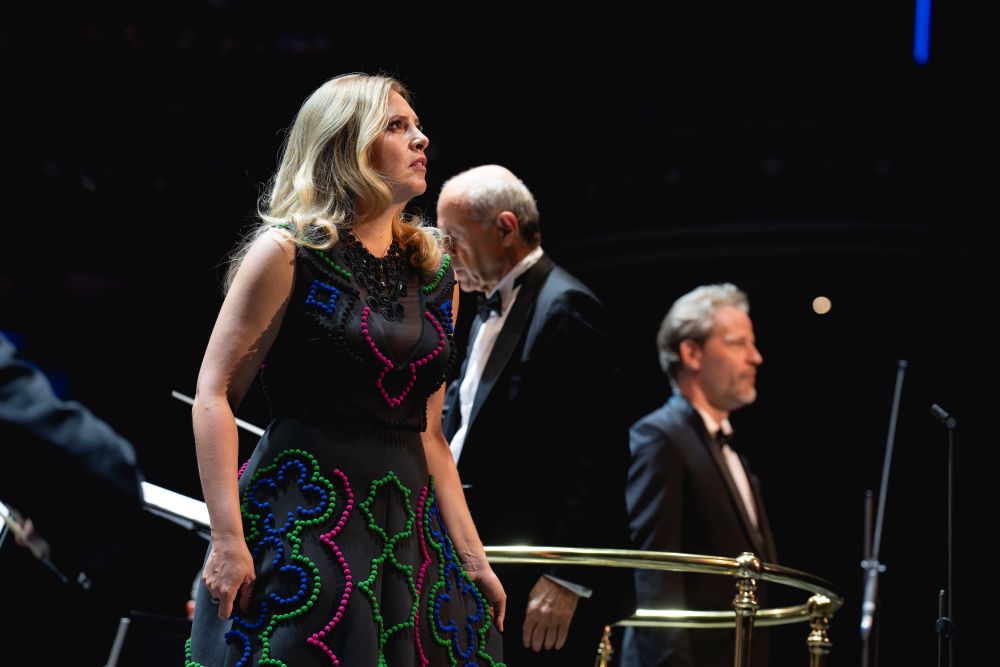 Mezzo Dorottya Láng and bass Krisztián Cser (pictured above with Fischer) had to conjure the moods without the assistance of lighting for the different doors – the strip at the back remained deep blue throughout – and, without scores in front of them or any breaks for sitting down, they absolutely did. Láng's commitment was riveting, again even from a distance, and came with a dramatic use of her long hair; I'd have liked a bit more cut and shine in the voice, but that you usually only get with soprano Judiths. Cser started mysteriously impassive, as all Bluebeards must, but his involvement in the shut-down man's growing hope at the centre of the piece was also impressive.
But where, oh where, was the crucial fortissimo organ on the opening of the fifth door? Had the Albert Hall instrument suffered a crisis and gone out of action? If so, an amplified substitute could have been found. The orchestra alone was not enough. Later climaxes of a darker nature were properly shattering as the secret of the seventh door is revealed, and Judith joins the other living wives. The sound-effects of the pretty garden and the lake of tears had full impact. The ending froze the blood, as it should. No Budapest encore was possible after this.