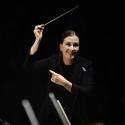
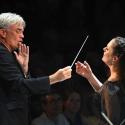
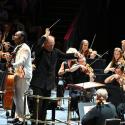
Three live, very alive Symphonie fantastiques in a year may seem a lot. But such is Berlioz’s precise, unique and somehow modern imagination that you can always discover something new, especially given the intense hard work on detail of Antonio Pappano and what is now very much “his” London Symphony Orchestra. They and Lisa Batiashvili also helped to keep Szymanowski’s hothouse First Violin Concerto in focus, too.
There can’t be a more exhilarating curtain-up to a concert than Berlioz’s equally fertile Le Corsaire Overture. The whiplash timpani, the unison helter-skelters of strings later meet with brass writing of supreme exhilaration. Between the flash, though, is a typical Berlioz tendresse, sighing and swelling with Pappano’s unique brand of keen and supple phrasing. He applied that to the muted opening of the symphony, a melody which turns out to fit the words of a poem he set in his teens, and the flickering originality of the idee fixe, the theme of the elusive beloved which dogs him to the opium dream of a death and a demonic ritual at his own funeral. 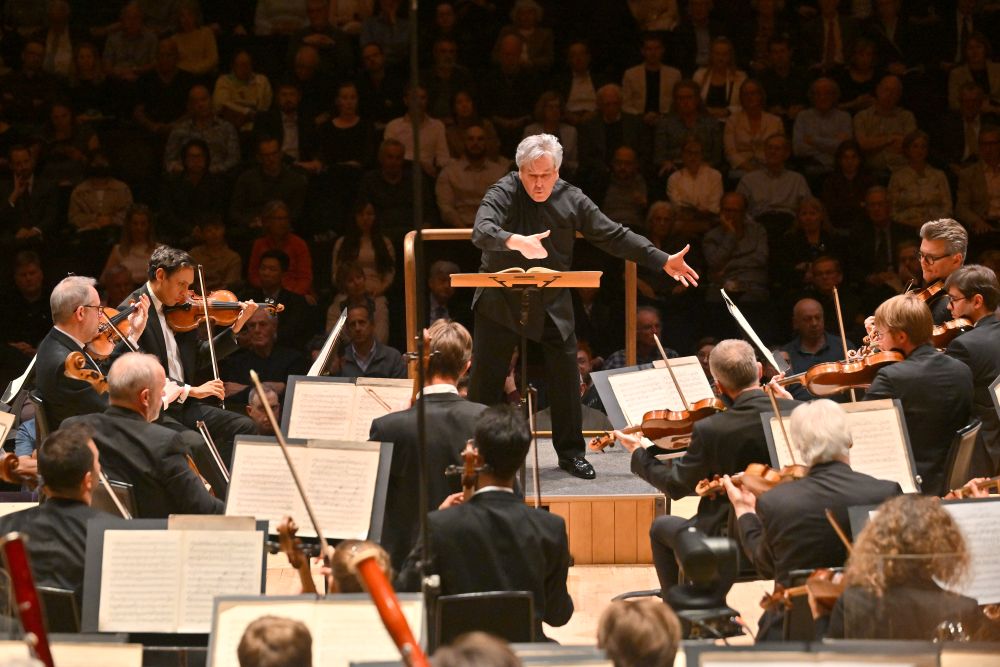 The fine tuning was what made this interpretation unique: the gruff vocalising of the double-basses in impatient response to the love-object, the quietest whispers of solo clarinet and flute, the trumpet making its mark in the ball scene long before we usually register it. If the whirls towards the end of the first movement and at the Witches’ Sabbath were suitably manic, there wasn’t quite the sames sense of ecstatic discovery I felt from the National Symphony Orchestra of Ireland and Lio Kuokman earlier in the year. I missed Kuokman‘s continuity between outer movements, too, and the repeats: the one in the "March to the Scaffold", though it takes us back into the distance, gives it more impact than it had here, a mere showpiece.
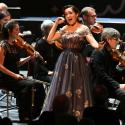
The problem with Szymanowski’s First Violin Concerto rested with the work itself: a diffuse fantasy, allegedly with classical Greek frolicking fauns and naiads. The phosphorescent opening sends sparks flying, but the soloist’s role is a sometimes baffling interchange of dreamy lyricism and stomping dance. It’s a relief when she arrives at the cadenza, put together with the original violinist, Pavel Kochanski: at last the orchestral chatter can stop, and Batiashvili, dressed presumably in support of Ukraine (she comes from another Russia-beleaguered country, Georgia), totally commanded the argument for a while. As encore, she played the Rachmaninov Vocalise with Antonio Pappano at the piano, one up on the wordless singer of the original version, who needs to take a breath where Batishvili never did.