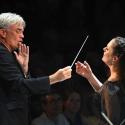
Who’d have thought Florence Price, Rachmaninov, Gershwin and Brahms would all fit the (unspoken) theme of 1930s America? Brahms made the bill by virtue of Schoenberg’s 1937 arrangement of the C minor Piano Quartet, so outlandish and camp that you’d be tempted to credit Stokowski as the orchestrator. Like Rachmaninov’s Rhapsody on the Theme of Paganini, it needs vertiginous audacity: that came in spades from conductor Joshua Weilerstein and pianist Martin James Bartlett.
Weilerstein and an orchestra sounding especially lustrous in the string section made the best possible case for currently feted Afro-American Florence Price's Ethiopia's Shadow in America, but inevitably that shadow only lasted as long as its opening slot. Rediscovered in 2009 at her Illinois home, its emotional and political heart is definitely in the right place, but you wish she'd shy away a bit from full brass and cymbal crashes. The reinvention of spirituals is well handled, but the popular dances come second-best to the syncopations in Rachmaninov's Paganini Rhapsody,
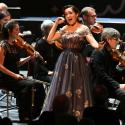
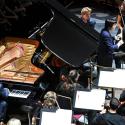
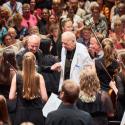
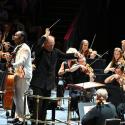
Composed in the wonderful modernist villa he had built on Lake Lucerne but with more than a nod in the direction of contemporary America, where this greatest of pianist-composers gave the premiere with Stokowski and the Philadelphia Orchestra in 1934, the Rhapsody (actually a set of variations on two themes, the violinist's and the Dies Irae), it's a total masterpiece, fresh every time if soloist, conductor and orchestra keep tabs on each other as they tumble through the more demonic variations. 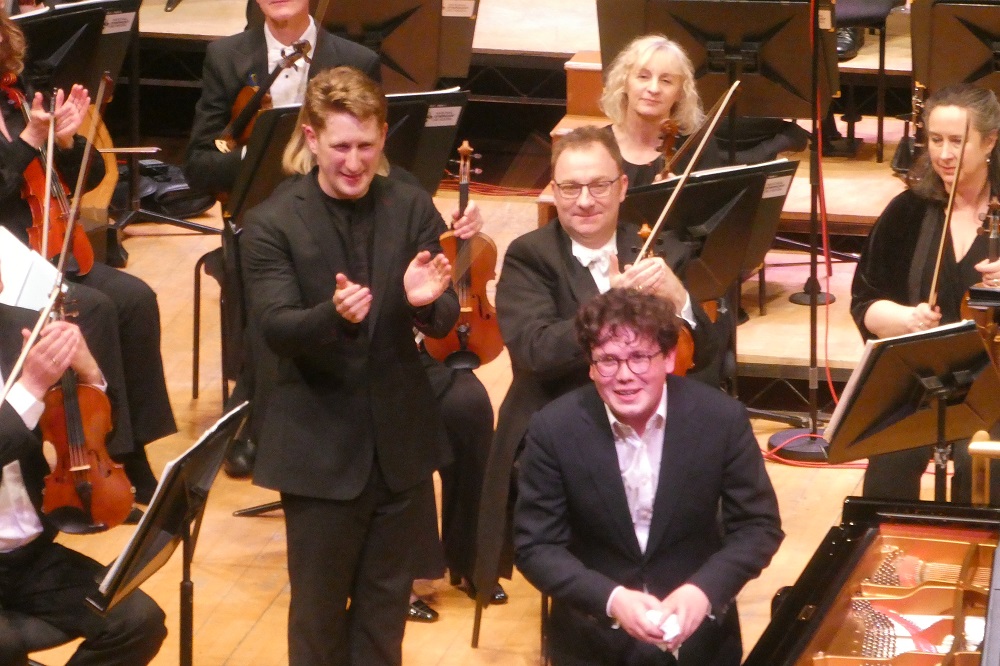 I'd expected wit and charm from live-wire Bartlett, but perhaps not the depth and menace (Bartlett pictured above with Weilerstein and members of the orchestra). He gave space when needed in miraculous rubato, with Weilerstein always watchful, and caught exactly the introspection and release necessary in the famous 18th variation; the NSO strings were also encouraged to hold back on their subsequent entry, reaching the lush climax so singular in this otherwise quicksilver-moody work. The drive through the finale was hair-raising, something you had to hear live to believe (though it still gives frissons on the radio broadcast). Beauitiful colourings from the other players, too, especially cellos and horns, and some spine-tingling trumpet work.
In the composer's 150th anniversary year, you might have anticipated a Prelude as encore, but I guessed what would make perfect sense, and it did: Bartlett's magical transcription, via the composer's own piano version, of Gershwin's "The Man I Love", admittedly composed a decade before the Rachmaninov, but of course Gershwin was still playing it over the years before his untimely death in 1937. Here was all the subtle artistry and emotion I can never hear too often from the spontaneous-seeming Bartlett.
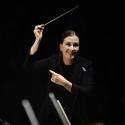
If Weilerstein's sleight-of-hand was less visible during the Rhapsody, his spring, swing and discipline came to the fore in the Brahms/Schoenberg, which he clearly knows inside out (conducting without a score isn't always a virtue, but the communication certainly flowed between conductor, players and orchestra). You do wonder what Schoenberg was playing at, especially in shrill upper woodwind frequencies (National Concert Hall acoustics seem to highlight them). I'd always prefer to hear the first two movements in the original.
Yet these were always fun, given Weilerstein's audacious physicality, while the Andante and Rondo alla Zingarese have that extra degree of audacity: all hands on deck for what here sounds like a parody of militarism in the middle of the slow movement, and of course the tongs and bones adding hilarious voices – think Disney or Tom and Jerry – to the tziganery. Panache is the order of the day, and that came from an orchestra on peak form under a conductor who's already at the top of his game. Good to see so many young people in the audience; many stood instantly for the "Rach Pag", and expressed their delight at the wlldest possible end of the Rondo.